
Nvidia is considering Huang’s successor, with his son-in-law Caprez the frontrunner
The US Department of Commerce has delayed adding the Chinese company to the blacklist

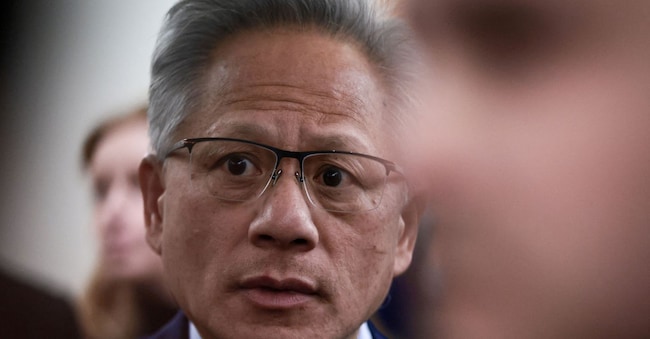
Jensen Huang, the head of Nvidia, returned to his office on Monday with the clear intention of conveying the impression that the situation is under control and that operations are proceeding as usual, ahead of the quarterly results on 17 November.
The storm triggered by his extramarital affair with Alice Huang, a senior executive at Megaspeed suspected of being a Chinese spy, is unlikely to subside any time soon, to the extent that analysts have highlighted the need to finalise something that was unthinkable just a few days ago: his succession.
Meanwhile, tensions are set to rise in relations between the US and China. With the AI microchip giant that Huang has built and shaped over the years, the natural candidate to lead the Californian company could be Nico Caprez, his son-in-law. Although his children hold positions at Nvidia, he is the frontrunner to succeed Huang should the circumstances arise: a former skier and current vice-president for global AI infrastructure development, Caprez has played a leading role in Nvidia’s AI initiatives and is regarded as a trusted adviser to Huang – a factor that is by no means insignificant.
Trump was aware of Huang
The affair involves many unclear aspects and complex links to the US administration, including doubts about the role of President Donald Trump. According to the New York Times, the tycoon was informed in May, whilst on board Air Force One during his trip to China, of classified intelligence revealing Mr Nvidia’s relationship with Alice Huang, a 43-year-old Chinese national with a background in the financial sector in Shanghai before moving into the technology sector and founding Megaspeed, a Singapore-based company believed to be involved in the illegal sale of highly advanced microchips to China.
No action was taken on that occasion, and Mr Nvidia has since continued to play a central role in the administration’s policies on AI and microchips, despite the obvious national security concerns. According to Axios, Treasury Secretary Scott Bessent discussed with Commerce Secretary Howard Lutnick the failure to include Megaspeed on the blacklist of companies posing a threat, during a meeting held on Thursday in the White House Situation Room, the day after the mid-term elections.

