
Nvidia, Huang's diplomacy: he will serve on the board of a Chinese university. But the chip sale does not unblock
By choosing to sit on the board of a Chinese university, the CEO of the semiconductor superpower is trying to maintain good relations with the country that does not give the OK to buy the chips even though there was a green light from Trump

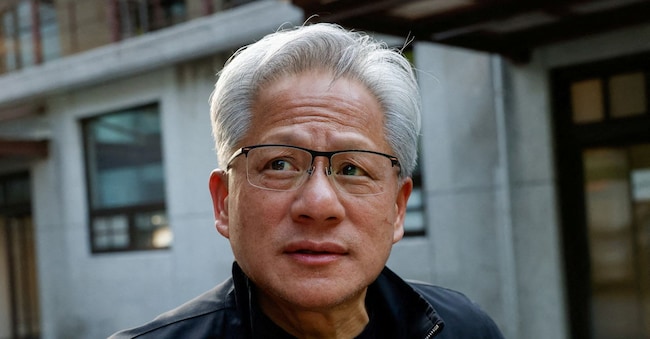
The CEO of Nvidia, Jensen Huang, has agreed to join the advisory board of a prestigious Chinese university, whose members include Apple's Tim Cook, writes the Financial Times. Huang, who accompanied US President Donald Trump on his recent visit to China (he joined the group of business leaders accompanying the tycoon at the last minute), accepted an invitation from Tsinghua University's Faculty of Economics and Management (SEM) to join its advisory board, according to two people familiar with the matter.
In addition to Cook, the 65-member board includes US high-tech leaders Elon Musk, Michael Dell, Microsoft's Satya Nadella and Meta's Mark Zuckerberg, as well as financial sector executives such as JPMorgan's Jamie Dimon, BlackRock's Larry Fink and Citigroup's Jane Fraser. The SEM board, established in 2000 by former Chinese Premier Zhu Rongji, is one of the few elite forums that still bring together US and Chinese business and academic leaders in an era of growing estrangement between the two countries.
Huang's move, which has not yet been officially announced, suggests that he wants to maintain ties with Chinese academic and corporate circles, despite the fact that Nvidia's advanced chips remain banned in the country. And this is the key through which to read what would appear to be secondary news. When, late last year, President Trump announced that Nvidia would be allowed to sell one of its most powerful chips to China, the H200, the deal seemed like a rare victory for both sides in an increasingly tense geopolitical context. It would have given a significant boost to Chinese ambitions in the field of artificial intelligence, while representing a success for the leading American chipmaker. It did not turn out that way. Since then, the issue has resolved into a stalemate that not even Trump's recent trip to China could break.
China has never given permission to buy Nvidia's chips, focusing instead on strengthening its domestic industry with the not-so-subtle goal of achieving technological self-sufficiency. In recent months, Beijing has been pushing Chinese companies to rely on domestic technologies from chipmakers such as Huawei, but Chinese competitors have not yet managed to build anything that can compete with Nvidia's best products. On the other hand, Trump's decision has thwarted years of US policy to keep those chips out of China's reach.
The standoff highlights the deep distrust between the world's technology superpowers. For decades, US and Chinese companies worked side by side to create products like the iPhone, which revolutionised entire industries. But over the past decade, the relationship has deteriorated as both governments have come to view technology as the focus of economic supremacy.

