Microprocessors

Nvidia: where its technology is found in cars – from Mercedes to Volvo, from Toyota to the Chinese manufacturers Geely, Xiaomi and BYD

From multimedia systems to autonomous driving, Nvidia processors are used by numerous car manufacturers

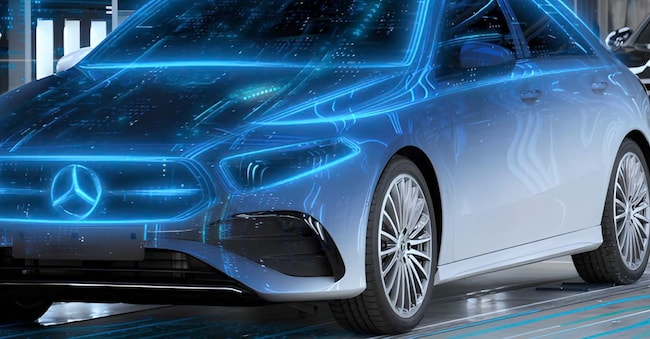
Mercedes-Benz Operating System (MB.OS)

5' min read

Translated by AI
Versione italiana

5' min read

Translated by AI
Versione italiana

From the Mercedes CLa to the S-Class, from the Volvo EX60 and EX90 to the electric cars from Xiaomi and BYD. Nvidia is featured in numerous cars, and its technologies will be used in many of the models due to be launched in the coming years. The American group, which has become one of the world’s leading players in artificial intelligence – with a history (and current expertise) in GPUs – has built up a network of partnerships that encompasses much of the automotive industry. This presence is not expected to suffer any immediate consequences following the departure of Jensen Huang, founder and chief executive for 33 years, whose resignation was announced on 12 November. Colette Kress, until now the group’s chief financial officer, has been appointed as his temporary replacement.

Nvidia: what it’s doing in the automotive sector

Nvidia’s involvement in the automotive sector dates back several years, when Tegra processors – derived from the smartphone and tablet sector – were used to manage instrument clusters and multimedia systems. Today, its activities also include active safety, driver assistance and the development of autonomous vehicles. The Drive AGX Orin and Drive AGX Thor platforms process information from cameras, radar and other sensors, enabling electronic systems to recognise vehicles, pedestrians, cyclists and obstacles. These processors provide the computing power required for driver assistance technologies to function, whilst software developed by manufacturers controls interventions on the steering, accelerator and brakes. With Drive Agx Thor, Nvidia has further increased processing power, making it possible to combine various electronic functions within a single central computer. The offering also includes Hyperion, an architecture that integrates computing components and sensors, as well as software tools dedicated to the development and verification of automated driving systems. The aim is to gradually progress to Level 4 automation, where the vehicle can handle driving without driver intervention, but only within defined conditions and operating areas.

Loading...

Mercedes-Benz: from the S-Class to autonomous driving

Mercedes-Benz is one of Nvidia’s long-standing partners. The collaboration, which began with the MBUX multimedia systems, has been extended to new electronic architectures and the development of automated driving. The agreement, which was expanded last October, covers the Hyperion, Alpamayo and Halos platforms, designed respectively for the integration of in-vehicle technologies, artificial intelligence systems for driving, and safety. Among the applications is MB.Drive Assist Pro, developed to assist the driver, including in urban traffic management. The programme also includes Level 4 systems, intended primarily for automated transport services, with the S-Class among the models identified for this development. The collaboration also covers industrial processes, through the use of digital simulations to design and verify production facilities.

Volvo and Polestar,

Volvo is one of the manufacturers that makes the most use of Nvidia technologies. The EX90 was launched with a central computer based on the Drive AGX Orin and Xavier processors, whilst the ES90 features two Orin units, capable of processing a combined total of approximately 508,000 billion operations per second. The same configuration is also being rolled out as a free update for 2025 model year EX90s. The upgrade involves replacing the central computer and increases computing power, enabling new electronic functions. The EX60 also uses Drive AGX Orin, integrated into the HuginCore architecture alongside Qualcomm technologies dedicated to in-car management and connectivity. The collaboration was expanded in October 2026 and involves the adoption of the Hyperion, Alpamayo and Halos platforms in future Volvo models. This decision has also been endorsed by Polestar, which uses Nvidia in the Polestar 3 and has introduced a central computer update for its previous models.

Toyota, Hyundai, Jaguar Land Rover and General Motors

Nvidia’s expansion also involves some of the world’s leading automotive groups. Toyota has chosen Drive AGX Orin and the DriveOS operating system to develop future driver-assistance technologies, whilst Hyundai Motor Group has expanded its collaboration with Nvidia on new electronic architectures and autonomous driving programmes for the Hyundai, Kia and Genesis brands. Jaguar Land Rover has been working with Nvidia since 2022 to develop in-car technologies for future Jaguar, Range Rover, Defender and Discovery models. The agreement covers active safety systems, driver assistance and automated parking functions. In the United States, General Motors has also chosen Nvidia for its next-generation electronic systems. The collaboration extends beyond cars to include digital simulations and the application of artificial intelligence to industrial manufacturing.

BYD, Xiaomi and other Chinese manufacturers

China is one of the key markets for Nvidia’s automotive technologies. BYD uses Drive and Orin to develop driver-assistance systems, with applications that also involve the Denza and Yangwang brands. The group has also selected Drive Thor and Hyperion for future generations of vehicles. Within the Geely group, in addition to Volvo and Polestar, Nvidia’s technologies are used by Zeekr and Lynk & Co. One example is the Lynk & Co 900, a large six-seater SUV that uses the Drive Thor processor in the configuration featuring the G-Pilot H7 driver-assistance system. Xiaomi has chosen two Drive Orin processors for the most advanced versions of the SU7 electric saloon, whilst Li Auto uses a similar configuration on models equipped with the Ad Max system. Nvidia has also been one of the main suppliers to Nio and Xpeng. The former has used four Orin processors for the Adam computer in the ET7 and other models, whilst Xpeng has adopted Orin in the G6, G9 and P7. However, both brands have begun developing their own proprietary processors: Nio has introduced Shenji, whilst Xpeng uses the Turing family in its latest cars. Other manufacturers that use or have adopted Nvidia technologies include IM Motors, a brand of the SAIC group, GAC and Great Wall Motor.

Stellantis, Nissan and Lucid are focusing on autonomous driving

Loading...

Nvidia’s activities also extend to the development of driverless vehicles. Stellantis has announced partnerships to develop platforms designed for Level 4 autonomous driving, whilst Nissan is working on the development of advanced systems, including through its agreement with Wayve. In the United States, Lucid Motors uses Nvidia technologies for driver-assistance systems and is collaborating on the development of automated vehicles. The programme also covers robotaxi services, with Uber among the operators involved in projects based on the Nvidia ecosystem. In the commercial vehicle sector, there are partnerships with Aurora, Waabi, Volvo Autonomous Solutions, Isuzu and Einride, all of which are engaged in the development of autonomous lorries and vehicles.

From Tesla to the Volkswagen Group

Before developing its own processors, Tesla also used Nvidia components. Tegra chips were used to manage multimedia systems, whilst Hardware 2 and 2.5 generations of Autopilot utilised technologies derived from the Drive PX 2 platform. Since 2019, Tesla has gradually replaced these components with in-house designed computers. The Volkswagen Group has also used Tegra processors in the past for multimedia systems and digital instrument clusters, with applications in Audi, Porsche and Lamborghini models. These solutions are less complex than the platforms currently used for automated driving, but they confirm a presence in the automotive industry that predates the widespread adoption of generative artificial intelligence by some time.

Copyright reserved ©
Loading...

Brand connect

Loading...

Newsletter

Notizie e approfondimenti sugli avvenimenti politici, economici e finanziari.

Iscriviti