
The chip sector is buzzing following Nvidia’s news and amid anticipation for Anthropic’s IPO
AI is therefore still ‘the hot topic’ in a week considered crucial for the future of sector-related shares. Technoprobe, Prysmian and St are among the top performers in Milan

Le ultime da Radiocor
Fed: verbali, dopo pausa, "quasi tutti" banchieri prevedono futuri rialzi
Saipem: conferma guidance 2026, per 2027 stima ebitda a 2 mld (RCO)
Pfas: allarme Corte conti Ue, protezione normativa europea piena di falle
(Il Sole 24 Ore Radiocor) – Nvidia’s better-than-expected figures, which have allayed concerns over Jensen Huang’s turbulent departure, and anticipation surrounding Anthropic’s pricing are driving buying in European tech stocks. AI therefore remains ‘the theme’ in a week considered crucial for the future of sector-related shares: Nvidia appears, for the time being, to have weathered the storm caused by its founder’s departure, beating revenue and profit estimates and revising its forecasts upwards (it forecasts revenue growth of 75 per cent for 2028, even with a higher base in 2027). Having passed the first test, the AI market is now turning its attention to Anthropic: according to the Wall Street Journal, the pricing of the largest IPO in history could exceed expectations and surpass $80 (the price range was $70–$78), bringing the valuation to a staggering $1,500–1,600 billion for Claude’s parent company.
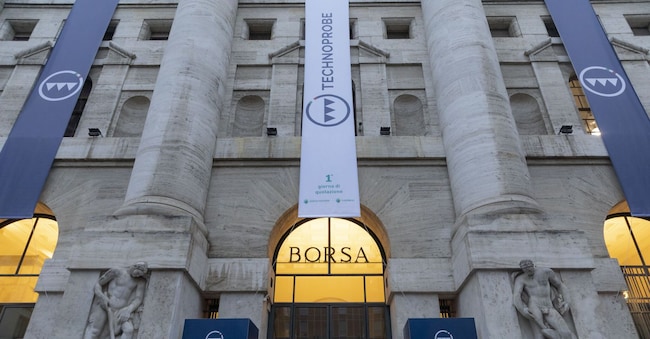
All this translates into buying in the AI-related sector in Europe, where, however, tech stocks account for a significantly smaller proportion of the market than in the United States or certain Asian markets (the most exposed being the Korean Kospi) and are therefore unable to turn the tide in a session that was otherwise lacklustre. The sector’s EuroStoxx index thus rose by 1 per cent, with Milan (FTSE MIB ) buoyed by the performance of Technoprobe (which gained almost five points), Prysmian (up by more than two points) and Stmicroelectronics (up by two and a half points).
Analysts have commented positively on the Italian market: according to Intermonte, ‘Nvidia’s results provide further confirmation of the strength of the AI investment cycle’ and the revision of targets “reinforces visibility on the AI investment plans of the major cloud providers and supports a positive spill-over effect across the entire AI data centre chain, from semiconductors to electrical infrastructure, connectivity, thermal management and testing”. Among Italian stocks exposed to this theme, Intermonte highlights STMicroelectronics (AI accounting for around 9 per cent of 2026 revenue, 15 per cent in 2027), Prysmian (around 8 per cent), Technoprobe (around 55 per cent), Lu-Ve (around 13 per cent) and Carel Industries (around 23%). Equita states that ‘following the weakness of recent days, confirmation of a very solid demand outlook (with an improved outlook for next year), and confirmation of the product roadmap (a point of focus in light of Huang’s departure) are factors supporting shares exposed to the AI investment cycle”.
According to Banca Akros, Nvidia’s results ‘confirm that the company’s short-term operational performance remains solid, despite Jensen Huang’s departure’. The upward revision of the outlook to 2028 ‘also suggests that demand linked to artificial intelligence remains robust’. Akros believes these signs are also having a positive impact on shares in the semiconductor sector, particularly Technoprobe (Buy, target price 40) and ST (Buy, target price 70). Regarding ST, analysts highlight the company’s upcoming presentations, from which it is expected that “the strong potential of the microcontroller business across various application sectors, including that of humanoid robots” will be emphasised. As for Technoprobe, Akros stated that during a series of meetings with investors held as part of the company’s roadshow in Spain, messages emerged that were in line with those communicated during the latest earnings conference call, which ‘confirm the strength of the growth drivers and the programme to expand production capacity, aimed at meeting a demand that is not currently being fully met by supply’.


