
From infrastructure to consumer PCs: Nvidia's innovations announced at Computex in Taipei

5' min read
5' min read
Computex has always been a very important stage on which to measure the state of the art of technological progress, especially in the hardware field, and the 2025 edition currently taking place in Taipei is not betraying expectations either. Many companies on the computing scene announced their innovations, and one of the most eagerly awaited protagonists was obviously Nvidia, which showcased an impressive array of novelties related (needless to say) to artificial intelligence: chips, strategic partnerships, infrastructures, software, and applications. A transversal portfolio of solutions to once again express its intention to be a strategically central player in the global AI ecosystem.
Main announcements, there are also supercomputers
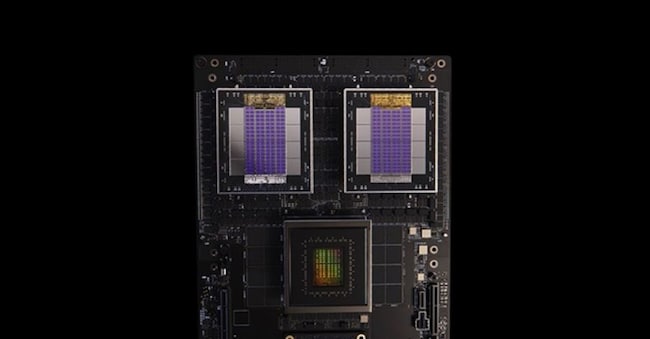
Catalysing Nvidia's presence is the so-called 'AI Factory', i.e. the next-generation data centres, those that will replace traditional machine rooms with a new infrastructure built specifically to generate intelligence, going beyond the single hardware unit to embrace a distributed, open and collaborative ecosystem. One of these factories is expected to be built in Taiwan in collaboration with Foxconn, the local government and the technological contribution of TSMC. At the heart of this infrastructure will be thousands and thousands of accelerators based on the Blackwell architecture with the task of powering advanced research and development projects, including in high-precision manufacturing. According to Nvidia, however, AI is also synonymous with connectivity and scalability, and the concrete expression of this vision is NVLink Fusion, a new technology for high-performance interconnection between chips (MediaTek and Qualcomm are the partners involved), designed to build 'semi-custom' infrastructures that are flexible and suitable for increasingly heterogeneous workloads. On the computing front, there have been a series of announcements arm in arm with Microsoft for AI PCs, solutions to bring artificial intelligence into the workstation sphere (the DGX Spark and DGX Station, already adopted by manufacturers such as Acer, Asus, Dell, HP, Lenovo and MSI), and the project (in partnership with Asus) that envisages the construction of a new supercomputer by the end of the year at the National Center for High-Performance Computing in Taiwan, powered by 1,700 Blackwell GPUs and dedicated to research on AI, climate change and quantum computing. No less impressive, at least on paper, is the launch of the so-called G-QuAT (Global Research and Development Center for Business by Quantum-AI Technology), in which the world's largest supercomputer dedicated to quantum computing operates, powered by 2,020 H100 GPUs based on Hopper architecture.
A markeplace to access GPU resources
.From enterprise-class IT systems to robotics, from data storage applications to the digital twins used for industrial simulations and computer vision, there is no field in which Nvidia is willing and able to have its say, and the project that will lead to the creation of DGX Cloud Lepton, a sort of artificial intelligence marketplace designed to connect (in the cloud) developers and GPU providers in a flexible manner, while functioning as an ultra-high performance AI computing environment, should not go unnoticed. The objective is clear: to offer millions of developers the possibility of accessing on-demand GPU resources provided by a network of cloud providers (among them well-known and emerging names such as CoreWeave, Firmus, Foxconn, Nebius, Nscale, and Yotta Data Services, with large hyperscalers such as Amazon AWS, Microsoft Azure, and Google Cloud already invited to participate), without having to invest in physical hardware and actually opening up the front to a substantial paradigm shift in access to the infrastructure that makes artificial intelligence applications work.
CEO Jensen Huang: 'AI factory for a new industrial revolution'
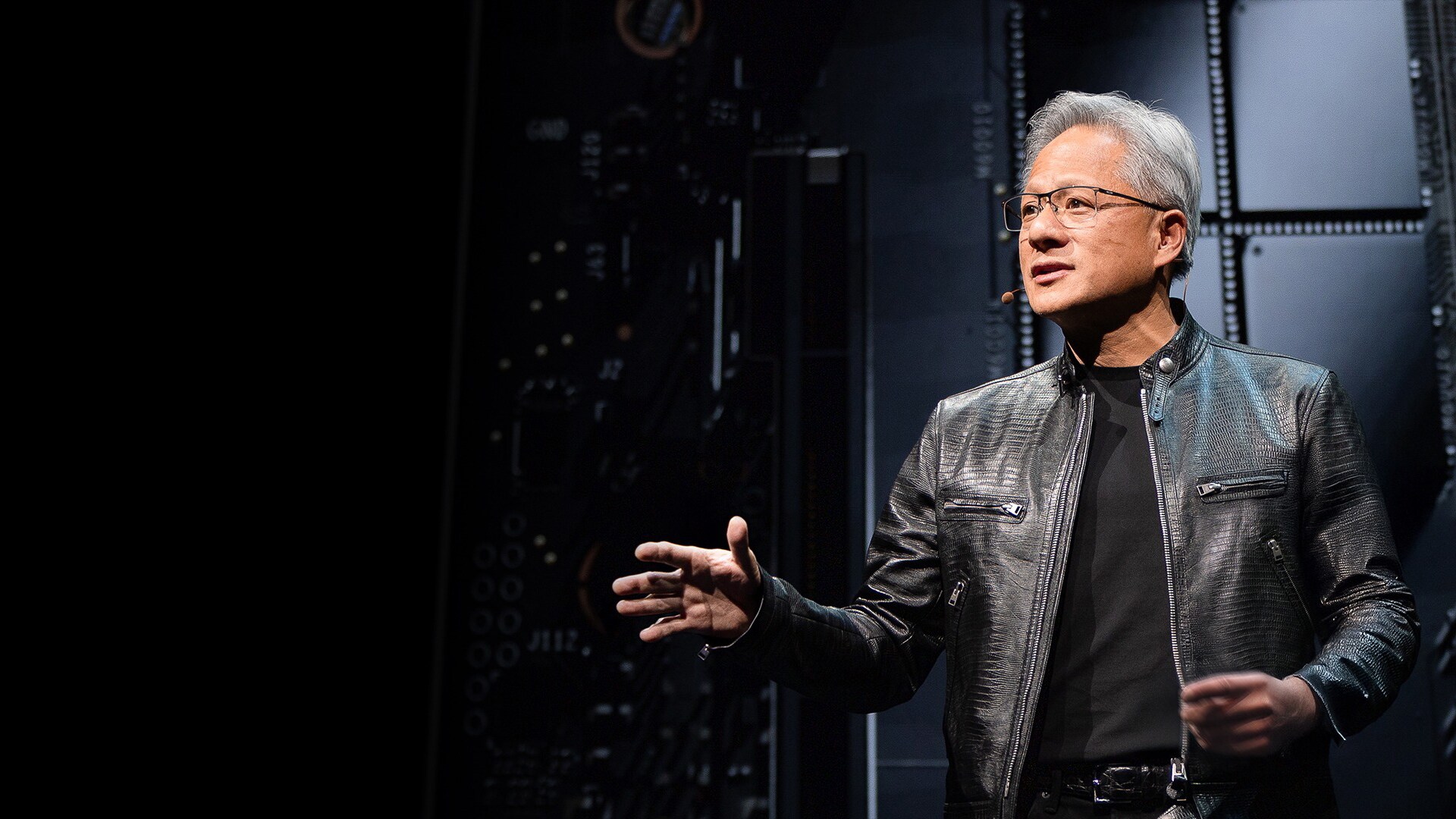
The keynote by Jensen Huang, CEO of Nvidia, is by now a not-to-be-missed event for those working in the world of technology, and this time too, the volcanic and charismatic orgini manager did not disappoint expectations. The leitmotif of his speech at Computex is what he calls the next industrial revolution, a new technological era in which AI is the transformative component. Haung's vision, in a nutshell, 'erases' the idea of the data centre as we have understood it to date and transforms it into an 'AI factory' that goes beyond being simply a collection of physical apparatuses to guarantee computational capacity, rising to the rank of an infrastructure in which power is transformed into computational intelligence, in the form of 'tokens' that will have to power AI languages and agents. In these factories, of course, Nvidia's architectures and technologies will operate, including the RTX Pro Server, a platform that brings generative artificial intelligence into the enterprise data centre in an integrated manner with respect to the existing legacy infrastructure, not replacing it in its entirety but enhancing it and ensuring it has the capabilities to handle multimodal models, workloads that rely on container systems, and nonetheless the new intelligent agents that grind data and applications in real time. To do all this, the power put into play in terms of petaflops and dedicated GPUs is definitely high, and the promise is in essence that of ultra-low latency operations for each individual user. The sketch Huang shared with the Computex audience therefore elects AI as a 'factor' that will allow for a complete rethink of the world of computing (including consumer computing) and professional computing, because it will be distributed, localised and adapted to the needs of each region and industry sector. The announcement of innovative technologies such as NVLink Fusion goes precisely in this direction, facilitating the construction of customised, modular and scalable AI factories, capable of responding more than flexibly to different workloads: Nvidia, in short, is championing the process of democratising artificial intelligence on an infrastructural scale, with the aim of making the word of agentic AI accessible on a large scale, and thus autonomous intelligences capable of observing, understanding and acting in business flows, in the same way as real 'digital robots'.
With Microsoft to bring artificial intelligence everywhere
As part of the announcements shared during Computex and Build 2025, Nvidia and Microsoft strengthened their alliance with the stated goal of bringing AI (and AI agents) to every device, to every developer and in every application vertical. How? By combining computational power at the hardware level, software tools and cloud services. In the PC area, for instance, one of the pillars of the collaboration between the two companies concerns machines equipped with RTX AI GPUs: TensorRT has been redesigned in this sense to offer just-in-time inference, optimised directly on the device, and to generate improvements not only in performance but also in efficiency, by significantly reducing the file size of AI engines and consequently making developers' work smoother. Another significant novelty is the native integration of TensorRT in Windows ML, Redmond's new framework for Windows 11: the advantage for developers, in this case, is the possibility to take advantage of a unified API and the acceleration guaranteed by Nvidia chips, and to cascade the distribution of AI models on different devices. The real transformation, as was also clear from Jensen Huang's speech, will take place (and is already taking place) in the cloud, and the integration of Nvidia Nim microservices in Microsoft Azure goes in this direction, a move that should help companies experiment, deploy and scale AI applications more quickly. AI everywhere, and for everyone: this is the shared vision of artificial intelligence by the two giants. Ranging from gaming computers to research centres exploring the new frontiers of science

