
Mandatory work on the balcony above if there is mould downstairs
The owner of the lower floor contributes part of the costs; the condominium is exempt if the balcony has no special decoration

2' min read
Key points
2' min read
The owner of the flat above him is obliged to carry out waterproofing work on the balcony if the neighbour living below him reports the presence of mould and condensation. This is what the Cassazione specified in its order 23069/2025 published on 11 August.
The obligation to perform work
.Convicted in the first and second instance, the family member of the flat above had appealed to the Supreme Court, contesting the failure to provide for the assumption of expenses also at the expense of the condominium, which the court-appointed expert had identified as being responsible for the situation, albeit to the reduced extent of 25%. The appeal was dismissed as out of time, but the ruling is interesting in other respects, i.e. with regard to the work to be carried out.
The division of costs
.The judges of legitimacy state that the application of Article 1125 of the Civil Code is correct, according to which "theexpenses for the maintenance and reconstruction of ceilings, vaults and floors are borne inequal parts by the owners of the two floors above each other, the owner of the upper floor being responsible for covering the floor and the owner of the lower floor for plastering, painting and decorating the ceiling".
In identifying theresponsibility, due account must be taken of 'the correspondence between the location of mould and condensation on the ceiling of the living unit on the floor below and the floor of the balcony above'. When, as in this case, it is evident that waterproofing works could have prevented the damage, the person living on the upper floor is obliged to carry out 'works to place thermal insulation (at least 6 cm), to lay a new screed and a hermetically sealed floor'.
When the condominium is required to contribute to private balcony works
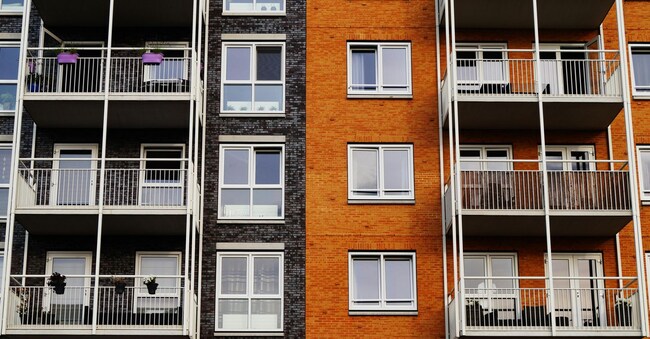
.The role of the condominium in this is not there. In fact, balconies can be considered either exclusive or common property parts, depending on their function and structure. In general, the projecting balconies, i.e. those protruding from the façade, are considered appurtenances of the flat to which they are attached, hence the property of theindividual condominium owner. However, if the balcony contributes to the architectural decorum of the building, certain parts (frontals or decorative elements) may be consideredcommon parts and the relevant maintenance costs may be shared among all the owners. This is not the case here because the balconies were devoid of identifying elements.

