
Obscure biodiversity, the invisible heritage left unexploited
A study of 5,500 sites reveals human damage even in pristine habitats. And the untapped ecological potential
3' min read
Key points
3' min read
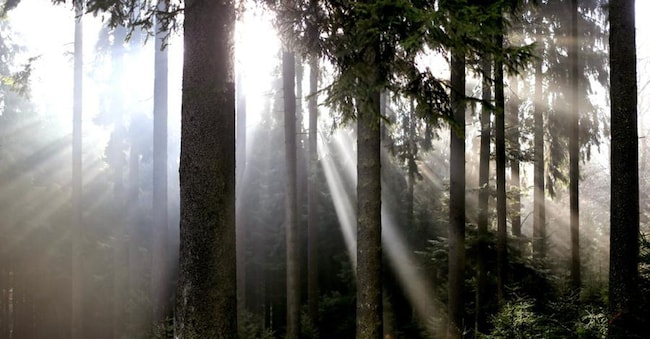
A forest may appear intact, a meadow completely lush, an ecosystem still rich and fertile. But beyond the superficial appearances can hide a silent void: that of species that could be there, and instead are not. They have not been exterminated by fire or replaced by cement, but simply cannot return. The impact of human activity spreads far beyond the visible boundaries of cities and roads, eroding the ability of ecosystems to maintain all the biological richness that can potentially be accommodated. Published in Nature in April, a mammoth scientific study coordinated by the international network DarkDivNet shows that this silent erosion of plant biodiversity affects every corner of the planet, even places considered pristine.
How does human presence affect you?
."Even in apparently intact habitats, the human presence in the surrounding areas significantly reduces the variety of plant species," explains Alessandro Petraglia, professor of botany, plant biodiversity and global climate change at the University of Parma, co-author of the study together with Michele Carbognani, Marcello Tomaselli, T'ai G. W. Forte and 250 other international experts. "This is not a blatant loss, but a slow ecological depletion, which is difficult to perceive". During the study, which lasted many years, 5,500 sites worldwide were analysed, highlighting the hidden gap between observable and ecologically possible biodiversity. This gap represents what is known as dark biodiversity: a subtracted asset that is crucial for assessing how complete an ecosystem really is. "The absolute number of species observed at a site doesn't mean much if you don't put it in relation to the ecological potential," Petraglia continues. "If a hundred species are identified where two hundred could live, it means that the variety is already halved."
A decline that worsens resilience
.The concept ofdark diversity, introduced by Estonian researchers at the University of Tartu in 2011, has proven effective in assessing global vegetation depletion. Plants, unlike other biological groups, lend themselves better to this type of analysis because they are sedentary, associated with a wide scientific literature and relatively easy to survey on a large scale. "It would be unthinkable to conduct a similar survey on butterflies or mammals, both because of the lack of data and their greater mobility," Petraglia clarifies. "We chose plants because they represent the most suitable group for this type of global ecological modelling." The study showed that in areas with a low anthropogenic footprint, an average of 35 per cent of potentially suitable species are present, while in the most disturbed regions it drops below 20 per cent. This loss is not due to habitat destruction, but to its gradual dysfunction, often invisible but no less dangerous. The disappearance of certain species, for example, can affect trophic relationships (links between living organisms), nutritional cycles and fundamental processes such as pollination or seed dispersal. The ecosystem continues to function, but with reduced efficiency and reduced capacity to respond to external changes. As they say these days, it is less resilient. It is a silent decline, which makes habitats more vulnerable to future shocks, such as prolonged droughts, fires, biological invasions and climate change. "This type of analysis also allows us to estimate, in reverse, how many species could be recovered if ecological conditions were improved," Petraglia points out. "We can imagine restoration pathways that are not only theoretical, but quantitatively grounded." Obscure species have not disappeared forever: they still exist in the region, but are cut off by ecological barriers, lack of connectivity or other complex dynamics that hinder their return. Identifying these absences makes it possible to assess the potential for regeneration and to plan more effective and targeted conservation strategies.
How do we alter natural processes?
.The future implications do not stop at the plant component alone. The Parma group is already involved in new projects that aim to extend the concept of dark biodiversity to the soil. "We have been collecting data on soil microbial biodiversity to assess the layered impact of humans on multiple ecological levels," says the professor. "It is a step towards understanding not only what we are losing, but how we are altering the fundamental processes of nature." The new branch of research aims to understand how anthropogenic pressure compromises not only the presence of species, but also their ability to contribute to the functioning of ecosystems, the stability of ecological cycles and - ultimately - the health of the planet. If the loss of biodiversity is often recounted through the most sensational extinctions, obscure biodiversity conveys a more subtle, less spectacular but equally worrying dimension. An incomplete ecosystem is poorer and less stable: the challenge goes beyond conservation, it is to rebuild ecological integrity where it is gradually being lost.

