
OECD Unlocks Global Minimum Tax Simplification Package
The 'side-by-side package' implements the agreements between the G7 and the US in June

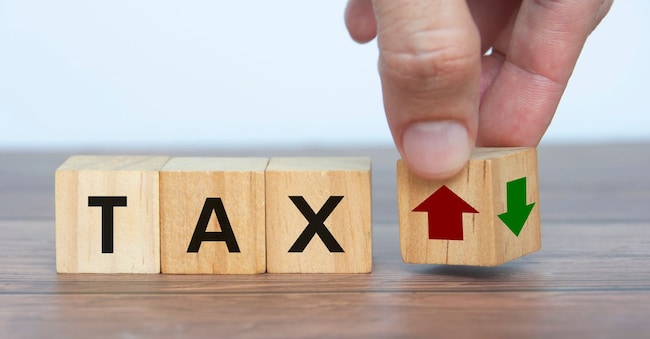
Yesterday the Inclusive Framework/Ocse published the long-awaited side-by-side package summarising the outcome of the negotiations with the US following the G7 communiqué last June. The report contains five main elements of understanding.
The first two elements
The first concerns the extension of the current T-CbCR SH with an extension for the financial year 2027 and confirmation of the minimum rate of 17%. The second concerns the provision of the new and permanent Simplified Etr Safe Harbour (S-ETR SH) which provides that the data for the calculation of the Etr of a group in a given country are no longer taken from the CbCR but from the consolidation package with some modifications. The data are therefore those used for the purpose of preparing the consolidated financial statements of the Upe. However, if the legislation of a country requires, for the purposes of the local Qdmtt, that calculations be made in accordance with local accounting standards (in Italy, Oic and Ias/Ifrs), then the relevant data for the calculation of the S-ETR SH are determined in accordance with those accounting standards, unless an exception is made for the use of those used for the purposes of the consolidated financial statements. The S-ETR SH applies for all countries from the beginning of 2027; in certain circumstances, it may apply from Year 2026.
Side-by-Side Safe Harbour
The third and most awaited new element concerns the so-called Side-by-Side Safe Harbour strongly desired by the United States of America although it can apply to any country that fulfils the conditions. The SbS SH applies when the Upe is based in a country with a tax system that:
- (i) subjects income to taxation at a rate of at least 20% and has a Qdmtt (or other equivalent minimum tax) at a rate of not less than 15%;
- (ii) routinely recognises credit for foreign taxes related to Qdmtt;
- and (iii) there is no material risk of effective taxation (of domestic and foreign income) of less than 15% having regard to tax incentives consistent with the GloBE Rules;
- (iv) subjects to accrual taxation worldwide income earned by consolidated entities;
- and (v) has domestic legislation designed to counter Beps consistent with the recommendations endorsed by the Inclusive Framework/OECD.
Under such a tax system, the SbS SH disables the application of the Iir (including by Ipe and Pope) and the Utpr, but not the Qdmtt, with respect to companies and entities, wherever located, belonging to the group. The SbS SH can be applied from the financial year 2026 on condition that the tax regime of the Upe's country of location is recognised as qualified by virtue of its inclusion in a list maintained by the Ocse.
Revision and replacement
The fourth new element concerns a revision, in a more permissive sense, of thetax incentives calculated in proportion to the costs incurred or the value of tangible assets produced by the group in the country, with an annual ceiling calculated in relation to eligible wage costs and the value of eligible tangible assets.

