A Different Kind of Holiday/1

Off-grid: a tandem adventure from Tokyo to Zurich, along the Silk Road

Fifteen months, 12,250 kilometres, taking in gruelling mountain passes and stretches of desert. A first-hand account of a journey for two that restores the balance between body, mind and the couple. An extreme test of one’s limits and a chance to let go of the need to be in control.

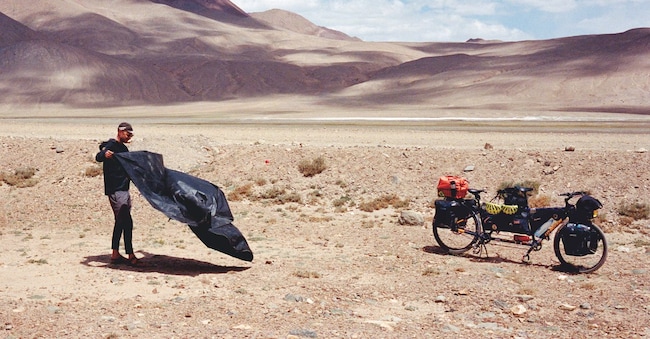
Hugo Timm, partner di Carol Sachs, fotografa brasiliana, residente in Svizzera, con il loro tandemin Tagikistan. © Carol Sachs

7' min read

Translated by AI
Versione italiana

7' min read

Translated by AI
Versione italiana

Ak-Baital, Murghab, Alichur. Like so many other travellers before me, I am drawn to the names of certain places. These distinctive words – and the numbers that go with them: nine gruelling mountain passes, the highest of which stands at a breathtaking 4,655 metres – form part of the Pamir Highway between Kyrgyzstan and Tajikistan, running along one of the ancient Silk Roads. From the moment we decided to cycle from Tokyo to Zurich on a tandem, those names and numbers have followed us like storm clouds – electrifying and menacing. We had no idea it would take 15 months and around 12,250 kilometres to reach our destination. And to think I could barely ride a bike.
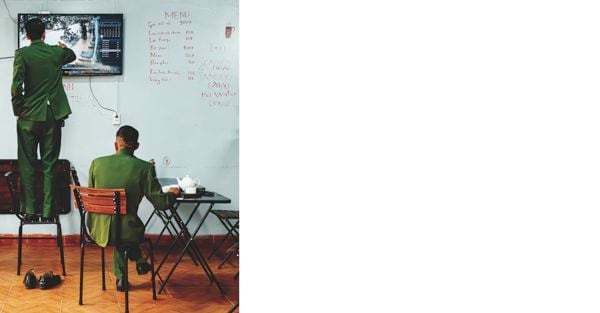
Due poliziotti in un caffè di Hà Giang, in Vietnam. © Carol Sachs

A few years earlier, during a very long journey, I had savoured the freedom of being away from everyday life. It’s exhilarating to have no obligations, no commitments and no one depending on you. I felt light, unburdened, free to simply exist in that moment. I told my partner, Hugo, that I wanted to take a sabbatical to travel. He was interested too, but he always needs a goal: the idea of wandering aimlessly didn’t appeal to him; he needed a deeper motivation and decided that cycling long distances could be just that. As for me, given that whenever I cycle I end up crashing into anything in my path – whether it’s moving or stationary – I had my doubts. But then we thought of the tandem, a rather curious-looking contraption, but above all an excellent way of balancing the differing abilities of two people who want to cycle together. During the three years it took to organise everything, the trip was a looming presence not only in our thoughts and minds, but also in our plans. We’d dreamt of cycling eastwards, as most European cyclists do – those whose blogs and reports we’d read. However, that would have meant arriving in Central Asia well into autumn, whereas we knew that the ideal season for crossing the region is summer. So we decided to cycle from east to west.
Loading...

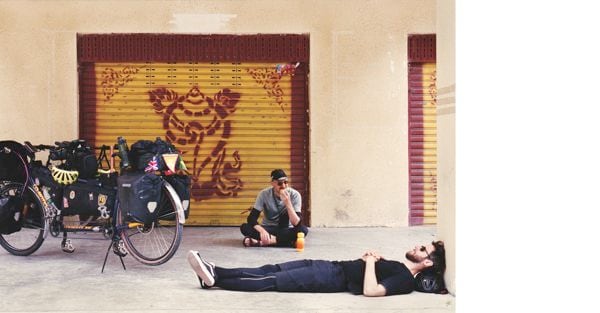
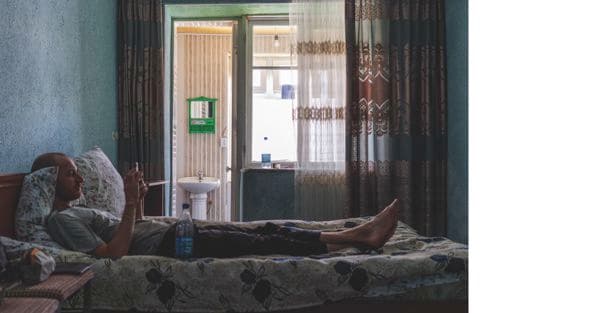
Hugo Timm in un hotel del Murghab, Tagikistan.© Carol Sachs

The start, at the height of the stifling Japanese heat, nearly destroyed us, both individually and as a couple. Our feelings couldn’t have been more different. I felt shamefully out of shape; I was afraid I’d burst, that I’d push myself beyond my limits. To cope with my anxiety, I kept eating. Whilst I was getting bigger and heavier before Hugo’s eyes, he was gradually fading from mine, trying to save money and energy, and shouldering the full weight of our load (and of me). I wanted to stop anywhere to eat anything; he, exhausted and exasperated, just wanted to keep cycling. For the first time in our nine-year relationship, we couldn’t communicate. Whatever either of us said seemed to fall on deaf ears – or not even reach its destination. Hugo did nothing but grumble. We were hot, tired, grumpy, yet inevitably stuck together. Each of us was frustrated and angry with the other, yet unable to distance ourselves. It took a nasty fall from an elevated cycle path to bring us round to our senses. We recalibrated everything as we carried on: the route, our expectations, our relationship and our bodies.
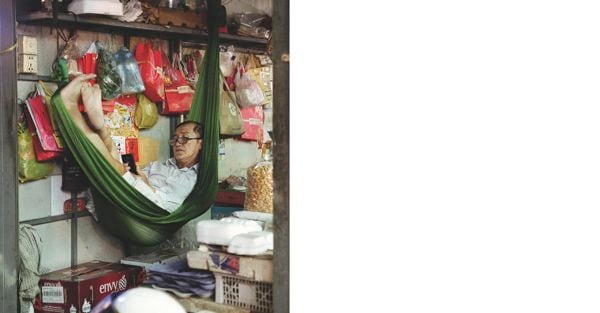
Un fruttivendolo al mercato diPhnom Penh, in Cambogia.© Carol Sachs

By the time we arrived in Central Asia a year later – having zigzagged between Japan, South Korea, China and much of South-East Asia, then back to China and Kazakhstan – we were like a well-oiled machine. We’d come to know ourselves as cycle tourists and felt confident and sure of our abilities. I was fitter and more resilient; Hugo had put on a few kilos and learnt to take it easy. Whatever the situation, we managed to find a compromise. The pace of the journey suited us, as did the simplicity of our days. We’d decided not to aim for total self-sufficiency, as many cyclists do, camping and cooking their own meals. We realised that we enjoyed stopping to eat and sleep in random places – places we would never have visited had it not been for our bodies reaching their limits. Our stops for the night, in fact, were dictated by how tired our legs were, the length of our lunch breaks and the time we woke up.
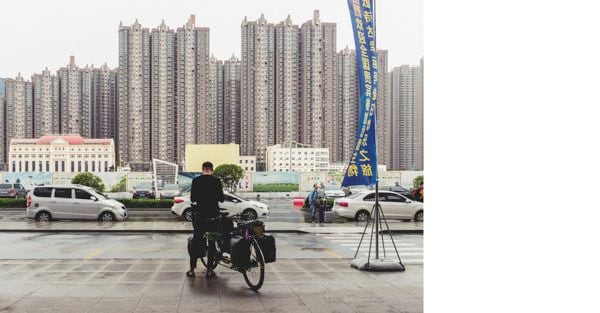
Timm a Qingdao.© Carol Sachs

Of course, we didn’t spend 15 months in a state of total carefree bliss, far removed from any worries. Some days were inevitably taken up with logistical matters relating to routes, visas, bike maintenance and our health. There were a few family dramas to deal with from afar and some work commitments. I’d decided to take on a few small jobs, even whilst on the trip, and this took time away from cycling. I remember a stormy night spent editing photos in our tent, pitched behind a lorry stopover in Kazakhstan. There were, however, moments when this way of travelling lived up to its promise of a more authentic life. There were weeks when our decisions boiled down to choosing the food least likely to cause us digestive problems, the least dilapidated accommodation, or which of our two sets of civilian clothes to wear in the evening. Sometimes there was no decision to be made, simply because we had no choice.
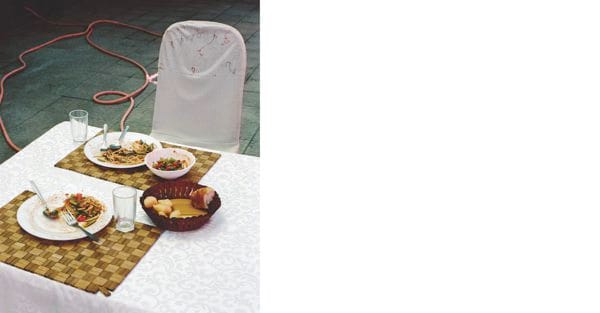
Un piatto di noodles in un ristorante sulla strada in Kirghizistan.© Carol Sachs

Then we arrived in Central Asia, where we faced a whole host of new complications. Long stretches of isolated terrain forced us to be self-sufficient. We stocked up on rice, lentils, oats and fuel for cooking; we bought Tupperware containers and Ziplock bags. For the first time, we used our UV steriliser to kill the dangerous giardia, which lurks even in the clearest glacial rivers from which we would have to drink. In the absence of a shovel small enough, I used a shoehorn to bury our rubbish whilst wild camping. And we posted some items home to lighten our load.

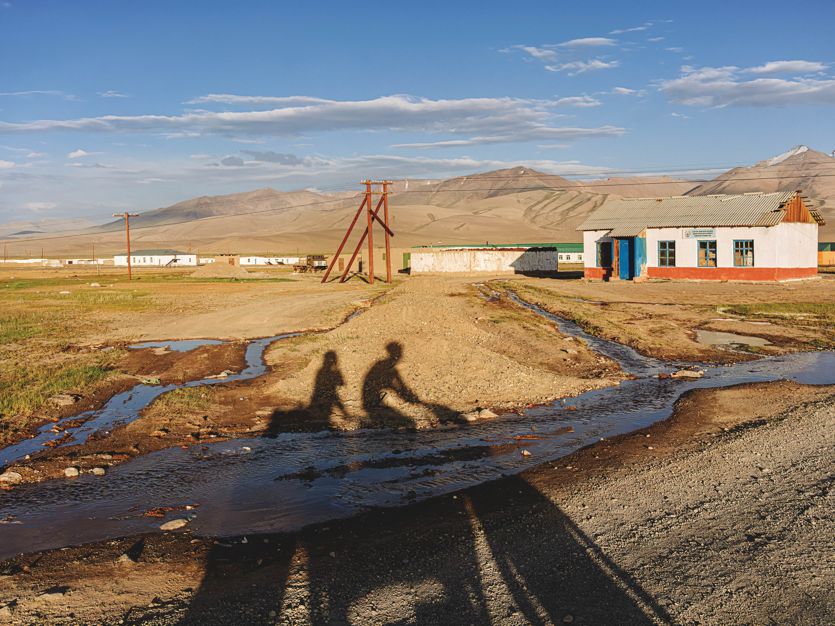
L’arrivo ad Alichur, in Tagikistan.© Carol Sachs

Right from the start, the whole adventure has been an exercise in letting go. We set off from London without knowing when – or even if – we would return. We let go of our belongings, our friends and our adopted city. Along the way, we left some things with friends in various places and sent others to our families. Not even my beloved long hair escaped this process of constant trimming. The hardest part was letting go of certainty and control. You cannot embark on a journey of this magnitude unless you are prepared to be vulnerable.

The parcel we sent from Kyrgyzstan was the last one. We thought we’d already pared things down to the bare essentials, but it turns out we could still get rid of more. I took the last few non-essential items to a post office in a plastic bag, thinking I might be able to buy a box there. The woman at the counter, stern and impassive, gave me a form to fill in – in Russian and, luckily and by chance, in French. Despite the lack of a common language, I realised they didn’t sell boxes. With tears in my eyes, I used Google Translate to explain that those items, although of little material value, meant a great deal to me emotionally. The woman seemed to soften and made a gesture as if to say, ‘Leave them to me’. This was a choice we’d faced several times before: trust people or get nothing at all. I watched her put my bag under her desk, certain it would stay there forever, and went into the next room to cry, consoling myself with a chocolate milkshake. Despite the thousands of kilometres we’d already travelled, I was terrified of the road still ahead of us. We hardly ever felt indanger, but our vulnerability was so glaringly obvious!

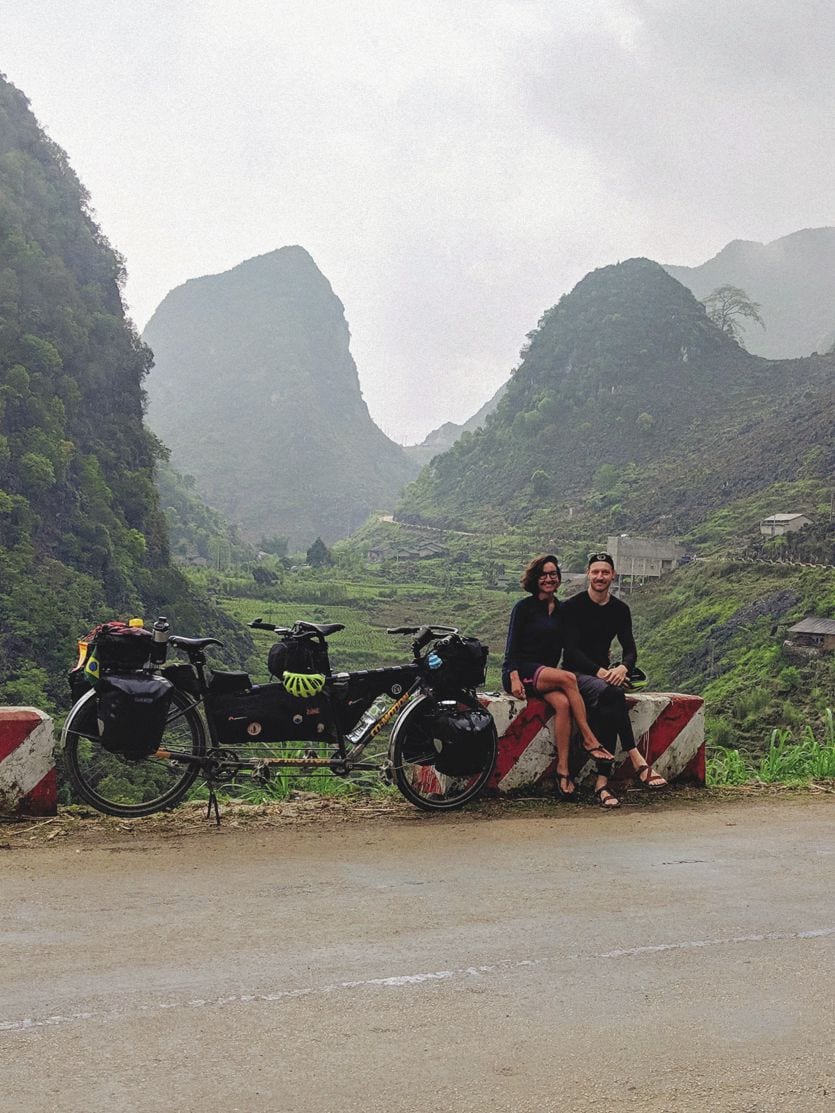
Carole Timm sul leggendario percorso dell’Hà Giang Loopnel Vietnam del Nord.© Carol Sachs

Cycling along the Pamir Highway was as magnificent and challenging as we’d expected, but not a solitary experience. Every day we met other cyclists and stopped to chat or have a bite to eat by the roadside. There were also other travellers on the road – on motorbikes, in jeeps or in huge lorries – particularly Germans. Along the route there were enough settlements to recharge, stock up on supplies and, with a bit of luck, have a bucket shower. The road surface was in a dreadful state: nothing but bumps, potholes and crumbling tarmac. It felt as though my brain was pounding against my skull, and my lungs were gasping for oxygen in the thin air. And the wind… A headwind, treacherous in places: cycling against the gusts is like swimming against the current. But the views made every effort worthwhile: their immensity was a constant source of wonder and surprise. The sight of the mountains has always filled my heart. Here, their simple shapes offer a multitude of colours and patterns: red, beige, black, sandy, rocky, snow-capped. Rivers of brilliant green meet and mingle with those of terracotta. An endless variety of shades and forms.

Timm con l’amico Edu, a Sichuan, in Cina.© Carol Sachs

In the end, it was the wind itself that gave me the day I’m most proud of on my tandem. We’d planned to stop and camp halfway between Murghab and Alichur, but it was unthinkable to pitch a tent, let alone manage to sleep in it. There was no shelter, nor any respite: the wind howled, veering between terrifying and horrifying. So we persevered for ten hours, almost without stopping, and I discovered just what my body was truly capable of. At the Green House hostel in Dushanbe, we took stock of the situation, cleaned our bikes and spent some time in the courtyard surrounded by kit, tents and sleeping bags left out to dry. They were all there for the same reason, including Davide, a blind cyclist travelling from Rome to Beijing – also on a tandem – who pulled out a moka pot and some Italian coffee blend and, cup by cup, made it for all of us, who were desperately craving a proper coffee after months of instant stuff. I remember thinking that, no matter what I did next, I’d achieved something extraordinary. I heard someone call us the ‘Pamir Highway Class of 2019’.

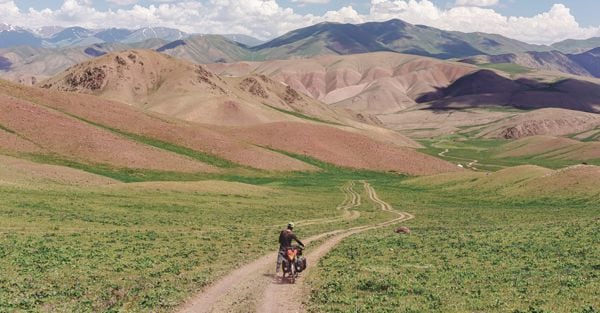
La discesa dal lago Songköl, nel Kirghizistan.© Carol Sachs

About two months later, I received a message from my brother: he’d received a parcel ‘from the Middle Ages’. The woman at the post office had not only found a box for my things, she’d wrapped it in a canvas sack, which she’d then sewn up by hand and sealed with wax, with my name and my brother’s address written in black, using a Sharpie permanent marker, directly onto the fabric.

Copyright reserved ©
Loading...
Loading...

Newsletter

Notizie e approfondimenti sugli avvenimenti politici, economici e finanziari.

Iscriviti