
Offshore wind: the new renewables challenge
The construction of parks on water is an established reality in several countries: by 2024, global installed capacity will rise to 100 Gw

4' min read
Key points
4' min read
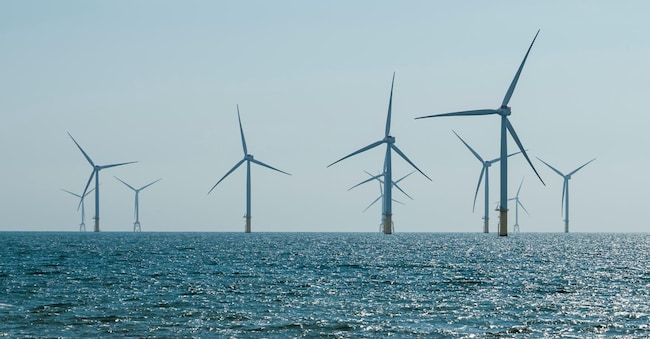
The energy transition has driven the growth of renewable energies worldwide, advancing, both in terms of manufacturability and cost reduction, the various technologies with photovoltaics and wind power leading the way. In recent years, the search for new solutions that increase capacity and decrease land use has stimulated the development of offshore wind power.
Installed power
.The construction of wind farms at sea instead of on land is, however, not a recent phenomenon, as the first ones date back to the 1990s in Denmark, but only in recent years has there been a strong acceleration. Today they are an established reality in several countries, with a global installed capacity of around 74 Gw in 2023 and a forecast of almost 100 Gw by the end of 2024 (source: IEA).
Although it covers only 7.3% of the world's wind power, the growth of offshore has been sustained in recent times. In Europe, development has been driven by countries with greater windiness, which allows for the economic viability of investments, and shallow sea beds that facilitate the installation of plants. The countries with the most capacity in the first half of 2024 are the United Kingdom with 14.8 Gw, Germany with 8.9, the Netherlands with 4.7 Gw, and Denmark and Belgium with 2.7 and 2.3 Gw respectively (source: Irex on Windeurope data).
More recently, however, growth has slowed down: soaring material costs, complexity of projects and connections, rising capital costs, combined with very low prices at some auctions, have caused several projects to be revised or postponed.
Financial difficulties of some players and technology providers also led to the cancellation of some initiatives.

