
Offshore wind power: Mase cuts funding, with the ports of Taranto and Augusta bearing the brunt
Offshore wind power: Mase cuts funding, with the ports of Taranto and Augusta bearing the brunt

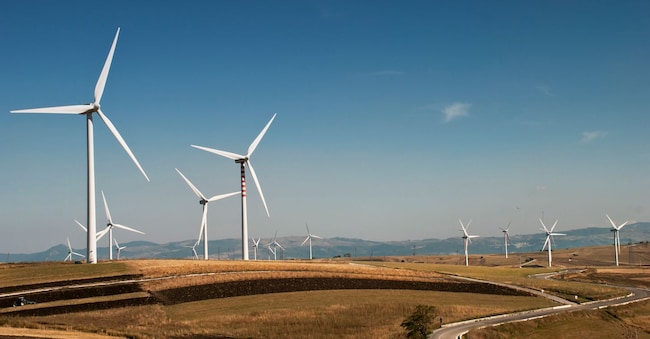
From 78 million to just over 38. The Ministry of the Environment is cutting the funds earmarked for investment in offshore wind power for ports, and the two ports identified as national hubs for this type of activity – Taranto and Augusta – are bearing the brunt of the cuts. The former’s allocation has been cut from 28.5 million euros to 13.94 million, whilst the latter’s has been reduced from 49.8 million to 24.359 million.
The cut was communicated in recent days to the Port Authorities of the Ionian Sea and the Eastern Sicilian Sea and to the private office of the Minister for the Environment, Gilberto Pichetto Fratin, by the Directorate-General for Energy Sources and Licences (Department of Energy) in a memorandum from the Director-General, Marilena Barbaro.
Mase: across-the-board cuts to expenditure categories
“Following across-the-board cuts to this ministry’s expenditure headings,” writes Barbaro, “it has been necessary to scale back the resources initially available for infrastructure projects aimed at developing the offshore sector, which totalled over 78 million euros”. And now, adds Barbaro, “in order to commit these remaining resources at short notice”, the Port Authorities of the Ionian Sea and the Eastern Sicilian Sea are invited “to confirm their acceptance of the reallocation of resources at the earliest opportunity, providing details of the infrastructure projects – already included in their applications – which the Authorities believe they can finance with the specified resources and which are, in any case, consistent with the objectives of the legislation”. It now remains to be seen whether the cut announced by Mase is a temporary one and whether further resources may subsequently be made available to compensate for it.
Taranto’s expectations for the post-Ilva era
Taranto, in particular, had placed great emphasis on the potential to invest in offshore wind power – creating business opportunities, a supply chain and new jobs – especially in the wake of the crisis at the former Ilva, which had also dragged the port down with it. Offshore wind power was, in fact, seen as a new opportunity to breathe new life into the port itself, which had seen a significant decline in traffic as a result of reduced steel production and the failure of the container terminal operated by the Turkish group Yilport to get off the ground.
Now this potential scenario is in danger of falling through or, at the very least, being significantly scaled back, which will also affect the projects that various companies had envisaged for Taranto. From Renexia to Vestas and finally to Nadara, the company that intends to build two large wind farms in the Adriatic Sea (Salento and Brindisi) and which has expressed its intention to make use of Taranto’s infrastructure.

