
Oil industry warning: ‘Sector at risk from new taxes’
Letter from UNEM to Prime Minister Meloni and Minister Pichetto: ‘Further tax levies would erode investment capacity’

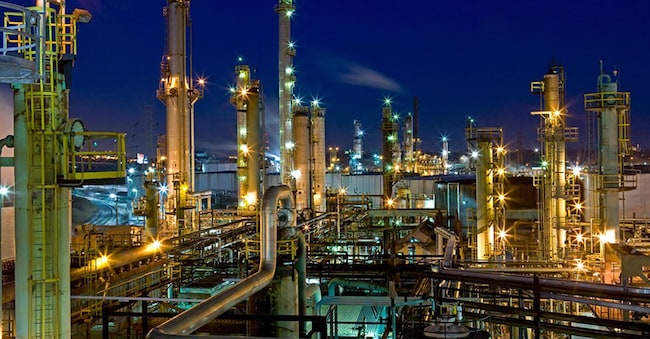
With the government set to take its next steps in the search for new funds to fund more targeted measures to tackle high fuel prices, the oil companies have taken to the fray and, in a letter sent to Prime Minister Giorgia Meloni and the Minister for the Environment and Energy Security, Gilberto Pichetto Fratin, they warn of the risk of ‘further tax levies’ on the sector (i.e. a windfall tax) which ‘would drain investment capacity and act as a further disincentive to operating in Europe, at a time when major international groups – writes Gianni Murano, president of the industry association UNEM – are already considering channelling new investments into other, more competitive parts of the world’.
The argument put forward by the association representing the leading Italian companies operating in the sectors of refining, logistics, the distribution of petroleum products, and research and development into new low-carbon solutions is as follows: the current crisis in the energy markets is not attributable to ‘a shortage of crude oil supply’, but rather to ‘an insufficient level of refining capacity at European level, estimated at several million barrels per day’ and, it is emphasised, of an energy policy which, over the last decade, has prioritised decarbonisation targets at the expense of security of supply requirements, ‘contributing to the gradual closure of refineries within the EU and making European demand increasingly dependent on imports of finished products’.
In the letter, the association goes on to point out that the Italian refining sector, like other sectors, has borne the brunt of the increase in IRAP introduced by Decree 21 of 20 February, and that industrial prices in the first seven months of the year ‘after tax, were on average 0.03 euros per litre and 0.08 euros per litre lower than the EU average for petrol and diesel’. The sector, it explains, “has therefore responded to the government’s calls for the utmost attention to be paid to fuel costs, and the contribution calculated on the total volume of petrol and diesel supplied during the same period stands at approximately one billion euros below the European average”. Not to mention that refining margins in the European Mediterranean region “have been significantly reduced in recent years, with an average gross margin from January 2021 to July 2026 of 4.6 dollars per barrel, well below the average operating costs of complex refineries (IEA data of 12 August 2026)’.
The sector, therefore, risks facing further upheaval if it is subject to additional levies that will ultimately drive investment elsewhere, with the risk of further increasing dependence on imports of refined products and triggering further losses of skilled labour and industrial expertise. “Today,” explains Murano, head of UNEM, “the sector needs, above all, a stable and predictable regulatory framework. Investments in industrial conversion require long-term horizons and cannot coexist with measures that increase uncertainty or undermine companies’ ability to invest.”
Consequently, we need to continue investing because, as Murano goes on to argue, ‘refining is cyclical; that is to say, it alternates between periods of negative margins (which are long) and periods of positive margins (which are short), and if one considers intervening during the positive periods, the result will be, as happened following the 2022 European windfall tax, that international operators will invest elsewhere, at a time when investment is needed to modernise refineries and support the transition’.


