
Oil jump and refugee asset race: towards a tense Monday in the markets
Analysts see +10% crude oil, $100 worst case scenario

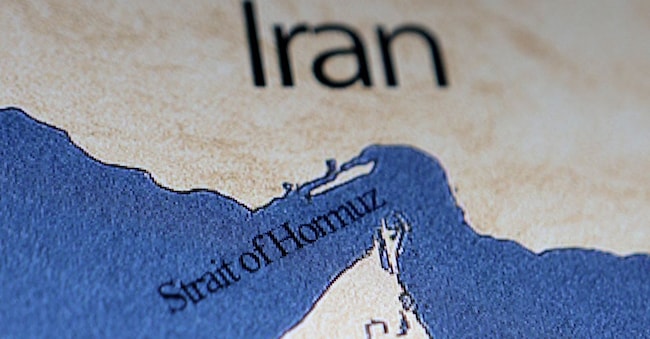
It is shaping up to be a highly tense Monday for global markets, following the joint Israeli and US attack on Iran and Tehran's subsequent retaliation. According to several traders, fears of prolonged instability in the Middle East could weigh on stock markets. At the same time, fears of supply disruptions related to the closure of the Strait of Hormuz, a key oil transport hub, will support the oil rally.
This, despite the fact that Opec+ agreed on Sunday to increase production by 206,000 barrels per day from April, a modest increase representing less than 0.2 per cent of global demand. When trading resumes tomorrow, US crude oil, Ig brokers, could jump 9% above $73 a barrel (from around $67 at Friday's close), which is the highest level since June 2025, at the time of Washington's first attacks on Theran's nuclear sites. Barclays' estimates see crude oil even spiking to between $80 and $100 a barrel in the event of significant disruptions, while for Royal Bank of Canada, 'Gulf leaders indicated that an oil price above $100 represented a clear and imminent danger'.
But crude oil will not be the only asset to be affected by international tensions. Traders also expect a run on gold and silver, already at record levels and among the safe haven assets par excellence, as well as currencies such as the Swiss franc and US Treasury bonds. According to John Briggs, head of US rates strategy at Natixis, investors' strategy will be 'first to shelter, then to ask questions'. 'The scale of the Iranian attacks and retaliation is greater than the market expected,' the analyst explains. In addition, high global equity valuations also make it easier to reduce risk positions in equities, according to Ed Al-Hussainy of Columbia Threadneedle Investments. Markets are already in turmoil due to the change in US tariffs policy, the upheaval caused by Ai and and private credit tensions. 'The extent of the risk reduction, however,' Al-Hussainy says, 'is difficult to predict. Certainly an important game will be played on the duration of traffic disruptions in the Strait of Hormuz. If shipping' recovers in short order, 'equities can weather the crisis,' says Dave Mazza of Roundhill Financial. 'If not, all bets are off. Meanwhile, however, both Maersk and Msc, the two largest shipping companies in the world, have ordered a halt to transit through the strait.

