
Oil royalties as a tool for development

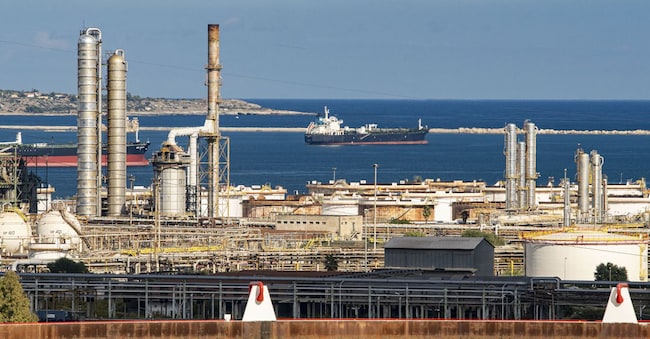
Oil royalties are the payments due from mining companies to the State and the regions for the extraction of hydrocarbons within the country. In Italia, hydrocarbon producers are required to pay royalties to the State, regions and local authorities amounting to 10 per cent of the value of onshore gas and crude oil produced. This is laid down in Law 99/2009, according to which, in addition to the 7 per cent royalties due on onshore gas and oil production, an additional 3 per cent must be added and allocated to a Fund which, in its original form, was used to reduce fuel prices in regions affected by gas and oil extraction, with effect from production in 2009. Since 2013, the Fund has been used to promote measures for economic development and social cohesion, and to introduce a social card for residents of the regions affected by extraction. The 7 per cent is divided between the State (30 per cent), ordinary-status regions (55 per cent) and local authorities (15 per cent); however, for Basilicata and the other ordinary-status regions of Southern Italia, the share due to the State is transferred in full to the relevant region, which therefore receives 85 per cent of the royalties paid.
Basilicata, as the region from which around 80 per cent of the country’s oil is extracted, receives substantial funds each year from private operators such as Eni, Shell and Total, which manage the facilities in the region. Excluding royalties collected directly by the State, between 2008 and 2024, Basilicata (taking into account payments made to both the region and the local authorities) received 86 per cent of the total payments made in Italia, amounting to over 2 billion euros. Between 1996 and mid-2025, Eni alone – in a joint venture with Shell – paid the Basilicata Region and the local authorities affected by extraction activities a total of 2.45 billion euros. Looking at more recent figures, in 2024 total royalties reached 141 million euros, whilst a lower figure was collected in 2025 due to a reduction in production. In 2025, Eni alone paid royalties totalling over €6.6 million to six of the largest municipalities affected by oil extraction activities, of which €4.239 million went to the municipality of Viggiano, €1.069 million to the municipality of Calvello, €611,000 to Grumento Nova, €458,000 to Marsico Nuovo and approximately €152,000 each to Marsicovetere and Montemurro. Taken together, these represent substantial resources which, according to the initial intentions of local administrators, were intended to help improve the living conditions of local communities, strengthen the local economic and social fabric, and alleviate some of Basilicata’s structural problems. But is it possible to take stock of the situation? A study recently published in the *Rivista Italiana di Economia Demografia e Statistica* (Italian Journal of Economics, Demography and Statistics), entitled ‘Do royalties improve local socio-economic conditions? Evidence from municipalities in Basilicata’, may be of assistance in this assessment. The research, carried out by Agata Maria Madia Crucci and Giovanni Vannella, investigates potential behavioural differences between municipalities in the province of Potenza that receive royalties and those that do not. The study reveals that around 90 per cent of total municipal royalties go to just four municipalities. These municipalities are small or very small in size and are classified as peripheral or ultra-peripheral according to the classification set out in the National Strategy for Internal Areas. They are also characterised by a significant demographic decline, with a population reduction ranging from -22.5% to -55.6% between 1951 and 2023. The researchers point out that the very small size of the beneficiary municipalities suggests that the royalties have a significant economic impact on municipal budgets. For example, in 2024 the municipality of Viggiano received 8 million euros: a figure which, when divided by a population of around 3,200 inhabitants, amounts to approximately 2,500 euros per capita per year. In its conclusions, the study highlights “a slow and partial improvement in the conditions of municipalities receiving royalties compared with those not receiving them”, with reference to the time period under consideration and the socio-economic variables observable at municipal level. This improvement is “evident primarily in terms of: migration rates, per capita social expenditure borne by the municipalities, employment rates and the local economic structure (with reference to business-related variables)”. The research also reiterates the need for further investigation. In particular, the conclusions state that “the issue of higher expenditure on social services in beneficiary municipalities and the ways in which resources derived from royalties are actually used to meet the needs of the population deserve special attention”.

