
AI: Council of Ministers approves draft legislative decree – 100 million for teacher training and significant new measures to tackle the education crisis
Valditara: “A promise kept”. Artificial Intelligence is now firmly established within educational programmes, both as a subject to be studied and as a tool for innovating teaching methods. With the implementation of the delegated legislation, action is being taken across all areas of school education, with specific measures in place for teachers, pupils and adults

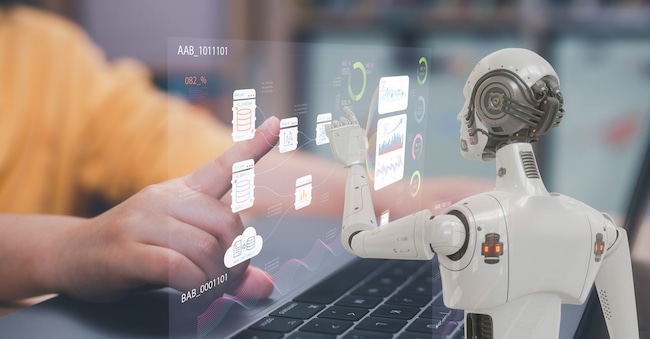
At today’s meeting, the Council of Ministers gave final approval to the legislative decree concerning the alignment of national legislation with the European provisions establishing harmonised rules on Artificial Intelligence, relating to the powers of national AI authorities and the use of AI in education, the professions, the workplace, healthcare and public administration.
School
As regards the measures of interest to the Ministry of Education and Merit, Artificial Intelligence is being permanently integrated into educational programmes, both as a subject to be studied and as a tool for innovating teaching methods. With the implementation of the delegated legislation, action is being taken across all sectors of school education, with specific measures in place for teachers, pupils and adults. “A promise kept,” said the Minister for Education, Giuseppe Valditara.
Update to the National Guidelines
There are plans to update the National Guidelines for the second cycle of education to incorporate advanced technologies and generative AI into the curriculum. AI is also being integrated into the teaching of civic education, with a focus on ethical considerations and digital citizenship.
Enhanced STEAM subjects
STEAM skills (science, technology, engineering, art and mathematics) and educational guidance are being strengthened to support pupils in making educational and career choices that are in line with technological changes.To support schools, regional technical and ethical committees will be set up, organised as a network, with responsibilities for providing pedagogical guidance, supporting educational experimentation, safeguarding fundamental rights and ensuring data protection. They will also contribute to updating school regulations to ensure that the use of AI is safe and verifiable.
Tackling the education crisis
Key new developments include measures to tackle the educational crisis linked to the misuse of social media, digital platforms and AI. Schools are to become hubs for prevention and digital wellbeing: a permanent training programme for teachers is planned, covering how systems work, the risks of error and distortion, data protection and the responsible use of AI, with a budget of 100 million euros. The aim is to strengthen the education system’s capacity to prevent risks, digital addiction, algorithmic opacity and forms of influence on minors. There are also plans to involve families, with a view to promoting the holistic wellbeing of individuals and minors in the digital space.
The measures extend to adult education, with structured programmes for digital literacy and training in AI, recognising skills already acquired and providing support for refresher courses, professional reskilling and reintegration into the labour market.
The integration of training activities dedicated to Artificial Intelligence into higher education programmes and ITS Academies is being promoted, in order to enhance their role.

Brand connect


Newsletter Scuola+
La newsletter premium dedicata al mondo della scuola con approfondimenti normativi, analisi e guide operative
Abbonati