
Chamber of Deputies approves bill on the technology-professional supply chain, it is law
Among other things, experimental courses for the second cycle of education and training courses for higher technological institutes (Its Academy) are planned. Valditara: 'An important day for the future of young people and our production system'

4' min read
4' min read
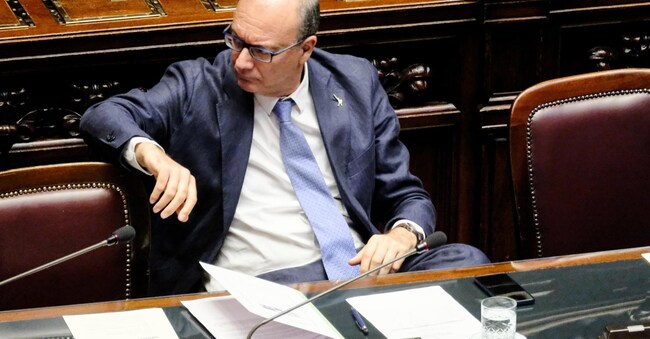
The Chamber of Deputies has definitively approved the government-initiated bill on the vocational technological training chain. There were 156 yes votes, 97 no votes and 19 abstentions.
Minister Valditara's measure, approved by the Senate on 31 January 2024 and not amended during the examination in Montecitorio, establishes the technological-professional training chain in connection with the reform of technical and professional institutes envisaged by the National Reform Programme. Among the government's stated objectives is the 'contamination' between schools, businesses and local authorities. In this sense, the chain envisages experimental courses for the second cycle of education and training courses for higher technological institutes (Its Academy). The Regions and the Regional School Offices can enter into agreements, with the participation of the Its Academy, the universities, the institutions of higher artistic, musical and choreographic education and other public and private entities, to integrate and expand the training offer of the experimental pathways. In addition, a technical structure for the promotion of the sector is created at the Ministry, and a decree of the Minister of Education is issued to set up a national monitoring committee. A fund of EUR 10 million for the year 2024 and EUR 5 million for each of the years 2025 and 2026 is established for the promotion of campuses of the technological-professional training chain.
Valditara
"This is an important day: thanks to the teamwork of the entire majority, today we are honouring a commitment made to our students and the world of work. With the new technical-professional sector, we are building a series A education channel, capable of giving a solid training to our young people, according to highly innovative programmes, which will ensure quality theoretical and practical skills, also thanks to the contribution of businesses. Our goal,' says Education and Merit Minister Giuseppe Valditara, 'is an education system that, in the light of the best European experiences, gives every young person the tools to build a solid future according to their inclinations. And that at the same time allows the production system to have the necessary professional skills to be competitive. As of today, half of the companies struggle to fill the available positions, this is the reality. A dramatic mismatch between labour supply and demand. We have taken this on board. The greatest link between training and enterprise,' Valditara continues. 'It was, among other things, shared at the recent G7 Education Summit in Trieste, which met with unanimous approval. And the response that has already come from the South, with the adhesion to the experimentation of four-year technical and vocational education and training courses, confirms the will for redemption of so many realities of our South to which this reform will give a further lever for development'.
Di Stefano (Confindustria)
."The 4+2 trial recognises the educational role of businesses and this is why Confindustria has supported it from the outset. The new law outlines a regulatory framework that will make school-enterprise collaboration increasingly broader and more stable, to the benefit of students choosing technical-professional courses and of the entire Italian school system. A school that can find in companies a reliable partner for integrating teaching with the know-how of those who face global competition every day. We will accompany the experimentation in the territories and we will be at the side of the ministry and Indire to ensure that it becomes an effective innovation of the entire educational system,' said Riccardo Di Stefano, president of the Young Entrepreneurs and delegate for Education and Open Innovation of Confindustria, commenting on the approval by the Chamber of Deputies of the bill.
Critical Objections
.However, the reform does not please the opposition and some trade unions such as the Flc CGIL. "It represents the start of the privatisation of the public education system and the regionalisation of technical and professional education. An inadequate idea of school with respect to the development objectives of our country as well as to the democratic mission that constitutionally belongs to the education system," comments Gianna Fracassi, general secretary of the Flc CGIL, who adds: "It builds second-class training courses, or rather 'training courses' aimed at the most disadvantaged social classes. A segregating and selective model'. Avs deputy Angelo Bonelli is also very critical: 'The experimentation wanted by the minister was, like the similar one of the Liceo Made in Italy, a failure: only 171 technical-professional institutes out of about 3,000 joined. And it is another blow dealt to the public school and damage to the middle and working classes: they want to privatise everything'.
Summary of the main innovations
Thanks to the 4+2 model, students in the four-year pathways will be able to directly access ITS Academy courses. Alternatively, the four-year pathway confers a qualification that can be used in the world of work on a par with a five-year diploma and allows students to enrol at university.
-Campuses are established, networks that link the educational offerings of technical and professional institutes, the ITS Academy and vocational training centres.
-The quality of the students' educational pathway is guaranteed with greater interaction with the world of work and the presence of experts from companies to cover skills that are not present among the teachers.
-The study of Stem subjects, languages, laboratory teaching and Pathways for Transversal Competences and Orientation (Pcto) are strengthened.
-Institutes will be able to reserve hourly quotas to be allocated to activities linked to the territory.
R-Teacher staffing levels remain unchanged, allowing for the strengthening of the study of disciplines in the four-year period.
Brand connect


Newsletter Scuola+
La newsletter premium dedicata al mondo della scuola con approfondimenti normativi, analisi e guide operative
Abbonati