Oksana Masters, the American (and Ukrainian) rose who enchanted Milan Cortina
Daughter of Chernobyl, she is the most medal-winning US Paralympic athlete ever: 24 podiums (13 gold) between Winter and Summer Games

-U14013257610adS-1440x752@IlSole24Ore-Web.JPG?r=650x341)
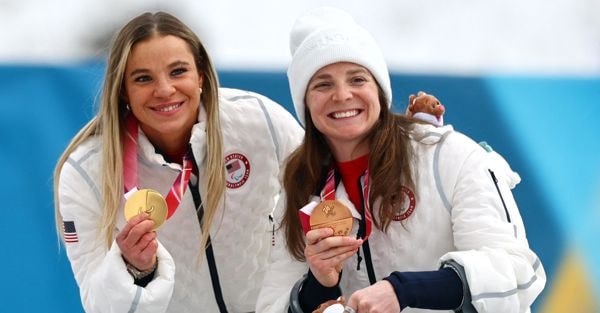
If winning one gold medal at the Paralympics is a dream, winning 13 does not even seem imaginable. Yet Oksana Masters has done it, and she has no intention of stopping there. There are 24 Paralympic medals on her palmarès so far, the last one (a bronze) in the 20 km cross-country skiing sitting in Milan Cortina. Collected - from London 2012 onwards - in 7 editions of the Games and four different disciplines: para rowing and para cycling in summer, biathlon and cross-country skiing in winter. Medals that weigh, literally: more than half a kilo the gold one in Milan Cortina (500 grams of silver plus 6 grams of the most precious metal, the organisers say), and Oksana of the most precious metal around her neck has four. "The good news is that I can't jump, so I don't think I'll break them," she jokes - interviewed by CNN - recalling how Olympic skater Alysa Liu had the lace that allows her to wear them detached. A story, that of Oksana Masters, that crosses and unites so many of today's warring places.

Childhood in a Soviet orphanage and adoption
He was born in June 1989 in Chmel'nyc'kyj, now Ukraine. Not far enough from Chernobyl, where reactor 4 of the nuclear power plant exploded three years earlier. Her mother is exposed to radiation, so Oksana develops several congenital disorders: her toes are six, her hands are five, but webbed and without thumbs. She only has one kidney, while her legs are very different lengths (the left one is 15 centimetres shorter than the other) and she lacks some bones that are indispensable for supporting the weight of her body and walking. She was abandoned by her familyin a Soviet orphanage, where she remained until she was 7 and a half years old. "It was survival, not childhood", she says of that time. Years of abuse and loneliness - she recounts seeing her best friend die, beaten to a pulp for stealing some bread, and learning not to cry - until she meets Gay Masters, an American professor and speech therapist, who came to the orphanage with the intention of adopting despite being single.
-U87871580570MPq-600x313@IlSole24Ore-Web.JPG)
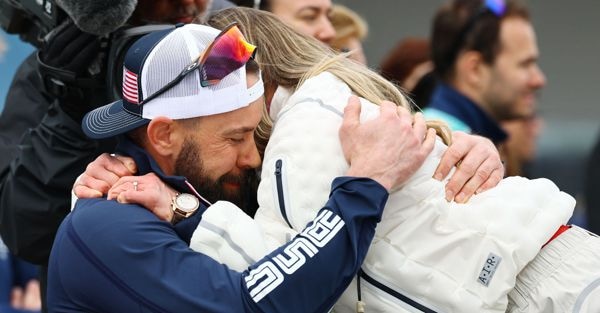
"He had to teach me what happiness means", says Oksana of her, who the other day, as a thank you, as she stepped down from the podium and put the gold medal she had grabbed in the women's sitting cross-country sprint around her neck. Growing up, malformations in her legs prevented her from walking, so she both had to have amputations above the knee before the age of 13. A painful choice, but one that allows her new mobility thanks to prostheses: 'It is often my hands that make me feel disabled, not my legs,' she confessed to US journalist Graham Bensinger a year ago. Numerous surgeries - 28 so far - have enabled her to create space between her fingers and 'turn' the first finger of each hand into a thumb.
Paralympic career
Her international Paralympic career began in 2012, at the Summer Games in London: she was bronze in the mixed doubles para rowing paired with Rob Jones, a former Marine who lost his legs in Afghanistan. Of rowing she loves "the feeling of gliding on the water and having everything under control" Oksana, but back problems prevent her from continuing to train. But she doesn't give up, she changes: she looks at winter disciplines - para biathlon and para cross-country skiing - and wins: 13 podiums at the Paralympics for her since Soychi 2014 in cross-country sitting, between those who compete sitting down (four golds at Milan Cortina 2026) and six more in the LW12 class biathlon (one gold at Milan Cortina 2026), which combines cross-country and polygon. When the snow melts, the training also changes: Oksana mounts her handbike and grinds out kilometres. Here too, second to none: there are four golds for her - two at Tokyo 2020, another two at Paris 2024 - in para cycling.
-U54546622050RKT-600x313@IlSole24Ore-Web.JPG)
Commitment on and off the slopes
Today, everyone sees her shining, Oksana - very blonde and smiling, she is the US Paralympic team's most ever medallist at a Paralympic Games - but she describes herself as 'one who is used to chasing, to having to prove herself' and continually emphasises the importance 'of having someone who believes in you'.