
Omar Galliani reinterprets the legend of the Apennine Sibyl
In Ascoli Piceno, the triptych L’eco della Sibilla was unveiled to the public at the Pinacoteca Civica

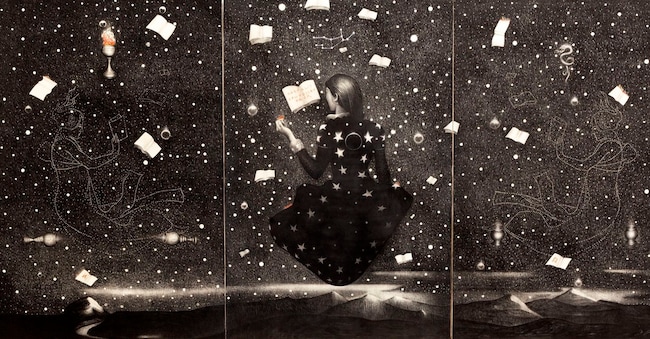
The Sibyl of the Apennines is one of the most iconic figures in the legendary heritage of the Sibillini Mountains. Medieval tradition describes her as a prophetess and sovereign who lived in a cave on Mount Sibilla, a destination for knights and wayfarers seeking knowledge and answers about the future. A figure who has spanned the centuries and continues to play a central role in the collective imagination of the Marche region.
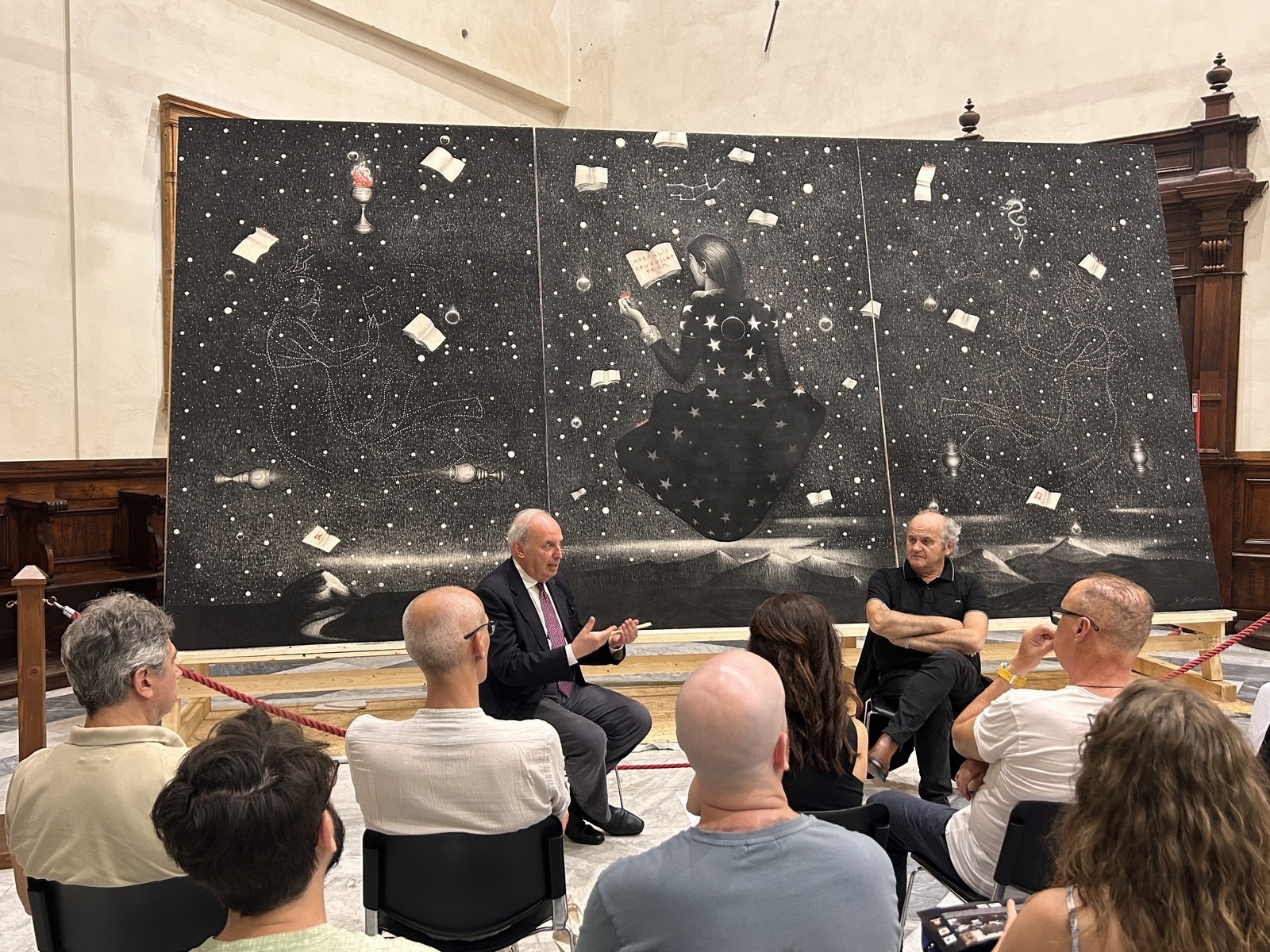
Omar Galliani’s project
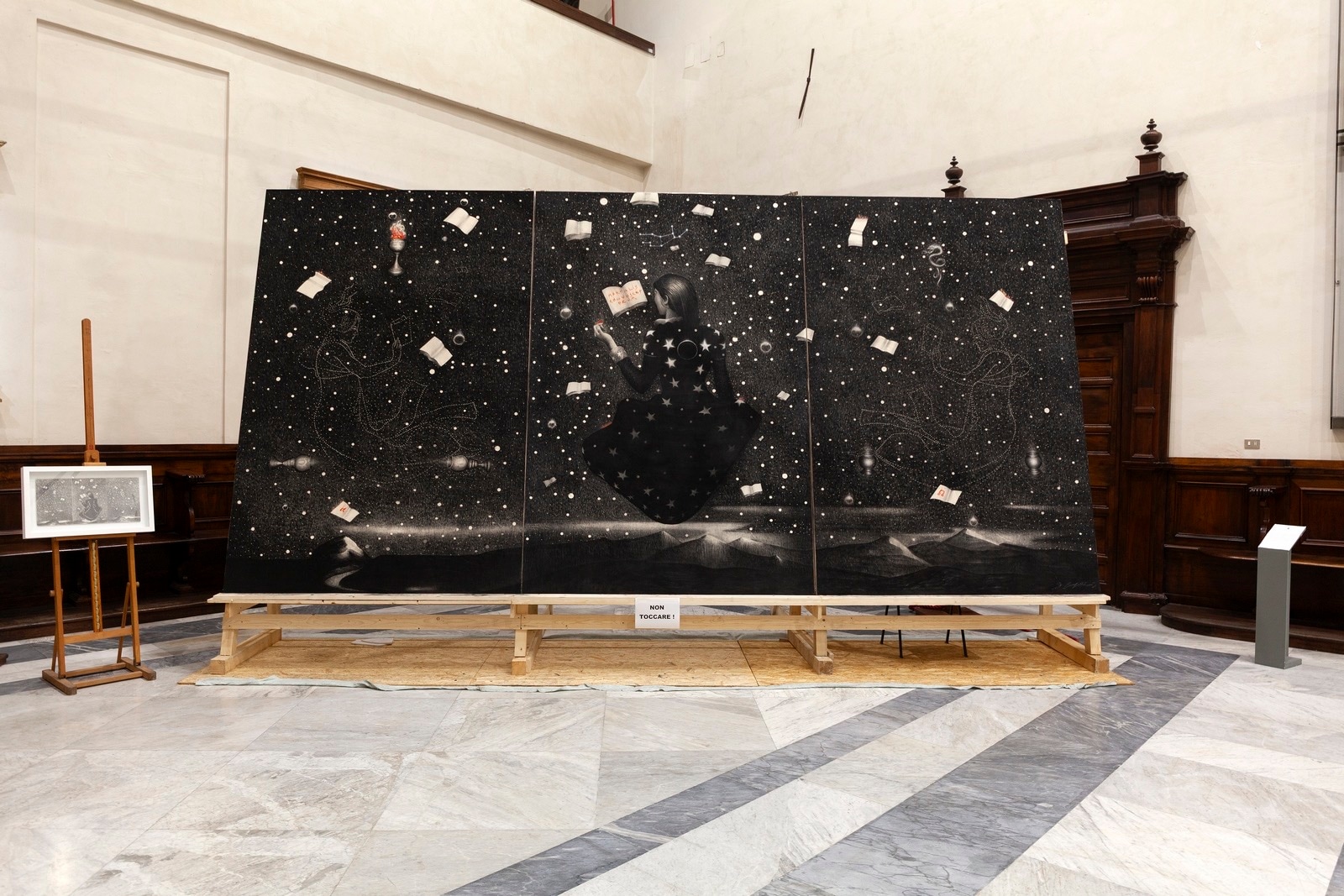
Omar Galliani dedicates the large triptych L’eco della Sibilla; the artist offers a contemporary reinterpretation of it, whilst maintaining its deep connection with history and the local area. The work, executed in black pencil on poplar panel and comprising three panels with an overall dimensions of three metres by six, was created within the Pinacoteca Civica in Ascoli Piceno, where it will remain on display throughout the summer before its permanent transfer to Palazzo Saladini Pilastri. The exhibition will also include the preparatory drawings, an integral part of the creative process. Built in the 16th century on a site previously occupied by a Benedictine nunnery, Palazzo Saladini is one of the city’s most iconic landmarks. A major urban regeneration project envisages its transformation into a cultural and social space with public, educational and community functions. The park will become a hub dedicated to cultural activities.
Working at the Pinacoteca Civica
For several months, Galliani moved his studio to the Sala della Vittoria at the Pinacoteca Civica in Ascoli Piceno, working within the museum’s premises and under the gaze of visitors.
This was an unusual choice for him, given that, for the artist, the studio is the quintessential, most intimate space for research and the development of his work. In this instance, the creative process took place in direct contact with the public, in an act of great openness and generosity. The project involved over four hundred members of the public, students and art enthusiasts through meetings and masterclasses, whilst the museum took on the role of a creative workshop and a place of observation. The Pinacoteca Civica houses masterpieces by Carlo Crivelli, Guido Reni, Titian and other leading figures of the Italian artistic tradition. In this setting, rich in history and culture, Galliani developed his work during his months-long residency, in an environment steeped in beauty, with the museum’s works serving as a constant point of reference.

