On board a jewel imagining the first races of the 24 Hours of Le Mans
In a garage in Devon, a family business brings the supercharged Bentleys of the 1920s and the carmaker's historic models back to life.

5' min read
5' min read
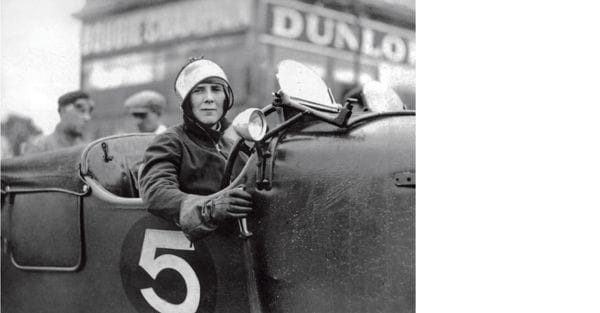
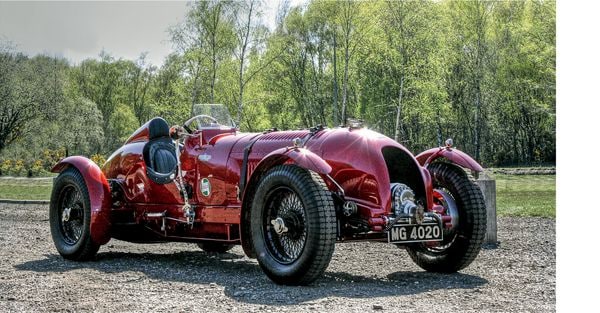
Before Formula Uno and Ferrari, Red Bull and multi-million dollar sponsorship deals, there were the Bentley Boys. In 1923, the inaugural edition of the 24 Hours of Le Mans kicked off a spectacle destined to become one of the most important races on the motor racing calendar. Soon after, manufacturers would register their teams to compete in the French countryside. In 1931, the grid would include Alfa Romeo, Mercedes-Benz, Aston Martin and Bugatti. But in the 1920s, it was Bentley that won five of the first eight races. Its early motoring successes were largely the work of a group of aristocrats, adventurers and war heroes, including Frank Clement, John Duff, Woolf Barnato and Tim Birkin. When they weren't keeping late hours in central London's Grosvenor Square, all they thought about was winning. Sir Henry Ralph Stanley Birkin, Baronet III, was the most ingenious of the bunch. In 1928, in the midst of a run of four consecutive Bentley victories, he had the idea of supercharging his 4.5-litre car. The Bentley Blower, one of the most famous Bentleys ever produced, was born. Almost a century later, it is also Petersen Engineering's best-selling car.

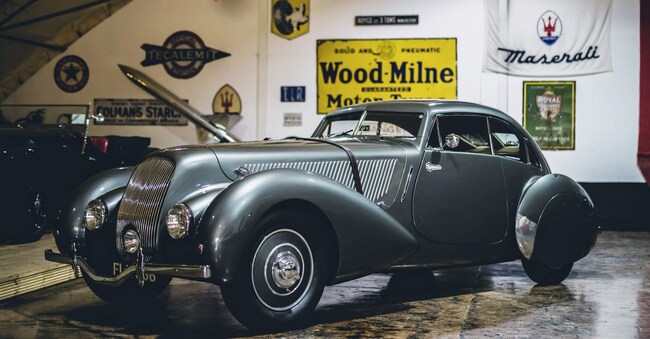
Based in a small town in Devon, Petersen has become the reference for vintage Bentley enthusiasts. Founded by Bob Petersen and his wife Sally in 1988 with a focus on coachbuilding and restoration, the company carries on the work that Birkin and W.O. Bentley did in the 1920s and 1930s. Each car is made to order: a salvaged original chassis serves as the base, everything else is the product of a modernisation process. Petersen's warehouse contains many vintage parts, but new elements are often devised and then made from scratch. Everything from Connolly leather seats to pistons, dashboards, nuts and bolts is assembled in the Devon workshops.
The company was founded almost by accident. Bob had trained as a graphic designer, but loved tinkering with tools. The first vehicle he worked on was a London double-decker bus, the next an old Bentley. "An acquaintance used to drive a vintage Bentley to the pub, but he could never get home because it always broke down," says his son Jesse. "So my father told him he could make it more reliable by improving some aspects of it. It was the early 1980s and he restored it on the spur of the moment. He fell in love with Bentleys, even though he wasn't a great connoisseur of them.
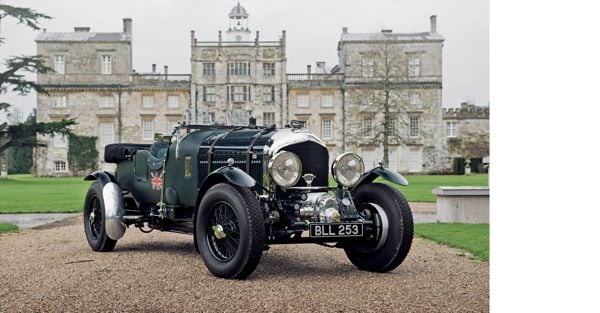
From there, things evolved rapidly and, deciding to take up the business full-time, Bob and Sally moved from High Wycombe to Devon. Most of the work is still done on site, but, having expanded, the company now has workshops and warehouses on a nearby industrial estate. Bob, 70, is still very much involved, although Jesse is taking the reins of the company. "In the beginning there was only my father," Jesse explains. "Now we have 16 people working for us full-time. Dad knows he is getting older, but for most of the activities he is still in charge. My sister and I are partners in the business and she does all the interior work herself." To date Petersen has built more than 100 cars, with production reaching a maximum of six per year. "We have had a few that were pulled out of orchards, one we salvaged from a lake in America," says Jesse. "Each car takes 18-30 months to build, with prices starting at €420k and can go up to €720k, depending on the model and customisation. Each car is built to customer specifications and almost anything is possible: we have already built a replica of the Mercedes 'Trossi' on a Bentley chassis."
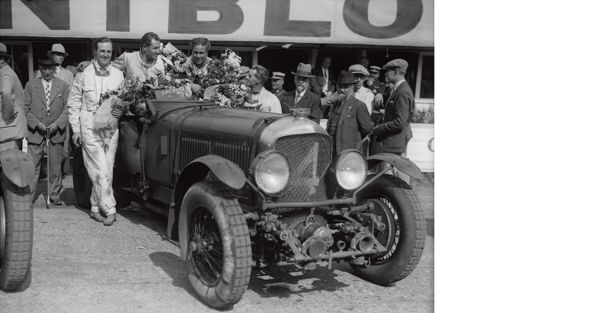
In 1930 Woolf Barnato raced against a train, crossing the whole of Europe. The Bentley he used for the challenge became known as the Blue Train. "Of that model, we made six, one of which was supercharged. Engines can be changed, and Petersen often uses newer models dating back to the 1950s, which his engineers converted to direct injection engines to make them more reliable. And then there are the cars with Meteor engines.