
On competitiveness and enhanced cooperation, the EU tries to make a breakthrough
Even von der Leyen, like Draghi, no longer excludes the use of enhanced cooperation, which is however still viewed with suspicion by many. On the common European debt proposal relaunched by Macron, Germany remains cool for now
from our correspondent Beda Romano
 Aggiungi Il Sole 24 Ore
ai preferiti su Google
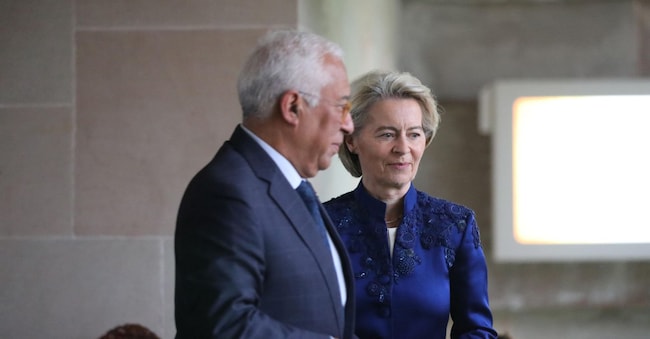
BRUSSELS - Informal summits have become the norm under the leadership of European Council President António Costa. Recently, heads of state and government have been meeting to discuss defence and transatlantic relations. In the medieval castle of Alden Biesen, in Belgian Flanders, originally inhabited by the Teutonic knights, the Twenty-Seven will devote themselves tomorrow, Thursday 12 February, to competitiveness. The topic is terribly old-fashioned. The hope is that this time the European rulers will be able to identify some reforms and commit to adopting them.
"In the current geopolitical context, strengthening the single market is more than ever an urgent strategic imperative," President Costa wrote in a letter to Heads of State and Government. The aim is still to reduce too many national barriers. For the occasion, the former Portuguese Prime Minister invited former Italian Prime Ministers Mario Draghi and Enrico Letta to participate in at least part of the discussions. The two are authors of well-known reports on the European economy.
For her part, in a letter sent to the leaders, European Commission President Ursula von der Leyen listed the most urgent reforms: the simplification of regulations, diversification in trade, the revitalisation of technological research, and the promotion of the international role of the euro. The former German minister recalled the estimates of the International Monetary Fund. The single market is still marked by barriers amounting to tariffs of 45% in goods and 110% in services.
Like Mario Draghi a few days ago, Mrs von der Leyen no longer excludes the possibility of enhanced cooperation. Actually, the track is nothing new. In their own way, the eurozone and the Schengen area are enhanced cooperations. It would be a matter of continuing along the same path. It is not easy, however. Historically, enhanced cooperations are viewed with suspicion. Many governments fear creating a two-speed Europe; others are concerned about segmenting the single market.
Six Northern European countries - Finland, Sweden, the Netherlands and the three Baltic countries - also participated in the pre-summit debate. In a document circulated last Wednesday, they rode one of their great war horses, free competition, but opened the door to state aid, provided it was targeted. The six governments then recalled that in 2025 Brussels had identified in a note the ten biggest obstacles to the completion of the single market. These included the non-recognition of professional qualifications.


