
‘The return of nuclear power in Italia: challenging but achievable times’
Francesca Mariotti, president of Enea, says: “AI will not replace engineers, but it will enable us to analyse vast amounts of data in a time frame that would previously have been unthinkable.”

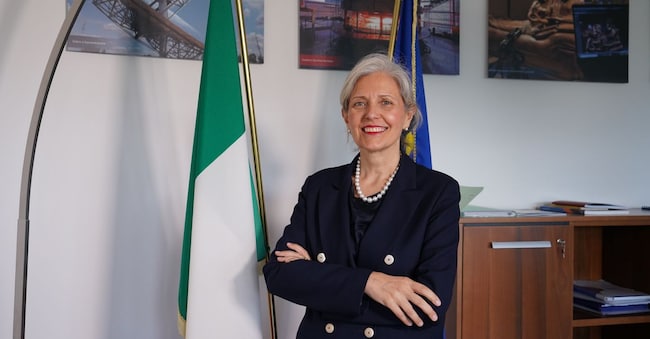
(Il Sole 24 Ore Radiocor) – The establishment ‘within 12 months of a regulatory and strategic framework to support the return of nuclear energy in Italia’ is ‘realistic’. This is the view of Francesca Mariotti, president of Enea, speaking to DigitEconomy.24, in collaboration with Digit’Ed. “The timeframe is challenging but achievable if the institutions work in a coordinated manner.” As for the use of new technologies, “AI will not replace engineers or safety systems, but it will enable the analysis of vast amounts of data in a timeframe that would have been unthinkable just a few years ago, improving simulation, forecasting and decision-support capabilities”.
Faced with the growing energy demands of data centres, Enea’s challenge is to ‘ensure that the development of AI and digitalisation is consistent with decarbonisation targets. AI algorithms can, in fact, help to reduce waste in industrial processes, enable predictive maintenance and support the development of smart solutions’.
President Mariotti, in light of Law No. 169 of 29 September 2026, the Agency is required to consolidate its expertise in both advanced fission and nuclear fusion, contributing to the drafting of the future National Programme which the Government must issue by means of legislative decrees within 12 months. Is this timeframe achievable? Do you have the necessary resources?
However ambitious it may be, we believe it is realistic to establish, within 12 months, a regulatory and strategic framework to support the return of nuclear energy in Italia, whilst balancing safety, innovation, sustainability and competitiveness. Enea possesses a unique wealth of expertise, infrastructure and professional skills, built up over more than 70 years of activity in the sector. We are therefore ready to provide the Government with the technical and scientific support required to draw up the National Programme and legislative decrees. The timeframe is challenging but achievable if the institutions work in a coordinated manner. As regards resources, the issue is primarily one of quality, and we have these at our disposal. Looking ahead, we will need to strengthen certain strategic skills, accelerate generational renewal and make the most of our partnerships. Italia possesses world-renowned scientific excellence and an industrial supply chain that is already operating successfully in other countries.
With a focus on new technologies, ENEA is actively participating in the European ASSAS project on the use of AI in the simulation of nuclear reactors. How will this technology change nuclear safety standards, and where does Italia stand in this context?

