
On tests for magistrates the Csm move. A pool of experts is also in the field
At the plenum on Wednesday, 15 October, the resolution on the novelty for future judges and prosecutors. Four lecturers will support the Council. No personality tests

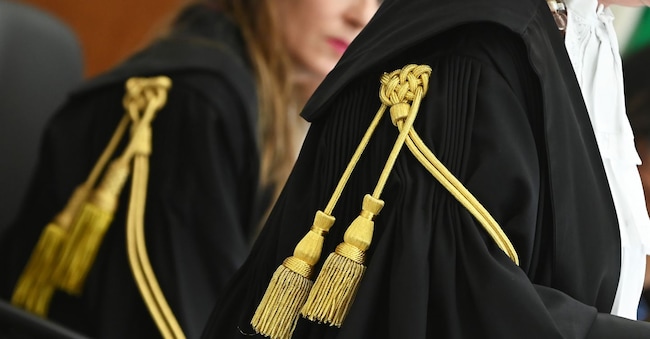
Tests for magistrates are on the move at the SCCM. With a resolution on the agenda of the plenary session of Wednesday 15 October, the Council has laid the foundations for the establishment of an autonomous model of evaluation of future magistrates. After an initial stage during which numerous hearings and a comparative study with what is envisaged in other European countries took place, the orientation that has taken shape is to "proceed to the elaboration of a test specifically designed and validated for the case in question, which takes into account the specificities of the judicial functions".
The Sixth Committee of the Council and four university professors, who have already been heard in previous hearings, will be in the field to fine-tune its physiognomy: Santo Di Nuovo, professor emeritus of general psychology at the University of Catania; Monica Molino, professor of labour psychology in Turin; Giuseppe Sartori, professor of forensic psychology in Padua; and Andrea Spoto, professor of psychometrics, also in Padua.
Upstream of the implementation intervention entrusted to the SCCM is the new discipline, with which, among the objections of the judiciary, which has seen in it a new episode of attacks by the government and the majority, is the legislative decree no. 44 of last year with which a specific assessment of the psycho-aptitude for judicial functions was introduced as part of the tests (written and oral) provided for access to the ordinary judiciary.
In particular, psycho-aptitude tests are to be held for candidates (starting next year) admitted to the oral test, once the written papers have been assessed. The tests are to be identified by the Superior Council of the Judiciary in accordance with international psychometric guidelines and standards.
Comparison with other European countries
First of all, the Council carried out a comparative study between European countries, which showed that some states have introduced an initial psychological test in the form of a test or interview with a psychologist (Croatia, Lithuania, Romania, the Netherlands, Hungary, Belgium, Luxembourg, the Czech Republic and Portugal); other countries have provided for tests only in the case of career advancement or appointment to senior positions (Germany, Finland, Sweden and Norway); while in others, like Italy, (Spain and Slovenia) the introduction of a psychological assessment at the recruitment of new judges is being discussed.


