
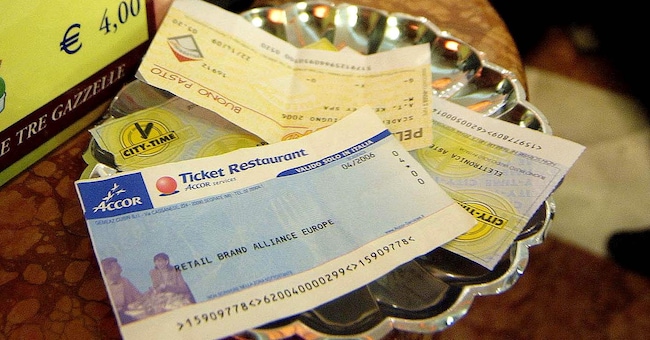
Meal vouchers under consideration for tax exemption to EUR 10
Towards the manoeuvre. On the table is the raising of the exemption of co-payments and the updating, according to the ISTAT index, of the travel allowance. Mancini (Fdi): push for welfare. The opinion of the Mef will be decisive

3' min read
3' min read
Giorgia Meloni threw the stone into the pond. In her last public statements she recalled how wages and productivity are 'two sides of the same coin' and that 'corporate welfare helps to better distribute the wealth produced'. Hence the push to focus, in view of the autumn manoeuvre, on all the instruments useful to support welfare. Not least because, according to Edenred's Welfare Observatory (analysis of 5,000 companies and 770,000 workers), in 2024 companies disbursed an average of 1,000 euros per worker in welfare, +10% compared to 2023.
Welfare, therefore, concretely supplements remuneration: added to meal vouchers, it comes to about EUR 2,700 per year for middle-class workers, equal to one or two months' net wages. Here then, in the range of measures being studied by the government's technicians and the majority, meal vouchers are peeping out again. As confirmed by Fdi senator Paola Mancini, a member of the Labour Committee of Palazzo Madama, who a couple of years ago presented a PDL to increase the value of electronic meal vouchers, raising the threshold of tax exemption from 8 to 10 euros, 'an amount,' the Fdi labour expert pointed out, 'appropriate for the consumption of a meal in the light of inflation, which has been very strong in recent years, and therefore the consequent increase in the relative cost. The measure, which modifies Article 51 of the Tuir, has passed through Parliament unscathed, and is now being examined by the Ministry of the Economy, and it is not excluded that it will find space in the next Budget law, within a range of proposals precisely to support wages and productivity (see Sole 24 Ore yesterday).
According to recent SDA Bocconi research, meal vouchers have an impact that goes beyond the individual worker, involving the economic system as a whole. The meal voucher sector, in fact, generates value for 0.75% of the national GDP, supporting 220 thousand jobs, including direct and induced employment. In 2023 alone, consumption through meal vouchers contributed EUR 419 million in VAT. Meal vouchers are now used by 3.5 million workers and there are 14 companies that issue them (as of 1 September, the new 5% ceiling on commissions, provided for by the law on competition, and which is causing discussion, is definitively in force for meal vouchers).
'Our attention to forms, including innovative ones, of corporate welfare is constant,' Senator Mancini tells us, 'because we are aware that in this way we are offering concrete and immediate answers to real needs that are very much felt in the world of work, where, moreover, we need to grow in productivity and competitiveness, and investment in human resources is the decisive step towards achieving these goals.
Again with the intention of supporting welfare, the Mancini PDL also provides for two other interventions, amending Article 51 of the Tuir. The first one provides that the reimbursement of rental costs incurred by university and Its Academy students to attend courses (if the university or Its Academy Foundation is more than 50 km away from the student's residence or can be travelled by public transport in more than 60 minutes) does not contribute to forming income.


