Europe

'On Russian gas the EU must take drastic decisions'

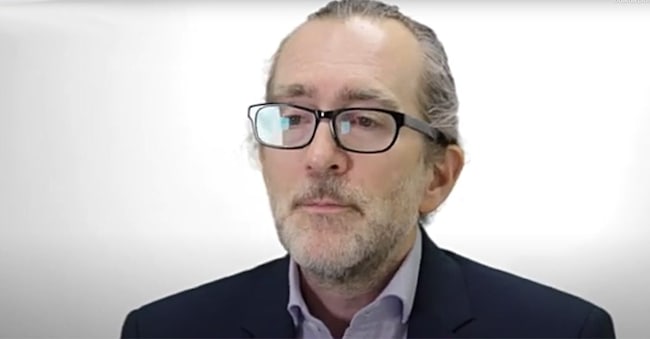
This is Tom Keatinge from the Centre for Finance and Security - Rusi

by Nicol Degli Innocenti

Tom Keatinge, fondatore e direttore del Centre for Finance and Security di Rusi

3' min read

Translated by AI
Versione italiana

3' min read

Translated by AI
Versione italiana

The EU needs to pick up the pace, stop buying Russian gas and oil altogether and start using frozen Russian assets to support Ukraine's war effort: this is the conviction of Tom Keatinge, founder and director of the Centre for Finance and Security in Rusi. The Royal United Services Institute, founded in 1831, is Britain's oldest defence and security think tank.

"Russia continues to finance the war in Ukraine with the proceeds of sales to EU countries, and this is a stain on the reputation of the EU,' he says. 'No one can think that this is right, and US President Trump is right to denounce this in no uncertain terms and force the EU to take more drastic decisions that it has so far avoided. Years of progressive sanctions have not brought results, we have to change gear'.

Loading...

The EU should use the handbook used by the US in Iran, which includes intense pressure on allies to stop energy purchases from Russia and practical help in identifying alternative suppliers, while the money destined for Moscow should be placed in an escrow account to prevent it from being used for improper purposes, such as buying weapons to attack Ukraine.

Even on the frozen Russian assets front, the steps taken in recent days at the informal summit in Copenhagen are not sufficient, according to Keatinge. The Twenty-Seven gave broad support to the EU Commission's proposal to use frozen Russian assets, but with great caution.

'Much stronger signals are needed than those that came out of the meeting in Denmark,' he says. 'The EU continues to make small progress at the edges without addressing the core issue. Fortunately, it seems that (German Chancellor) Merz is changing course and is in favour of using the seized Russian assets. France and Germany must show that they have the political will to proceed'.

The problems, both legal and technical, pointed out this week by Belgian Prime Minister Bart De Wever, are real. Belgium, where the financial company Euroclear holds some EUR 194 billion of Russian reserves, does not want to find itself embroiled in a complex legal diatribe.

'The situation is complex but there are both financial and legal engineering solutions,' Keatinge explains. 'And it is certainly not right for Belgium to take all the risks, it has to be a joint action at European level to manage all the problems that are undoubtedly there but are solvable.

According to Keatinge, ECB President Christine Lagarde can play a crucial role in removing the fears of some in the Eurozone that the use of Russian euro-denominated assets could lead to negative consequences for the euro.

'When the assets were tied up in 2022 we knew very well that they would never return to Russia,' he says. 'Yet the euro has not collapsed and interest rates have not shot up. It takes courage, because it is the right thing to do, especially when European taxpayers' money is being spent on arming Ukraine'.

Another front on which the EU must do more is in examining the role played by cryptocurrencies in circumventing sanctions. 'Russia is very agile and very adept at using every available tool, so we need to be more careful,' Keatinge explains. 'Cryptocurrency has now become a matter of national security.

Ukrainian military intelligence is working superbly, collecting every drone fragment to examine it and trace who the component suppliers are, who are always paid in crypto. 'Instead, European policymakers do not know how to enter the online world, the whole technological ecosystem that has been created,' says the expert. 'We need to identify which nodes on the blockchain are connected to illegal payments. The opportunity is there, because transactions are transparent on the blockchain'.

Financial interference is also political interference by Moscow, as seen in the elections in Moldova and Romania and as will be seen when Armenia goes to the polls next year.

The weakness of the EU reaction was also seen after the recent incursions of Russian drones that violated NATO airspace, says Keatinge: 'There should have been a vigorous response, as we have the technology to obliterate those drones. The political stasis is worrying'.

The only solution, according to the security expert, is to take decisions by qualified majority because the unanimity requirement is proving to be 'a straitjacket' that paralyses the EU's ability to act.

Copyright reserved ©
Loading...

Brand connect

Loading...

Newsletter

Notizie e approfondimenti sugli avvenimenti politici, economici e finanziari.

Iscriviti