Open Days

On Sunday, 56 historic houses and farms across Italy will open their doors to the public

Castles, villas, farmhouses and country estates across 13 Italian regions are opening their doors to visitors. The initiative is organised by the Dimore Storiche association. Mazzi: a proposal to diversify tourist flows

3' min read

Translated by AI
Versione italiana

3' min read

Translated by AI
Versione italiana

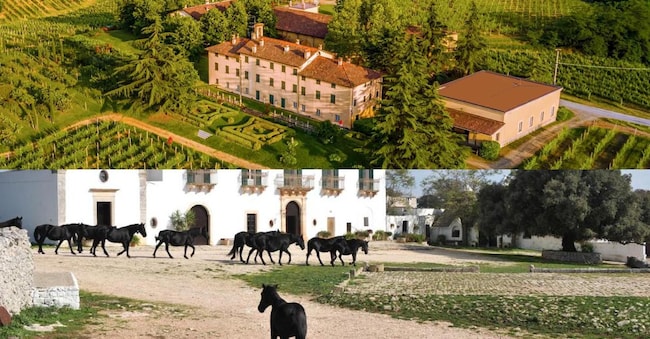
From castles to country estates, from villas to palaces, from farmhouses to small estates and farmsteads, next Sunday 56 historic residences – as well as farms – across 12 regions (Abruzzo, Basilicata, Calabria, Emilia-Romagna, Friuli-Venezia Giulia, Lazio, Lombardy, Piedmont, Apulia, Sicily, Tuscany, Umbria and Veneto) will open their doors to the public. These historic properties combine cultural significance with environmental and landscape value, as well as their role as agri-food production businesses.

The ‘Coltiviamo la Cultura’ event across 13 regions

Applications will be open for the 2026 edition of ‘Coltiviamo la Cultura’, organised by the Associazione Dimore Storiche Italiane ETS and supported by the Ministry of Agriculture, Food Sovereignty and Forestry, and held, for the first time, in collaboration with Confagricoltura, with the involvement of Confagricoltura Donna.

Loading...

Promoting Italia’s cultural and rural heritage

The initiative strengthens dialogue between organisations committed to the protection and promotion of Italia’s rural heritage and highlights the ability of historic estates to combine conservation, productive activities and innovation, thereby contributing to the evolution of agriculture and to the economic and cultural development of local communities.

The initiative was unveiled this morning at Villa Sagramoso Perez Pompei, a historic residence and farm estate in the Verona area.

Protection of the agricultural landscape and biodiversity

Historic houses are not merely custodians of art, architecture and history: for centuries, they have also served as guardians of the agricultural landscape, biodiversity and the local produce that have helped to shape the identity of these regions.

On Sunday, through open days as well as guided tours and in-depth sessions, villas, castles, farmhouses and country estates will showcase a living heritage, where conservation goes hand in hand with productive activities, hospitality and the promotion of local specialities.

Cereals, vines, fruit and vegetables, and olive oil are grown on the historic estates

The figures from the 7th Report of the Observatory on Private Cultural Heritage confirm the ‘agricultural’ role of historic residences: in 35 per cent of cases, they grow cereals, 26 per cent have vineyards, 13 per cent are involved in fruit and citrus cultivation, whilst 9 per cent produce olive oil.

66 per cent are involved in agritourism, 56 per cent in guided tastings

66 per cent of the agri-food businesses involved in the survey offer agritourism or other forms of rural accommodation, whilst 56 per cent promote, either on a regular or occasional basis, food and wine experiences open to the public, including guided tastings, visits to production sites, themed tours and events. Direct sales on the farm, reported by 37 per cent of businesses, also remain the main distribution channel.

Bolstered by these figures, historic residences are thus confirmed not only as guardians of Italy’s cultural heritage and agricultural traditions, but also as active drivers of sustainable development, tourist appeal and the promotion of ‘Made in Italy’ excellence.

Mazzi: a proposal to diversify tourist flows

“Historic homes,” said Minister Mazzi, “are marvellous places handed down to us from the past, but they can also speak to future generations because they tell the story of the land, the history of our ancestors and the identity of these places. In this regard, the role played by these sites in the tourism sector is fundamental, given that 30 per cent of Italy’s historic residences are located in municipalities with fewer than 5,000 inhabitants and that one of the Ministry of Tourism’s main objectives is to spread tourist flows, particularly international visitors, who tend to concentrate in cities of art. This is a proposal for an alternative form of tourism that allows visitors to enjoy authentic experiences in local areas and will enable these historic residences to play a leading role in the future.”

Loading...

Odescalchi (Historic Houses): passing on this heritage to the younger generation

“Through ‘Coltiviamo la Cultura’,” commented Maria Pace Odescalchi, President of the Associazione Dimore Storiche Italiane Ets, “we wish to emphasise that historic houses are not merely custodians of art and memory, but living entities, deeply rooted in their local areas and their productive activities. Cultural heritage and agricultural heritage are part of a single ecosystem, capable of generating economic, social and cultural value for communities. Supporting this link means safeguarding the identity of these regions and creating the conditions for this heritage to continue to thrive and be passed on to future generations.”

Copyright reserved ©
Loading...

Brand connect

Loading...

Newsletter

Notizie e approfondimenti sugli avvenimenti politici, economici e finanziari.

Iscriviti