
On the road in Utah's pristine wilderness
The Mormon State can be discovered by car along a route from Salt Lake City to the South East, stopping at some of its beautiful national parks and driving along the most scenic roads
4' min read
Key points
4' min read
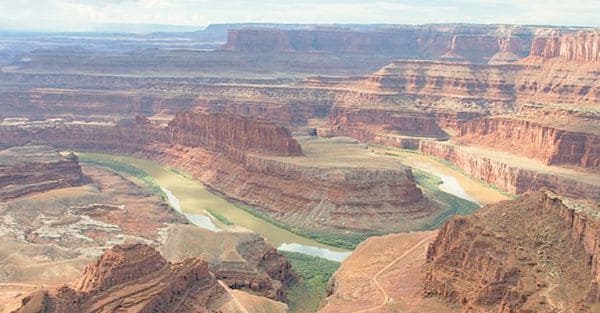
Who does not remember the final scene of one of the most iconic films in film history as Thelma &Luise? When the two protagonists take a leap into the void, the setting chosen by Ridley Scott is Dead Horse Point in Utah, a place where nature is wild, primordial and red canyon walls alternate with the immensity of the desert. The sense of freedom that inspires the film could not find a better representation. Utah's extraordinary landscapes have always inspired great stories. Like those etched in the diaries of its first explorers, of the Mormons who chose it as their new land, and in the hearts of the travellers who discovered it. It is therefore not surprising that Hollywood has repeatedly chosen its landscapes to set films there. If you are looking for an alternative trip to the American West, you can be inspired by the Utah Film Trail and America's Film Set.® , stopping off in one of its varied landscapes.
Immersion in nature
.The real treasure of a trip to Utah, however, is nature. The whole country is an outdoor playground with the Mighty Five, the spectacular five national parks, and 46 state parks, perhaps less crowded than the former. All offer easy accessibility, a variety of settings and the opportunity to enjoy a variety of activities. Utah is a mecca for mountain bikers and easy ebikes, river runners, rock climbers, hikers, off-roaders, and horseback riders. But also of a relaxing family trip where the little ones can capture with their camera the rugged red-tinged landscape on easy walking trails. It is certainly the ideal destination to organise a slow on-the-road trip by car because with those views and on those roads, driving is part of the adventure. Itineraries include driving south-east from Salt Lake to Moab and then west to Bryce Canyon Park on UT-12, taking one of the most scenic roads in the States that has become famous for its variety of views and magnificent stops in just 200km.
From Salt Lake to Moab
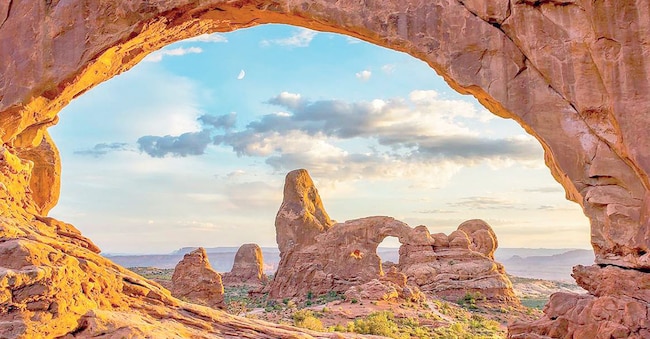
.In July 1847, the Mormon leader Brigham Young, with the famous expression 'This is the place', chose the valley of the Great Salt Lake as the area where his religious community that had fled the Missuri would settle. From there Salt Lake City was born. If Temple Square, dominated by the imposing temple, reminds us that we are in Mormon country, the embrace of the mountains around us reminds us that we are at the entrance to the great west and the country's best-known ski resorts. It is no coincidence that Salt Lake City will host the 2034 Winter Olympics. Just over four hours' drive away is Moab with its history-rich past. Here the first Native Americans carved petroglyphs in the imposing canyons of the desert, then came the fame linked to the numerous film sets (from the aforementioned Telma&Luise to 'Rio Grande', 'Indiana Jones and the Last Crusade', 'Star Trek', 'Wagon Master' and 'Geronimo'). It is a green oasis in the heart of the desert, surrounded by high red mountains, gateway to Arches National Park at Canyonlands, passing through Goblin Valley and Dead Horse Point State Park, as well as an extensive list of itineraries, hiking trails and hikes in the rich surroundings. Arches is a park with some two thousand stone arches, some of which have collapsed due to wind and rain erosion. Delicate Arch, made famous by the Utah plaque, is among the must-see scenic spots as is Devils Garden, a wonderland of red-hued rock forms emerging from the living cryptobiotic terrain. While in Canyonland, Utah's largest national park (1400 km² divided into 4 areas), there is Island in the Sky, a steep-walled mesa with breathtaking views of the surrounding area, including the rugged canyons carved by the Colorado and Green rivers. Here, the desert climate makes for a pleasant year-round trip except in the height of summer and the darkest days of winter. For accommodation, you can camp in Arches National Park, rent a room at the nearby Red Cliffs Lodge or try glamping under the stars, also because Utah leads the world in night sky preservation, with 26 sites accredited as Dark Sky International. One option is offered by Under Canvas Moab, an eco-friendly, solar-powered campground, 13 km from Arches National Park and 35 km from Canyonlands National Park.
Down Bryce Canyon
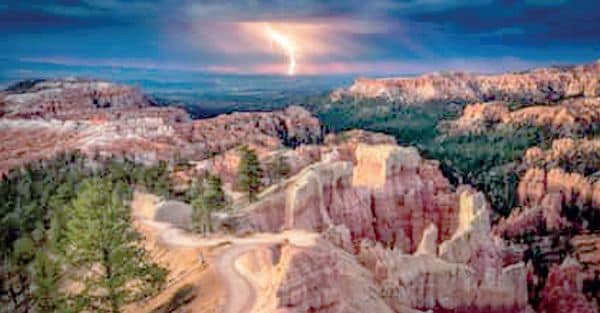
.You enter UT-12 after passing Capitol Reef National Park with its warm shades of red earth but also mountain habitats of ranches, green pastures and enchanting views. One cannot leave Utah without visiting its most iconic park, among the 59 places protected by the US state administration, which began planning how to safeguard the country's most fragile ecosystems as early as the late 1800s. Bryce Canyon's fame is due to its greatest concentration of hoodoos, uniquely shaped rock pinnacles sculpted by natural erosion phenomena. Wind and rain have carved this brittle rock over millions of years, forming canyons, spires, arches, pinnacles and gullies, creating the typical landscape of the West. One sight not to be missed is the viewpoint at Bryce Point. At dawn, as soon as the light rises, the hoodoos glow in splendid shades of orange and the spectacle repays the early rise. But even during the day the views and thrills remain extraordinary. And for a final immersion in the country's history, one only has to reach nearby Panguitch, founded in 1864 by the Mormons. According to the Utah Historical Society it is home to the highest concentration of historic houses built in red brick in the style in vogue between 1880 and 1940, also an example of how the Mormon community evolved. To visit the parks, one can obtain the Interagency Annual Pass, which allows one to visit several US national parks. (Before planning a stop, it is always a good idea to check whether a reservation is required by accessing the individual park websites for information, schedules and other details).


