Craftsmanship

One-of-a-kind pieces to furnish a living room never seen before

They are magical places to find the unexpected. Collectible design galleries are going through a special moment with a generation of curators and curators who also pay attention to the narrative and social content of objects.
by Nicoletta Spolini

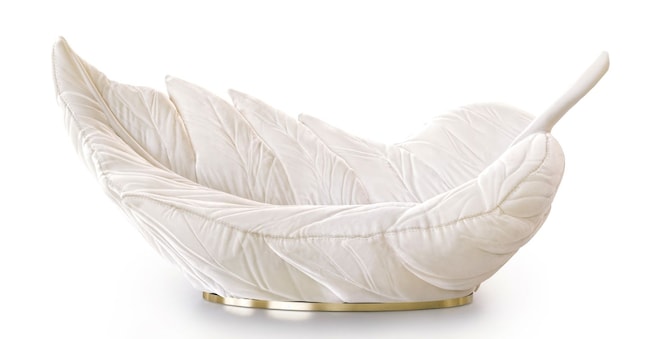
Feather Sofa di Studio Job, un day bed, a forma di piuma in cashmere lavorato a mano: il paradosso della leggerezza che sostiene.

7' min read

Translated by AI
Versione italiana

7' min read

Translated by AI
Versione italiana

In the 1920s, the Chicago Tribune called Eile en Gray's collectible design gallery in Paris - perhaps one of the first in the world with a concept so close to contemporary - "a sojourn into the never seen and the never heard before". This can be read in Gray's biography, signed by Gisella Bassanini and Giovanna Canzi for marinonibooks, with beautiful illustrations by Beppe Giacobbe. The spaces dedicated to unique pieces are magical places where one can find the unexpected; Gray exhibited his lacquer screens in particular, but also the artistic objects of his contemporaries. The handmade has always been considered the true luxury to display in one's home. But the world of collectible is now having its moment and the first symptom was Salone Raritas. Curated icons, unique objects, and outsider pieces, a section dedicated to one-of-a-kind objects. And not at the Fuorisalone, where in the past galleries often displayed their masterpieces, but at the Salone del Mobile that has just ended in Milan, alongside the more classic industrial design brands, effectively sanctioning a sort of dialogue between the design chain and high creative manufacture. This was confirmed by Nicolas Bellavance-Le-compte, co-founder of Nomad, the international event dedicated to the collectible that has its emblematic edition in St. Moritz (the last one was at Villa Beaulieu from 12 to 15 February) and will then land for the first time in the Hamptons from 25 to 28 June and in Abu Dhabi in November (if the world geopolitical situation allows). "It is a market that has grown exponentially over the last six years," he explains to HTSI. "The pandemic has certainly played its part in this: confined within the home we have begun to place more value on the home environment and the objects around us. While industrial design in general has benefited, the market for unique pieces, with fashion acting as a driving force through special projects, limited editions with a deep craftsmanship content, has also been very fortunate thanks to an economic context that has favoured consumption in the luxury area. The consequence is that a vanguard of young curators - and many curators - animated by passion, attentive not only to the commercial aspect or investment potential of each piece, but also to its narrative content, has made its way into the sector. The new gallerists do not necessarily have huge spaces, nor do they only open in big cities, but they know how to create communities everywhere through talks, workshops and special events, they often use digital potential and have been able to give light to an emerging generation of designers, while attracting a new audience of collectors. It is no coincidence that another collectible design fair, the Belgian Collectible, has just inaugurated a section dedicated to emerging designers - it is called Curated - which immediately received rave reviews. So let us begin an exploratory journey among some of the young galleries that, in Italia and elsewhere, are proposing the most innovative formats.

Loading...

CONCEPTUAL IRONY

Among the galleries chosen to inaugurate Raritas at the Salone del Mobile was one in particular that focuses on radical design. It is the brand-new Mouromtsev Design Editions, which does not yet have its own physical headquarters - it was supposed to open soon in Dubai, but given the geopolitical situation has remained digital-only for now - and presents its first collectible collection in Milan, curated by Maria Cristina Didero. "It is the objective of the founder, Efim Mouromtsev, that is interesting in the concept of this gallery: to use design as a tool to confront reality, to propose a reflection on the present," she says. "So we chose Job Smeets, a Belgian artist and designer, who is deeply conceptual. The title of the collection is Soft Parade and explores the theme of softness as a tangible expression of kindness towards others, towards the world". Also interesting is the expressive code used by Job, irony and the play on contradiction. There are six pieces that make it up: a day bed that looks like a feather, very fragile, yet capable of supporting body weight without difficulty; a carpet called Gentle Panther and, if the feline recalls ferocity, the carpet is soft and cosy; an armchair that seems to be made of fire and flames and instead is comfortable and enveloping. There is a table made of a kind of pink chewing gum that emerges from the candy dispensers that support it, a childhood memory of the designer; a coffee table made from the collars of 18th-century servants. And finally, a wheel, one of mankind's greatest inventions, which, instead of serving movement, carries light and becomes a lamp. The prices of the works range from 30,000 to 100,000 euros. "Yes, because each one is made using precious raw materials and very sophisticated craftsmanship," adds Didero, who in his curatorial projects focuses on the man, his storytelling rather than the object, on symbolic expression and manual intelligence rather than form.

A VIRTUOUS TRIANGLE

Joy Herro nella galleria milanese The Great Design Disaster. ©Alina Lefa

The gallery has been open since September 2025, although The Great Design Disaster (TGDD) started five years earlier with an innovative idea. "It all stems from a consideration of the value of collectible design," explains Joy Herro, founder together with Gregory Gatserelia of TGDD. "A piece costs and is worth a lot, but I always wondered how aware a buyer was of the craftsmanship sometimes hidden in its making." And precisely for this reason, the Lebanese designer, who has been in Italia for 14 years, imagined building a sort of virtuous triangle, to act as an intermediary between the customer and the artisan. "It is the buyer who, in an almost creative role, exposes his idea to us. We find him who realises it for him. And we follow the project through to delivery. We have cabinet-makers in Brianza (tables from 10 to 60 thousand euro), glass-blowers in Murano (consoles with glass tops, from 15 thousand euro). Recently, we also have metalworking experts in Lebanon'.

La lampada Hydra II Wall to ceiling, disegnata da Paul Matter e in mostra da The Great Design Disaster (11.677 €) a Milano. ©ANKUSH MARIA

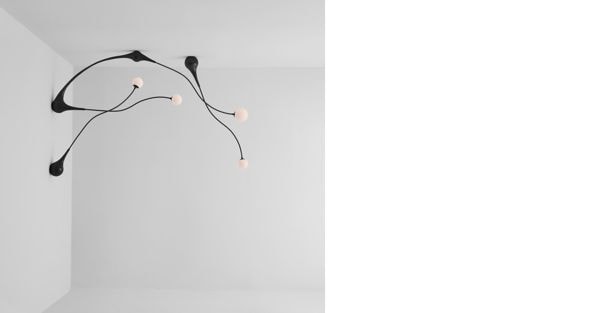
The gallery is now on Via della Moscova. "It is a somewhat irreverent space where we want to pose questions more than display collections, we want to engage the city with reflections on design and art," Joy explains. "The exhibition that just ended Connective Tension presented the work of Nikhil Paul (Paul Matter) who, born in Zambia, raised in New Delhi and trained in Milan, has developed a practice that explores light beyond function, moving between sculpture, design and experience. His work investigates light as a spatial presence, capable of activating relationships and transforming the perception of the environment (Hydra II Floor to Wall lamp, €11,677). On 15 April, on the other hand, we inaugurated the Ceramics - Second Edition exhibition in collaboration with the Eleftheria Tseliou Gallery in Athens, which challenged its artists to work with a material as unusual for them as ceramics to produce pieces halfway between art and design (500 to 100,000 euro depending on the artist)".

MODERNISM AND WABI SABI

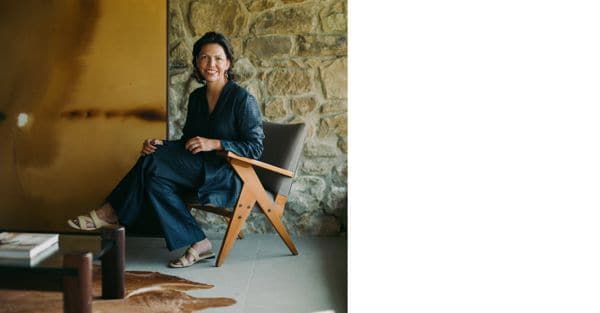
Mirian Badaró, brasiliana, founder della Sorgin Gallery. ©Tinko Czetwertynski

Mirian Badaró of Sorgin Gallery in San Sebastián in Spain was among the new talents at the last Nomad in St. Moritz. You only get to her exhibition space if you are passionate about it: it is not in the city centre, you don't pass by there by chance. It is in a historic farmhouse that is two hundred years old, a fine example of Basque vernacular architecture. "It's a special place, in the middle of nature and a few steps from the sea of the Bay of Biscay, where I like the idea of welcoming visitors as guests rather than customers," says Brazilian-born Badaró. "I would like them to have an immersive experience, to experience the gallery as a platform where they can share ideas about design, art and architecture. I moved here for love ten years ago and in 2024, after a meticulous renovation, I opened Sorgin: a dream come true."

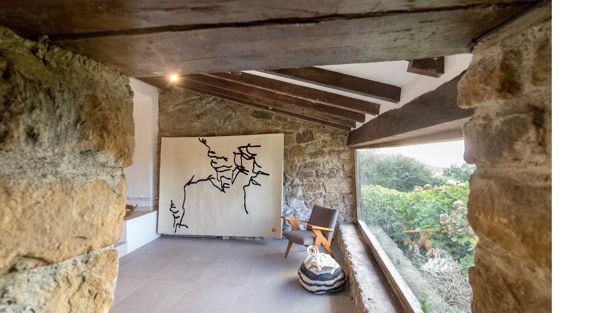
Un angolo della Sorgin Gallery a San Sebastián, nella campagna basca: sulla sinistra “Chrysta 02” di Adeline Halot(22.500 €); sulla scala, arazzo “Gravitación” (1997), di Eduardo Chillida per Nanimarquina in lana e seta (12.000 €); sedia Hedonê di Estúdio Mameluca (prezzo su richiesta). ©Erlantz Biderbost

A law graduate from a family of lawyers, but with a great passion for creativity, she had already opened a gallery between Rio de Janeiro and São Paulo, but when her Basque-born husband returned home, she followed him by moving the business here with a selection of pieces by the masters of Brazilian modernism such as Joaquim Tenreiro and José Zanine Caldas and playful creations by contemporary artists such as Adeline Halot, Joseba Lekuona and Eduardo Chillida. "Harmony for me comes from mixing different techniques, decades and languages," he explains. "I particularly like pieces with organic shapes (low table in peroba wood and glass by Giuseppe Scapinelli, €11,000), natural materials (wool vases by Inês Schertel from €10,000 to €22,000), practices reminiscent of wabi sabi, such as the sculpture Chrysta 02 by Adeline Halot, made with stainless steel wires, brass and linen yarns (€22,500)."

Nella Sorgin Gallery: tappeto in lana di Eduardo Chillida per Nanimarquina (4.015 €), sedia di José Zanine Caldas per FÁBRICA MÓVEIS ARTÍSTICOS Z(8.000 €) e cesto di lana merino Inês Schertel (1.800 €). ©DAVID VICENTE

The SEMANTICS OF THINGS

Valentina Guidi Ottobri di Vgo Associates e alle sue spalle “Magia”, scultura talismano che fa parte del “Bestiario”, da lei disegnato e prodotto dai Fratelli Colì (da 60 €). ©Monica Spezia

"The objects that surround us must all have a deep meaning". Valentina Guidi Ottobri, founder of Vgo Associates, studied Semiotics with Umberto Eco. And the discipline ended up influencing her life and work. So when she tells us about her work as a curator of art and design, she introduces the concept of the medicine house. 'It is a house that welcomes you, heals you, contains things that evoke memories and emotions'. She opened her first gallery on the Côte d'Azur, in a rustic mansion just outside Grasse, where she had moved in 2019. "It was my home and garden where buyers and enthusiasts could see the objects, born from my collaboration with artists and designers, in the full expression of their semantic content. Like, for example, the Visual Fractal by Carlo Maria Maggia, a virtuoso mirror construction with a metal frame that, in nature, reflects the surrounding landscape, or Franco Raggi's tent, an architecture that sways with the wind, elegant and fragile (from 7,000 euro)". Now Valentina has transferred the concept of dwelling/gallery to Florence, her city of origin, where she has returned to open La Cabana, her home overlooking a terrace full of succulent plants: "Each object synthesises design, art and rituality, and can be ordered from our craftsmen". A few examples: The Snake Table, a tribute to alchemy born of the partnership between Vgo and the artist Leonardo Bianchi (9,500 euros), or the talismanic sculptures that are part of the Bestiary, designed by Valentina and produced by Fratelli Colì (60 to 150 euros).

Night Dance Coffee Table di Alphie Fuzzies, prodotto da ANGELONI di Carrara e proposto da Vgo Associates (10.000 €). ©Monica Spezia

In Florence last year, Valentina opened another house-gallery that can also be rented for a stay in the city. "It is Casa Lilia, whose name is a homage to the Florentine Lily and the identity of Florence. It can also be found on Airbnb for 200 euros per night. Guests, as well as buying the objects, can book a visit that I personally lead to some of the artisan ateliers I work with'. With the two houses, the creative residencies that Valentina organises around the world and the collaborations with international designers, in fact, Vgo Associates is a collectible design project that goes beyond the gallery to become a community of cultural exchange and design research.

Copyright reserved ©
Loading...
Loading...

Newsletter

Notizie e approfondimenti sugli avvenimenti politici, economici e finanziari.

Iscriviti