
US: Campaign of raids on suspected drug traffickers continues
The US military has stated that it struck a vessel ‘operated by designated terrorist organisations’ – which it did not identify – adding two more victims to the list of over 200 people killed in such attacks since September.

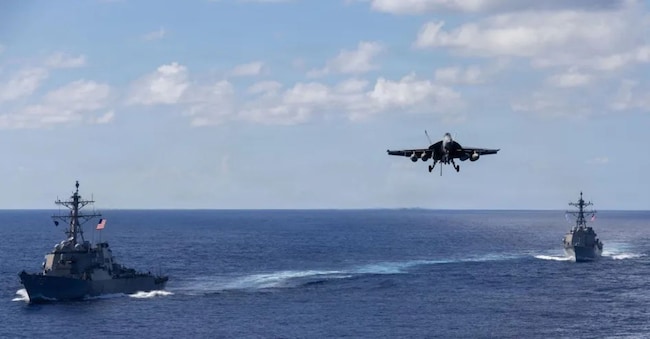
On Thursday, the United States once again attacked a vessel accused of drug smuggling that was sailing in the eastern Pacific Ocean, killing two people. The operation is part of an ongoing campaign against alleged drug traffickers in Latin America. The military has not provided any evidence that the vessel was carrying drugs.
In a post on X, the US Southern Command stated: “Intelligence reports have confirmed that the vessel was travelling along routes known to be used for drug trafficking in the Caribbean and was involved in drug trafficking operations.” The video attached to the post shows the vessel speeding across the water before being struck and bursting into flames. Six men survived, but the Pentagon has not clarified whether the US Coast Guard managed to rescue them or the two survivors of Tuesday’s attack, which killed one person. The Operation Southern Spear , aimed at combating drug trafficking to the United States, has now recorded 65 raids on vessels in the eastern Pacific Ocean and the Caribbean Sea, resulting in a total of at least 211 casualties.
The first attack and the double tap
The Trump administration began taking military action against those it describes as ‘narcoterrorists’ over nine months ago: the first offensive against a vessel suspected of drug trafficking took place on 2 September 2025, and remains the most controversial due to the use of the ‘double tap’ method. The attack actually took place in two stages, initially killing nine people and leaving two survivors clinging to the wreckage of the now-destroyed vessel. The US military then continued the operation, killing both survivors.
At the time, President Donald Trump had claimed, without providing any evidence, that the vessel was carrying drugs, had set sail from Venezuela and was run by the gang ‘Tren de Aragua’. The White House insisted that the attack on the survivors had been carried out ‘in self-defence’, to ensure the destruction of the vessel and in accordance with the laws of armed conflict. Karoline Levitt, a White House spokesperson, attributed the order for the second attack to US Navy Admiral Frank Mitchell Bradley, who was promoted following the operation. However, some legal scholars have argued that a second attack on the survivors is to be considered illegal under any circumstances, regardless of whether or not an armed conflict exists.
Critics: ‘Extrajudicial killings’
Following this initial military operation, Democratic senators wrote a letter to the White House complaining about the lack of legitimate legal justification, emphasising that the US armed forces are not ‘authorised to hunt down alleged criminals and kill them without trial’. The attacks on the vessels continued, however: Trump claimed that, as a result, large sacks of cocaine and fentanyl were scattered all over the ocean, but neither the military nor the White House released any images to back up this claim.

