Interview

'Online searches are increasingly conversational'

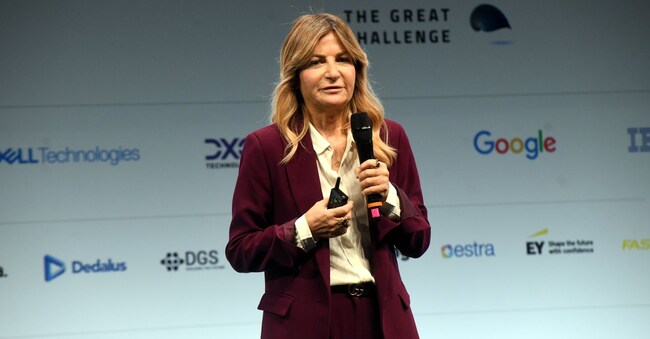
Melissa Ferretti Peretti VP and Country manager Google Italy: 'Thanks to 'tailor-made' digital advertising, seven out of ten SMEs are able to compete with big companies'

by Giampaolo Colletti and Fabio Grattagliano

(Imagoeconomica)

2' min read

2' min read

"The move from traditional advertising to personalised advertising, then to online advertising, represented a paradigm shift. From a dispersive model based on a megaphone aimed at the crowd to propose indistinct solutions, we have moved to a customised tool for consumers and businesses. This makes advertising more effective and more accessible even for small and medium-sized businesses that account for 80% of jobs in Italy'. Thus Melissa Ferretti Peretti, VP and Country Manager of Google in Italy.

The turn to more targeted advertising messages is the focus of Public First research commissioned by Google. The data show how for 71% of Italian and European SMEs online advertising enables them to compete with large companies. Meanwhile, 62% stated that digital advertising was useful for intercepting new customers, and as many as 80% said that the overall increase in company revenue could be directly attributed to the adoption of customised advertising campaigns.

Loading...

"Ads of this type accelerate economic growth, facilitate competitiveness and contribute to building a more inclusive digital landscape. After all, online advertising has democratised access to advertising, allowing you to connect more effectively with your audience,' Ferretti Peretti points out.

How is the 'data economy' evolving between access to information and privacy protection?

We as consumers on average interact with about 130 touch points on mobile every day. To find what we are looking for, we have access to a monstrous amount of information. So online advertising is a way to untangle ourselves within this maze. Obviously the privacy is felt by people. For us, it is addressed by giving more options for personalised experiences.

Where are we with the migration towards the use of first-party data?

We are working with companies so that they learn to make better use of their proprietary data. We are providing tools based on artificial intelligence.

Aren't you afraid that the elusive Generation Z will choose other platforms as search engines?

We often say at Google that the consumer is increasingly unpredictable. It happens at times of great transformation: I think of the adoption of mobile or the advent of artificial intelligence. Search is synonymous with Google because there is no other platform that is able to understand queries so well. But what we are recording is 15% of completely new daily searches, despite the fact that Google has existed for twenty-five years.

So how are the searches evolving?

They are becoming much more complex, longer and more conversational. And we are seeing this even more in the younger age groups.

It seems that the compasses of yesteryear can no longer guide us.

Today, 80% of online purchase paths involve many touch points. This is referred to as the messy middle, an infinite line between online and offline, making it virtually impossible to predict choices unless one has effective tools. To overcome this random approach, it is necessary to identify relevant content.

Nicola Mendelsohn of Meta, asked some time ago about the future of the web, replied: 'Video, video, video'. How would you respond?

The multimedia component will be more and more all-encompassing, but I would say: 'Ai, Ai, Ai'. Because artificial intelligence is increasingly the tool that allows us to revolutionise our products, to satisfy people's curiosity, to make research more relevant.

But does Ai really translate into a competitive advantage in the end?

.

It is an opportunity we cannot miss. Bcg in its report 'The blueprint for AI marketing' commissioned by Google highlighted how marketing activities are seeing revenue growth for the companies involved up to 60% higher than their competitors.

In this dynamic digital chessboard, where do you stand?

As partners of companies, small or large. We only grow if they grow. It is a win-win logic.

Copyright reserved ©
Loading...

Brand connect

Loading...

Newsletter

Notizie e approfondimenti sugli avvenimenti politici, economici e finanziari.

Iscriviti