
Sciuto: ‘Access, talent and research: excellence also depends on social mobility’
We need urban policies that support the right to education in order to overcome the financial barriers to access

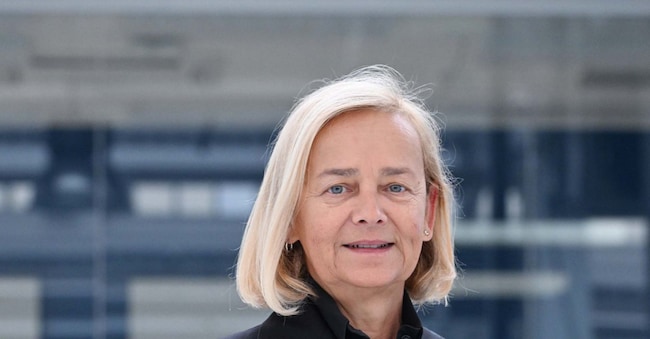
The report ‘Drivers of Growth’ identifies human capital as one of the key factors for the country’s future. As the head of a major technical and scientific university, this is a perspective I feel particularly close to. In an Italia that is ageing and will have fewer young people, we cannot afford to leave the available talent untapped. We must broaden access to advanced education, be able to attract talent from other countries, and create the conditions for knowledge and research to translate into innovation.
Few graduates
The first challenge is access. Italia has a proportion of young people with tertiary education that is significantly below the European average: 31.6 per cent of 25–34-year-olds in 2024, compared with 44.1 per cent in the EU. But increasing enrolment figures is not enough. We must ask ourselves who can actually afford to study and who, on the other hand, risks having to give up due to their financial, family or geographical circumstances.
This is why the right to education must now be interpreted in a broader context. Grants, fee waivers and support services remain essential, but in large cities, the ability to find affordable accommodation is an integral part of university accessibility. We see this every day in Milan. As the Politecnico, we invest in halls of residence and student support services; but a university, on its own, cannot resolve an issue that affects the city as a whole.
If studying at a large university entails costs that are incompatible with the income of some families, this creates a barrier to entry that is less explicit than others, but no less selective. The right to education and urban policies must therefore once again be brought into dialogue: housing, transport and services are now part of the educational infrastructure. This is an area in which universities, public authorities and the private sector must share responsibility.
Public universities, in particular, bear a specific responsibility. We cannot measure our quality solely by our ability to attract the best students. We must ask ourselves to what extent we can reduce the burden of students’ starting conditions, by supporting those who do not come from families with a university background and by identifying the risk of drop-out at an early stage. The ability to foster social mobility should become part of our concept of excellence.
Few arrivals from abroad
The second challenge concerns talent. The international mobility of our young people should not be hindered. Studying and conducting research abroad means growing, building networks and acquiring skills. The problem arises when we are not equally capable of attracting and retaining talent.
We must make it normal to leave, possible to return and attractive to come to Italia. From this perspective too, the Politecnico is an interesting case study: out of around 49,000 students, nearly 10,000 are international. And around 60 per cent of our international graduates choose to stay and work in Italia within a year of graduating.
Attracting talent is only half the job. Retaining it depends on the entire ecosystem: professional opportunities, career prospects, salaries, services, administrative procedures, and the chance to build a life here. The university can open the door to international talent; for that talent to stay, the country must play its part.
Few links with businesses
The third challenge concerns the relationship between research and innovation. Italia continues to invest less than the European average. The NRRP has brought about a significant shift: new PhD programmes and researchers, national centres, partnerships and collaborations with businesses. The challenge now is not to squander this asset.
From the university’s perspective, this also means moving beyond a linear view of technology transfer. Research does not become innovation when it generates a patent, but when universities and businesses build lasting relationships, when PhD students and researchers can move between the laboratory and the company, and when a discovery meets entrepreneurial expertise, capital and the market.
The Politecnico has built up a significant portfolio of intellectual property and industrial partnerships, including joint laboratories. But the number of patents cannot be the end goal. The measure of success is the ability to transform knowledge into new technologies, businesses, investment and skilled employment.
It is not enough simply to increase the supply of research: the demand for innovation within the production system must grow, as must the ability to attract and retain innovative international companies. We must create more opportunities for PhD graduates and researchers to join companies, bringing with them scientific method, skills and innovation.
These three challenges are, in reality, one and the same. We must make universities accessible to those who are talented but have fewer resources; be attractive enough to compete for international talent; and build an economic system capable of utilising that talent, thereby fostering the creation and attraction of innovative international companies.
The phase following the National Recovery and Resilience Plan (PNRR) should mark the transition from a project-based approach to an institution-based one. Education and research require continuity, but also clear objectives and results.
In a country with a shrinking youth population, every talent lost carries greater weight than in the past. This is why I regard the university not merely as a place of education and research, but as one of the fundamental infrastructures through which the country builds growth, social mobility and its future.
*Vice-Chancellor of the Politecnico di Milano

