
Open innovation: the company becomes a client of the start-up
According to the Politecnico di Milano, 68 per cent of businesses are familiar with venture clienting, but only 31 per cent have tried it

Key points
Is it possible to switch off noise and recreate silence? For Marc von Elling, a young German engineer specialising in electronics, the answer came to him during a sleepless night at his home in Hamburg’s Altona district, just a stone’s throw from the famous fish market and the city’s vibrant nightlife. Before long, this insight spread beyond the confines of his home and found its way into the cabins of the large industrial machinery operated by a transport giant, thanks to his active noise-cancelling start-up, Recalm: this generates sound waves capable of attenuating unwanted noise, creating a buffer zone of around 20–30 centimetres around the operator’s head. Krone, a German industrial group specialising in the manufacture of agricultural machinery – founded at the start of the last century in Lower Saxony and now boasting a turnover of 2.3 billion euros and over 6,000 employees – has taken a faith in the technology. Over the past three years, the partnership has improved acoustic comfort and working conditions for agricultural machinery operators. One partnership, many benefits.
What is venture clienting?
This is venture clienting, one of the transformations brought about by open innovation: corporations do not merely finance promising companies, but purchase products and services to solve operational problems. “Stop investing in start-ups, now we need to become their customers”: this was the headline in Fortune in the US, accompanying a report by the Wharton School at the University of Pennsylvania. It marks a shift in perspective. First customers, then investors. A phenomenon that is also affecting traditional sectors. From factories to construction sites, from logistics to mass retail, the relationship between large and small players is changing. The ‘Open Innovation Lookout 2026’ study by the Politecnico di Milano captures this phenomenon in Italia, revealing an ecosystem in transition but still fraught with contradictions: 68 per cent of companies are familiar with the model, but only 31 per cent have put it into practice. Familiarity with the model increases with company size, reaching 93 per cent among multinationals. Companies adopt it to solve industrial problems by accessing new technologies (27 per cent) more quickly (19 per cent).
Capella (PoliMi): ‘The key is to identify the problems’
“Venture clienting is a strategic approach that is driving the transition of open innovation from a set of tools to a strategic lever. However, at present it remains a tactical tool: many companies still struggle to clearly define the problems they need to tackle and, once solutions have been tested, to scale them up,” says Francesca Capella, co-scientific director of the Lookout Open Innovation Observatory at the School of Management of the Politecnico di Milano.
Meanwhile, for 24 per cent of the organisations surveyed, the model does not form part of their innovation strategy, 18 per cent cite a lack of dedicated internal resources – in terms of staff, time and budget – whilst 15 per cent struggle to identify use cases that are genuinely relevant to the business and 13 per cent encounter difficulties in accessing the start-up ecosystem. In short, there is little willingness to take risks, and the focus is on established products and customers. ‘The gap measures the distance between ambition and execution, but it is also a question of responsibility: engaging in venture clienting means committing to a start-up, but it must be done properly. Preparation is key, and not everyone is ready: the barriers cited are a lack of strategic alignment, resources and budget. Slow procurement and rigid contracts represent where the process stalls, not why: in successful cases, the difficulties are often the same, but what changes is a senior management team with the vision to make the model strategic and lead people beyond resistance’, explains Capella.
Success stories, from Bosch to Walmart
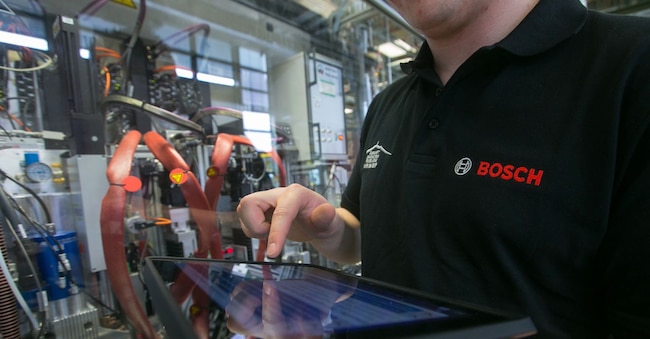
Innovation is no longer merely the result of a laboratory or a corporate department, but of a network of widespread expertise that can take various forms. In Germany, BSH, the household appliance giant that includes brands such as Bosch and Siemens, has set up Startup Kitchen, a unit dedicated to identifying and acquiring technologies from start-ups. In its early years, the programme developed over 130 projects, 20 per cent of which led to a commercial partnership on a larger scale. Also in Germany, BMW Startup Garage is one of the pioneering models, launched a full eleven years ago. The automotive group selects start-ups to test their technologies and services within its own processes. The programme operates on a continuous cycle, carrying out 40 pilot projects a year with a growing focus on process optimisation.

