
OpenAI-Amd, billion-dollar chip deal. The risk of circular investments
The daddy of ChatGPT signed an agreement to jointly develop dedicated computing infrastructures for Ia.

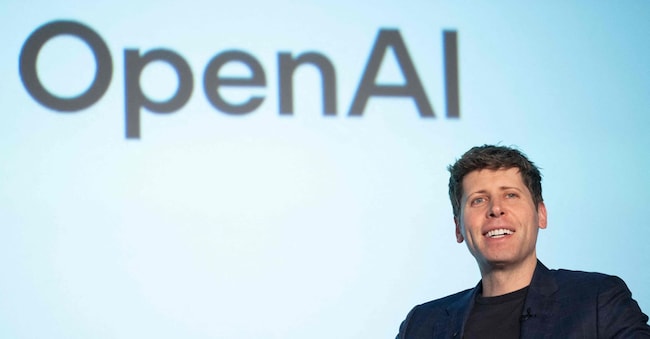
Always OpenAI. Only OpenAI. By now, mega investment deals in artificial intelligence (AI) seem to be the sole preserve of Sam Altman & Co. The Wsj reports, in fact, the news that the ChatGPT dad has signed a multi-billion dollar agreement with Amd (Advanced Micro Devices) to jointly develop computing infrastructures dedicated to Ia. All based on the Sunnyvale company's processors. The agreement represents one of the strongest moves against Nvidia's dominance in the field of Artificial Intelligence (Ai) chips.
Details
.The agreement, in particular, provides for OpenAI to acquire up to 6 gigawatts of computing capacity via Amd chips, starting with the new MI450 model to be launched next year. The purchase can take place directly or through the company's cloud partners. According to CEO Lisa Su, the deal will generate tens of billions of dollars in revenue for Amd over the next five years. The total cost was not disclosed, but the company indicated that each gigawatt of computing power requires investments in the order of tens of billions of dollars.
In addition, the agreement provides for OpenAI to obtain rights (warrants) to purchase up to 160 million Amd shares - equal to approximately 10% of the capital - at the symbolic price of one cent per share, in several tranches linked to the achievement of specific implementation targets. The exercise of the warrants will, however, be conditional on an increase in Amd's share value.
The past
.In short: beyond the technicalities, we are faced with Altman's perennial movementism. An operativeness that, so far, has also raised perplexities. Several experts have pointed out the intertwining of investments involving OpenAI itself and various US technology giants. Above all, so far, Nvidia and Oracle. Analysts raised their antennae at the end of last September, when Sam Altman & Co signed a letter of intent with Nvidia itself. The company led by Jensen Huang, on the one hand, pledged to gradually invest up to USD 100 billion in OpenAI; and, on the other hand, said it would support the deployment of at least 10 gigawatts of infrastructure for the new data centres that OpenAI itself intends to build in the coming years. This is not, therefore, a pure financial investment, but an industrial partnership in which the supplier helps finance the expansion of its main customer, which in turn will continue to buy Nvidia hardware to power its artificial intelligence systems.
The Other Agreements
.It will be said: no objections! Correct, were it not that some experts invite us to look at two other fronts. The first is a further agreement by OpenAI: the one with Oracle initiated last July. According to this other agreement, the ChatGPT group relies on the 'oracle' to acquire computation and cloud services, committing up to USD 300 billion by 2030. The agreement, which is part of the maxi-infrastructure project Stargate, is intended to provide the power needed to train OpenAI's language models. The second front, on the other hand, concerns Oracle itself, which must itself acquire large-scale hardware in order to provide the services. Well: according to various sources, the company founded by Larry Ellison has - for instance - ordered the purchase of some USD 40 billion of Gpu from Nvidia. In this way, part of the resources that OpenAI pays to Oracle for cloud services would indirectly end up in Nvidia's coffers, which at the same time finances OpenAI to boost its own demand.


