Digital Economy

OpenAI launches GPT-5: faster, smarter and more human. Here's what you need to know

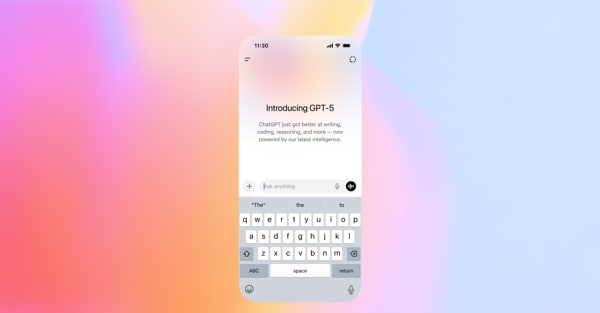
The new model is made available free of charge to all ChatGPT users. Three versions are available: GPT-5, GPT-5 Mini, GPT-5 Nano.

by Luca Tremolada

6' min read

6' min read

Thirty-two months after ChatGPT's debut, GPT-5, OpenAI's new model described by its founder Sam Altman as 'an important step towards AGI (General Artificial Intelligence)', comes to light. "Going back to GPT-4 after trying GPT-5 will be frustrating," Altman said during a briefing with journalists. 'The difference is comparable to going back to an old phone with a pixelated screen after the iPhone. GPT-3 felt like a high schooler,' he said, 'GPT-4 felt like a college student. GPT-5 is like dealing with an expert with a PhD."

Gpt-5 immediately available for all.

As was the case with the latest Gpt4o model, GPT-5 will also be made available free of charge to all ChatGPT users. Three versions are available via API: GPT-5, GPT-5 Mini, GPT-5 Nano, to balance performance and cost. There are also Pro and Plus versions: the main difference is the usage limits. The Pro one ($200) offers unlimited GPT-5; access to GPT-5 Pr. The Plus version with the 21 euro per month subscription offers much higher usage limits than the Free version, which we remember offers access to GPT-5 & GPT-5 mini. This is the first time that Free users have access to a reasoning model.

Loading...

For Plus users it will be the default template, eliminating the complexity of the template selector. They will also have a much greater amount of use than GPT-5. When they exceed the limit, they will switch to GPT-5 Mini, which is still very good.
What has changed since the 4th? Is it really a revolution?

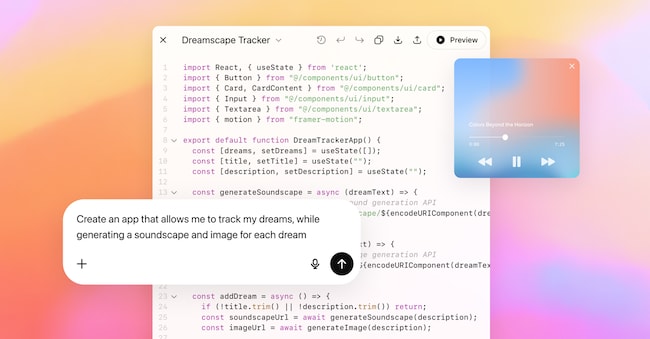
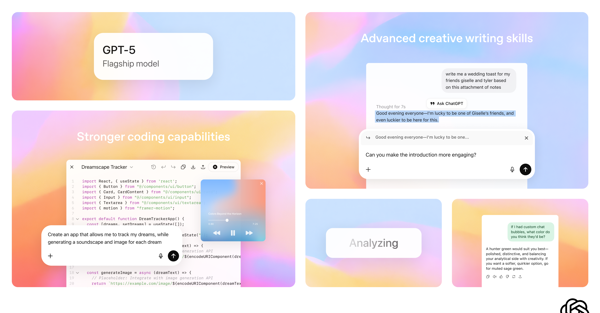
Conceptually, GPT-5 integrates many technological components including the reasoning model and intelligent agent functionalities. It is therefore a candidate to be a kind of 'unifier' of the OpenAI proposal. The OpenAI team has emphasised that this is the fastest, most accurate (less hallucinations) and most intelligent (in mathematics, science, programming) model. But it is the programming aspect that they seem to want to focus on most. 'GPT-5,' they repeated, 'is the best model for coding ever created by OpenAI. "One of the most amazing things is that it can instantly create an entire piece of software from scratch. I believe,' Altman explained, 'that the concept of 'software on demand' will be a hallmark of the GPT-5 era'.
We are in the era of Vibe coding

.

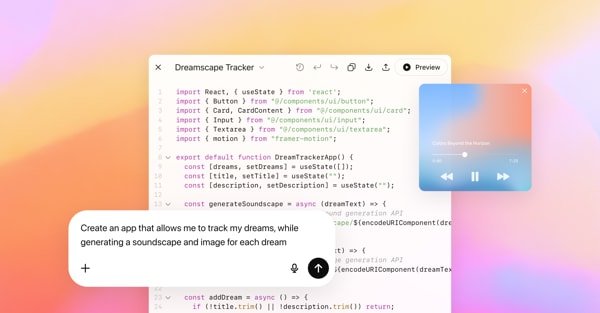
During the presentation, an example of Vibe coding was shown, which means being able to create any app or software simply by asking the model, without having to know how to programme. Specifically, they created a web app to learn French. "Building such a site would take a human programmer hours of work. GPT-5 does it in seconds". In practice, GPT-5 generated 600 lines of code. Furthermore, they showed that every time you give the same prompt to GPT-5, you can get different results, all working.
GPT-5 does not lie and simulate and knows its limits

GPT-5 has been trained to recognise when it cannot complete a task, avoid speculation and better explain its limitations. This drastically reduces instances of made-up but convincing answers compared to previous models. The researchers explained that it has been trained not to lie and not to simulate fictitious answers. In the case of potentially ambiguous or dangerous questions, GPT-5 only responds with general content to reduce risks. A new function has also been introduced: the 'reasoning effort parameter', which allows you to choose how much the model should 'reason'. In other words, it can be decided whether the model must reason deeply, or whether it can remain faster and more superficial (useful for simple tasks).

He is not a doctor but answers health questions.

GPT-5, OpenAi claims, pointing out that it does not replace a doctor, is the best OpenAI model ever made for health-related questions. It is more proactive in pointing out potential problems and asking questions, and can help understand the results, formulate the appropriate questions to ask specialists, and evaluate options when making decisions.

And it takes into account where you are

.

GPT-5 also offers more precise and reliable answers and adapts to the context, knowledge level and geographical location of the user - thus providing more secure and useful answers in a wide range of scenarios.

Objective: to obtain a non-deceptive model.

On the security side, one goal they set themselves is to achieve a non-deceptive model. "This is crucial for security," explained Nick Turley, ChatGPT's head of product, "we want the model not to lie to users, both for ethical reasons and to ensure a quality user experience: people have to be able to trust the system." To solve this, they trained GPT-5 to be honest. Another important aspect is to prevent users from abusing the model to do harm. "In the past," he explained, "we used a binary system: if a prompt was considered safe, the model would respond. If it was dangerous, it refused. With GPT-5 we use an approach called 'safe completions'. The model provides useful answers, but within the limits of safety. In dual-use questions, GPT-5 limits itself to general, safe information that cannot be used to harm." In addition, they conducted over 5,000 hours of testing with external red teams to ensure that the system is robust against misuse.

Why is ChatGpt5 crucial for Sam Altman?

Its release comes as organisations such as BNY Mellon, California State University, Figma, Intercom, Lowe's, Morgan Stanley, SoftBank, T-Mobile and others have already provided their employees with artificial intelligence, with 5 million paid users now using ChatGPT's enterprise products, and have begun to rethink their API operations.

As of March 2025, it has raised $40 billion at a valuation of $300 billion, and a secondary share sale is underway that could raise the valuation to $500 billion, making OpenAI the most valuable private start-up in the world. Today, Sam Altman's creature has over 120 million daily active users and around 700 million weekly active users. It controls a dominant share, estimated between 59% and 63%, of the AI assistant market. The goal is to turn OpenAI into a pillar of the global digital infrastructure, with recurring annual revenues growing from about USD 12 billion today to a forecast of USD 20 billion by the end of 2025. Gpt 5 is not only OpenAi's most powerful Ai model, but the proof that ChatGpt is the uncontested leader in the industry today. But how does this market measure up?

How are virtual assistants measured?

.

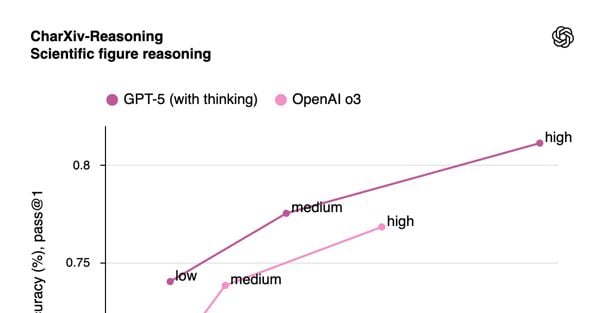
Models today are evaluated by benchmarks that measure their reasoning ability and performance in fields such as programming and mathematics. And by the agentic characteristics they have, that is, by their ability to orchestrate functions autonomously. We know that there is no way to verify the tests that assess the model's intelligence. As with the others, we have to trust what the manufacturers say. GPT-5, writes OpenAi, 'is much smarter across the board, as demonstrated by its performance in academic and human-rated benchmarks, particularly in mathematics, programming, visual perception and health. It sets a new state of the art in mathematics (94.6 per cent on AIME 2025 without tools), in real programming (74.9 per cent on SWE-bench Verified, 88 per cent on Aider Polyglot), in multimodal understanding (84.2 per cent on MMMU) and in health (46.2 per cent on HealthBench Hard), and these improvements are noticeable in everyday use. Thanks to the extended reasoning of the Pro version of GPT-5, the model also sets a new state of the art on GPQA, achieving a score of 88.4 per cent without tools. As a reminder, Gemini 2.5 Deep Think scored on benchmarks such as LiveCodeBench v6 (87.6 per cent), Humanity's Last Exam (34.8 per cent) and the IMO 2025, where it achieved the bronze medal level with a remarkable 60.7 per cent. Specifically in programming, Opus 4.1 achieved 74.5 per cent in the SWE-bench Verified benchmark, surpassing the previous generation (Opus 4 stopped at 72.5 per cent).

The problem, however, is not the benchmarks. Already since the summer of last year, the first flaws in the Ai scaling law have emerged. As access to data increases, we no longer see a propotional improvement in the efficiency of algorithms. The more they read, the more they learn, but they do not improve accordingly. Moreover, while processing power continues to grow thanks to the huge investments of big tech (and the confidence of the financial markets) big language models struggle to find datasets.

So now how far is the AGI?

.

How far is AGI? Sam Altman explained that GPT-5 is not yet AGI, but it is a big step forward. To achieve AGI will require models to continuously learn from the real world, which GPT-5 does not yet do.

Copyright reserved ©
  • Luca Tremolada

    Luca TremoladaGiornalista

    Luogo: Milano via Monte Rosa 91

    Lingue parlate: Inglese, Francese

    Argomenti: Tecnologia, scienza, finanza, startup, dati

    Premi: Premio Gabriele Lanfredini sull’informazione; Premio giornalistico State Street, categoria "Innovation"; DStars 2019, categoria journalism

Loading...

Brand connect

Loading...

Newsletter

Notizie e approfondimenti sugli avvenimenti politici, economici e finanziari.

Iscriviti