
OpenAI working on a smartphone based on artificial intelligence?
No technical specifications are known but the start of mass production is expected in 2028

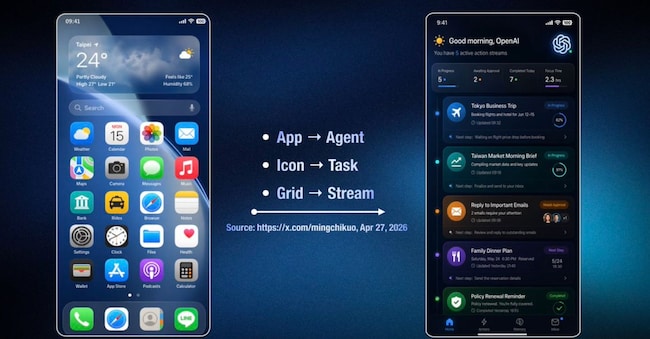
OpenAI is reportedly preparing a move destined to redefine the concept of the smartphone. According to analyst Ming-Chi Kuo, the company led by Sam Altman is working on an innovative device to be introduced in the telephony sector, but with a different approach to current proposals. It would not be a simple smartphone, even more powerful and evolved, but a product based on a brand new user experience: no more traditional apps, but a system entirely based on artificial intelligence in which the user would interact with AI agents capable of understanding needs, context and intentions in real time, and then return answers and immediate actions such as, for example, searching for a restaurant or making a reservation. As anticipated by Kuo in a post published on X, MediaTek and Qualcomm are the companies chosen to manufacture the chips of the alleged device while Luxshare Precision Industry is the exclusive partner for production, which is expected to start mass production in 2028. The same analyst also published a screenshot of a concept of what the interface of the new device might look like, with the traditional grid of apps being replaced by an AI-processed activity feed.
From a technical point of view, however, the project envisages a close integration between local data processing and the cloud: chips developed with MediaTek and Qualcomm would allow power consumption, memory and the lightest AI models to be managed directly on the device, while more complex operations would be delegated to cloud-based infrastructures, achieving what could become a standard over the next few years.
OpenAI's strategy therefore seems clear: to control the entire technological chain, from hardware to the operating system, in order to build a seamless and integrated AI agent; in this perspective, the smartphone remains the most suitable device to date, being the one that follows the user throughout the day and the one richest in contextual data useful to feed intelligent models. If the project sees the light of day, the smartphone of the future might no longer be a tool to be used but an assistant to be dialogued with: no further details on this are currently known, but according to Kuo, technical specifications and suppliers should be defined by the end of 2026 or early next year.

