
Opera, good accounts and ticketing. The challenge is to increase private resources
In 2024 over 110 million euro in box office and for many theatres it was a record year

4' min read
Key points
4' min read
For many Italian lyric theatres, 2024 marked a confirmation of the golden age that began immediately after the Covid disaster, with a return of interest in opera, ballet and symphonic music that allowed the 14 Italian foundations to quickly recover the ground lost during the pandemic and, in some cases, to reach record numbers in terms of box office receipts and private contributions, thanks also to the Art bonus tool. Without forgetting the possible 'boost' resulting from inclusion - in December 2023 - in the UNESCO Intangible Cultural Heritage List.
A system generating 110 million revenues
.At an overall level, SIAE data revealed that the sector was substantially stable last year, with 2,880 performances (2.3% less than in 2023), 2.13 million spectators (down by 0.8%) that generated takings of 110.4 million euros (-1.1%). "Opera was, by far, the theatre sector most able, proportionally, to generate revenue, with an average unit expenditure per spectator of 51.76 euros, constant compared to the previous year," reads the Siae report. More than one fifth of the value of tickets sold in 2023 in the theatre sector in Italy came from opera.
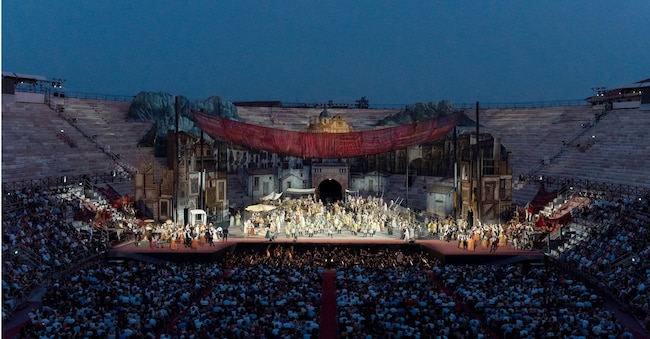
Obviously, the situation is very different from theatre to theatre, with foundations that have been grinding out records for 2-3 years now and have far surpassed even pre-Covid numbers: among them the San Carlo in Naples (178.841 admissions in 2024, with over Euro 6.6 million in revenues), the Massimo in Palermo (with box office sales up 22% last year, for a total of over Euro 4.1 million), the Opera in Rome (with an increase of almost Euro 2.3 million, equal to 18.9% compared to 2023), the Arena in Verona (with Euro 33.6 million, the best ever). Genoa (+21%), Bologna (+13%) and Florence (+5%) also did well.
The Economic and Financial Balance
.In terms of economic and financial solidity, the picture is also positive: after a decade of reorganisation through the tools offered by the 2013 Bray law, almost all the foundations have achieved the desired balance, although for some of them it is a precarious balance, due to a structural fragility of the system, which entails extremely high costs to guarantee the level of quality required of these theatres, in the face of revenues that are not always adequate, largely covered by public institutions (first and foremost the State, through the FUS, but also the Regions and the Municipalities), with very rare exceptions such as La Scala in Milan (one third of the resources come from the institutions, approximately one third from ticketing and own activities and one third from sponsors, partners or private supporters) and the Arena in Verona (approximately 70% of the budget is made up of non-public resources). But most foundations manage to collect private contributions amounting to only an average of 10% of their annual budget.
And therein lies the crux of the matter: if the Italian opera system wants to ensure a future for itself and its cultural and artistic heritage, it is necessary to increase the share of private revenue, as well as to contain management costs through greater administrative efficiency and a sharing of burdens and honours between foundations.

