
Operaestate takes Bassano by storm

The Grand Tour of summer festivals recommends a visit to Bassano del Grappa, where, until 12 September, the rich and varied programme of Operaestate – now in its 46th edition – will be taking place: over a hundred theatre, music, circus and dance performances taking place in theatres, across the countryside and in the city’s cultural venues, as well as throughout the Veneto foothills.
The programme includes B. Motion, a sort of festival within a festival, which, from 21 to 30 August, will feature numerous performances exploring contemporary forms of expression and themes, with two special sections dedicated to Switzerland and Lithuania. One of Operaestate’s strengths is that it has always given ample space to dance, inviting both established companies and artists and emerging talents who find in Bassano the resources and venues to present their work. This year, under the curatorship of Michele Mele and artistic director Rosa Scapin, the programme includes, amongst others, performances by Daniele Albanese, Michele di Stefano, Giulia Cannas, Dovydas Strimaitis, Sara Sguotti, Elisa Sbaragli, Elena Antoniou, Roberto Zappalà, Chiara Bersani, Fotini Stamatelopoulou and a new production by the Dance Well collective, which over the years has established in Bassano a commendable dance workshop for men and women living with Parkinson’s disease.
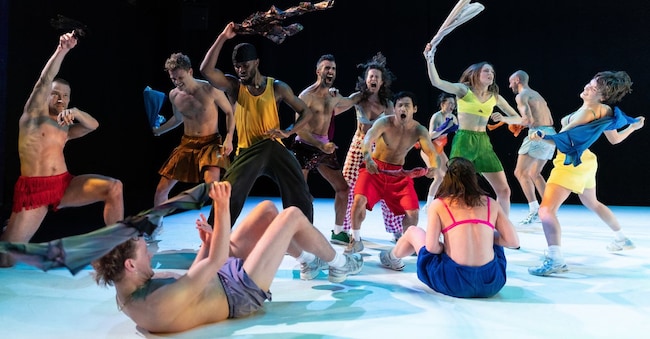
Among the most interesting performances seen in recent days, *Irresistible Revolution* by Ayelen Parolin – an Argentine choreographer based in Belgium – stands out, reflecting the festival’s festive and community-oriented spirit. It is a performance that recaptures the exuberant and liberating spirit of the Buenos Aires carnival, characterised by the irresistible rhythms of murga and cumbia. Twelve performers, men and women, enter the stage in silence, holding hands as in a medieval round dance; slowly, but with growing fervour, as if driven by an uncontrollable inner impulse, they allow themselves to be carried away in a crescendo of whirling, liberating movements – energetic and playful – until they reach exhaustion and a trance-like state. Seemingly disorganised and spontaneous, Parolin’s choreography is in fact a structured and rigorous composition, which the performers execute with extreme precision whilst at times appearing to be possessed by a superhuman force.
The dancers’ bodies, clad in simple, colourful sports outfits, oscillate between abandon and control, interacting with one another or individually following the flow of Benoist Esté Bouvot’s percussive sounds, singing and shouting at the moments of greatest release. What Parolin proposes truly seems like an ‘irresistible revolution’ – an invitation to let oneself go to the rhythm of dance as a means of liberation and regeneration. By reviving the spirit of Carnival – which represents a time of revelry and transgression before Christian Lent or, according to its most ancient pagan origins, the overturning of social norms – the choreographer restores to dance a ritual, cathartic and communal function.
*Irresistible Revolution* follows in the footsteps of a trend that has emerged in recent years, one shared by the works of a number of choreographers who counter the dissolution of the present with a sort of liberating and apotropaic ritual. Productions such as Dance People by the Lebanese choreographer Omar Rajeh, which also involves the audience; Crowd by the Franco-Austrian choreographer Gisèlle Vienne; Delirious Night by the Danish choreographer Mette Ingvartsen; Room With a View by the LA(HORDE) collective; and *In girum imus nocte et consumimur igni* by Roberto Castello, amongst others, all propose in their own distinct ways a redemptive function of dance and sit somewhere between a modern shamanic ritual and the revival of a Dionysian dimension of theatre, in an attempt to restore order through chaos.

