Products

The Oppo Reno16 focuses on creativity, AI and nostalgia

The most intriguing new piece of hardware, however, is Bubble, a magnetic accessory with a display that clips onto your phone and acts as a secondary screen.

3' min read

Translated by AI
Versione italiana

3' min read

Translated by AI
Versione italiana

Oppo unveils the new Reno16 series and sets out a clear strategy: to stand out in the smartphone market through computational imaging, generative AI and new hardware accessories. The range comprises the Reno16, Reno16 Pro and Reno16 FS – three models that focus on creative photography, battery life and integrated AI features.

In terms of hardware, the Reno16 Pro is powered by the MediaTek Dimensity 8550 5G chip, whilst the Reno16 uses the Snapdragon 7 Gen 4. Battery capacities range from 6,000 mAh to 6,500 mAh on the FS model, with fast charging of up to 80W. The entire range is IP68/IP69-certified and is designed to be more durable in everyday use.

Loading...

But the most significant innovations aren’t in the silicon. They’re in the software.

Photography: the rise of computational vintage

The first new feature is Pop Cam, a built-in shooting mode that introduces filters inspired by vintage cameras, instant film and analogue lighting effects. In short: OPPO is bringing an aesthetic to its camera app that currently dominates Instagram and TikTok. The Digicam, Instant Film and Light Leak effects simulate the visual imperfections typical of analogue photography and digital compact cameras from the early 2000s. It’s an interesting move because it reflects a specific trend. For years, the smartphone industry has pursued technical perfection: less noise, greater sharpness, more advanced HDR. Now the opposite is happening. And that’s just fine.

The sensor is less important than the processing

In terms of photography, OPPO maintains a premium setup: a 50 MP ultra-wide selfie camera, and a triple rear camera system featuring a 3.5x telephoto lens and an ultra-wide-angle lens. The Reno16 Pro takes it a step further with a 200 MP main sensor. But it’s not about the megapixels. It’s all about the image processing.
AI enters the world of creative editing

The second new feature concerns editing. With AI Remix Collage, OPPO brings artificial intelligence into the visual creation process. Users can combine photos, short videos and motion photos into automatic compositions featuring stickers, text and dynamic layers.

Here you can clearly see the direction the market is taking. In short, AI is no longer just about enhancing a photo. It’s about creating content.

And then there’s Bubble: the most interesting accessory in the launch

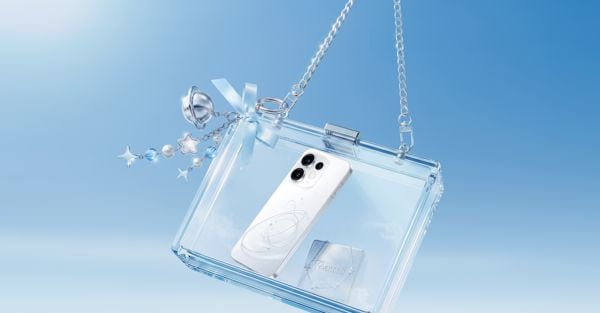
The most intriguing new piece of hardware, however, is **Bubble**, a 27.5-gram magnetic accessory with an AMOLED display that attaches to the phone and acts as a secondary screen. It allows you to view the rear camera’s preview whilst taking selfies and remote shots. It seems like a niche accessory. In reality, it signals a broader transformation. The smartphone is fragmenting into an ecosystem of smart modules and accessories. Cases, wearables, secondary displays and magnetic devices are becoming functional extensions of the phone. The device is no longer a self-contained object.

Oppo’s personal AI

There are plenty of new developments in the field of AI, which remains the least convincing feature at this stage in the evolution of smartphones. With AI Mind Space, for example, the Reno16 introduces a digital memory that organises content, receipts, screenshots and payments. With AI Mind Pilot, the system coordinates various AI models to select the one best suited to the task at hand. These are all features that are worth taking the time to try out.

Oppo’s strategy in the smartphone market

The Reno16 series is launching at a peculiar time. The global market is growing slowly, hardware is becoming increasingly similar, and prices are rising. The differences between premium and upper-mid-range devices are becoming less pronounced. This is why manufacturers are seeking new areas of differentiation. It is no longer just about the processor, RAM or megapixels. Today, the battle is being fought over AI, creativity and design. A mobile phone aiming to become a true universal assistant must have personality and stand out from the crowd. The challenge? The next successful smartphone won’t necessarily be the most powerful – not least because costs are skyrocketing. Instead, it will be the one capable of transforming technology, creativity and AI into a personalised experience.

Copyright reserved ©
  • Luca Tremolada

    Luca TremoladaGiornalista

    Luogo: Milano via Monte Rosa 91

    Lingue parlate: Inglese, Francese

    Argomenti: Tecnologia, scienza, finanza, startup, dati

    Premi: Premio Gabriele Lanfredini sull’informazione; Premio giornalistico State Street, categoria "Innovation"; DStars 2019, categoria journalism

Loading...

Brand connect

Loading...

Newsletter

Notizie e approfondimenti sugli avvenimenti politici, economici e finanziari.

Iscriviti