
Oracle beats Wall Street, Ellison overtakes Musk among the world's richest people
Artificial intelligence cloud boosts Texan company's revenues and share price

2' min read
2' min read
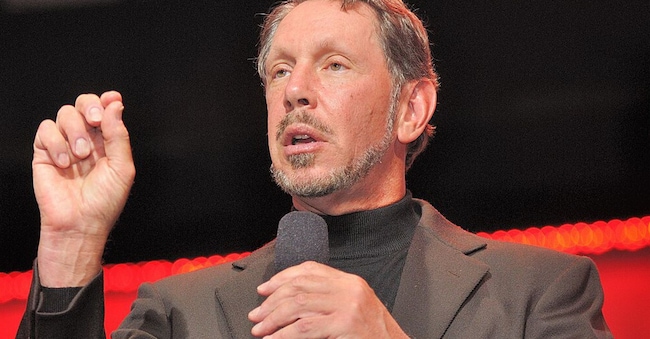
There is one undisputed protagonist on Wall Street: Oracle. The cloud giant made an incredible surge on the stock exchange, realising gains of up to 40%, taking its capitalisation from USD 678 billion to USD 943 billion and sending co-founder Larry Ellison's fortune soaring to USD 393 billion, surpassing Elon Musk (standing at 383) after a long domination by the Tesla CEO.
The boost came from the quarterly accounts and, above all, from the wave of contracts related to artificial intelligence. Presenting the accounts, CEO Safra Catz spoke of an 'extraordinary quarter', with four multi-billion dollar contracts signed in three months and bookings rising to USD 455 billion, well above the previous period's USD 138 billion and market expectations.
A growth made possible by the hunger for the cloud infrastructure needed to train and operate the new AI models, which also points to a new factor: after chips (which have made Nvidia the most valuable company in the world), it is now the cloud that is the other eldorado produced by the artificial intelligence boom.
Oracle, which had lagged behind Amazon and Microsoft in the cloud race over the years, now finds itself at the centre of the demand generated by OpenAI, xAI, Meta, Nvidia, AMD, and other technology bigwigs. In July, a maxi-agreement with OpenAI for 4.5 gigawatts of computing power was leaked, amounting to around USD 30 billion per year. So much so that the development envisages new data centres in the United States, including a 1.2 gigawatt site in Abilene, Texas.
Now, the real question for analysts shifts to the real ability of the Texas-based company (headquartered in Austin) to expand its infrastructure so rapidly, in a context marked by chip shortages and fierce competition. Because it should not be forgotten that other big players such as Amazon, Microsoft, Google and Meta will spend more than 350 billion this year on data centres and AI infrastructure, a figure set to exceed 400 billion by 2026.


