
Bio and sustainability, so Coprob sugar beats the French and Germans
. .

3' min read
3' min read
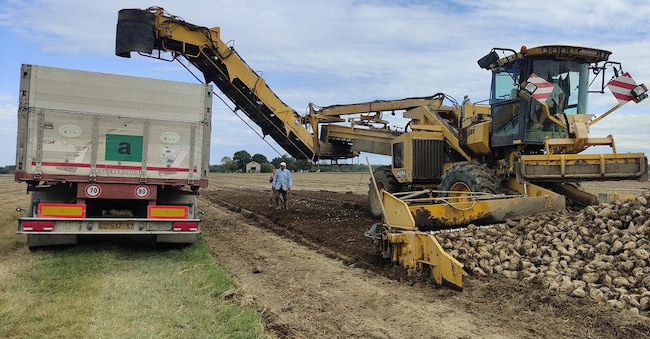
The organic sugar beet harvest started two days ago and in the next two weeks the conventional crops will also start to be harvested from Veneto, Emilia-Romagna, Marche to Lombardy and Friuli-Venezia Giulia. They are not large quantities, just under 2 million tonnes for this beet-sugar campaign, but they are the only ones that will be processed into the only truly 100% Italian sugar, with local supply chains, from the fields to the Italia Zuccheri brand on the shelves. It is a well-known story that Italy, the third largest consumer of sugar in Europe, was in fact forced to close 17 of its 19 sugar factories after the reform of the CMO, and today manages to produce barely an eighth of what it consumes and imports all the rest from the Nordic bigwigs (with Cristal Union, which even won the Eridania brand, which today has only an Italian name). Less well known, however, is that Coprob - the cooperative that brings together almost 4,000 farms in five northern regions with 330 employees in its two historic processing plants in the countryside between Bologna (Minerbio) and Padua (Pontelongo) - is now giving lessons to its German and French competitors, who have gone into a tailspin in the face of a climate gone mad and new pests.
"Since 2017, we have focused more and more on distinctiveness and have transformed sugar from a commodity to a quality product, enhancing and tracing with transparency every step of the supply chain, the only one remaining 100% Italian, and the market is rewarding us. We have focused on genetic improvement, new sustainable agronomic techniques, product innovation, with organic and raw beet sugar, and process innovation, from biogas and agrovoltaic plants to factory automation,' says Luigi Maccaferri, a beet grower from Bologna who has been at the helm of Coprob for a few weeks, 30 thousand hectares of beet basin, more than 200 thousand tonnes per year of beet sugar produced, and a strategic investment plan for the three-year period 2024-2026 of more than 20 million euros, "to which we hope to add the 30 million foreseen by the NRP for the beet-sugar supply chain," the president points out.
The French and German companies, on the other hand, are in difficulty, because in the last two years the European market has changed radically, between increased production costs, climatic warming, consequent phytosanitary problems and the invasion of Ukrainian zero-duty products, which has given the final blow to the already difficult balance between beet growers and large industrial groups in northern Europe, who see yields dropping and are unprepared, in spite of Italy. "After the years spent healing the wounds created by the stop to the quota mechanism, triggered precisely by German and French ambitions, we are now at an advantage: we are earning 20% more than the average market price and organic sugar is even sold at double that price,' Maccaferri points out.
Out of the 300 million euro turnover of the Coprob-Italia Zuccheri supply chain, exports are zero: 'We say no to several companies,' he adds, 'our aim is to enhance the work of our sugar beet growers and in Italy there is plenty of room for growth; we consume 1.6 million tonnes of sugar a year and 1.4 we have to import. For Coprob, growth means first and foremost consolidating the social base; improving yields in the fields, to bring all growers to a performance of 10 tonnes of sucrose per hectare (today the average is 8, in France it is over 12); expanding Sqnpi certification of integrated agricultural production; strengthening circularity and renewable sources by creating agrovoltaic parks in disused former sugar areas (there are projects in Finale Emilia and Porto Viro), after the three biogas plants already built, fuelled by beet by-products. "It will be difficult to succeed in using only energy from renewable sources in Minerbio and Pontelongo; we have energy-intensive processing cycles concentrated in 90 days a year," explains Maccaferri, "but beets are among the most virtuous extensive crops in terms of CO2 capture capacity. If we considered the entire supply chain, from field to table, we would already be close to carbon neutrality'. Sugar beet is therefore a benefit both for the environment and for the community, and after the battles lost in the past in Brussels, 'defending it and defending Made in Italy will be my commitment for the next three years of my mandate,' the president concluded.


