
Organisation and process office to cut files
In 2025, there were more than 2,000 more definitions than in the previous year
by Ivan Cimmarusti and Giovanni Parente
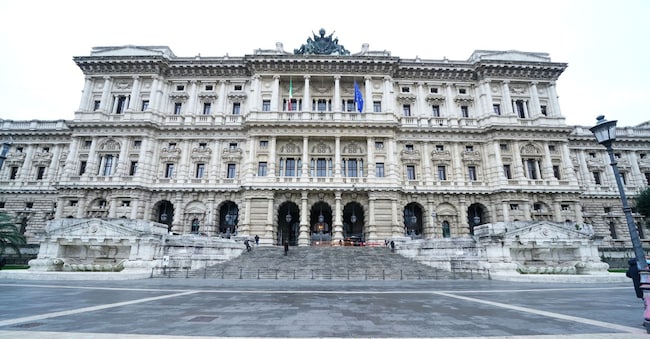
In May 2025, Angelina-Maria Perrino took over the presidency of the tax section of the Supreme Court with a delivery: the backlog had to be dismantled piece by piece. But she does not start from scratch. The approach is already there, built up in previous years by predecessors Ettore Cirillo and Biagio Virgilio: organisation, scanning, priorities, calendar discipline. Perrino does not 'remake' the section. He takes a rebuilt machine but brings it up to full speed, with one more decisive variable: after years, the number of judges returns to 50.
That the pace has changed further is attested by the latest reports filed and the numbers recalled at the inauguration of the 2026 judicial year. The clearest figure is put into focus by the first president of the Supreme Court of Cassation, Pasquale D'Ascola: "The tax backlog has been challenged in the year 2025 with the definition of two thousand more appeals compared to the previous year". And if one looks at the long series - at least from 2021, with the start of the Pnrr cycle - the trajectory becomes even more legible. The 'stock' of the oldest cases, those up to 2020, drops: from around 50,000, it goes down to over 47,000 in 2021, to 36,786 in 2025. This is not a sudden collapse: it is a continuous filing work, which allows Italia to stay the course on the objective promised to Europe, i.e. the reduction of litigation of legitimacy. Yet, the levels are still very high (see the article at the top of the page). The point that scratches the picture, in fact, are the new appeals that continue to deluge the section. For more than ten years the flow has not moved, nailed around 10,000 per year. It is the constant that resists, impregnable to every deflative intervention that has been launched in recent years.
But back to the slopes. What, then, is boosting the section? There are two targeted actions. The first is the organisation of the work, inherited and now brought to depth. Three groups of judges, three strands, stable presidium of subjects: direct taxes; harmonised taxes (VAT, excise duties, customs duties); local taxes. A segmentation that limits dispersion, reduces differences in interpretation and builds consistency. Then meetings and regulatory studies on the various strands.
The second action, which has proved particularly effective in reducing litigation, is the so-called 'filter'. Within the same architecture operates the team of employees of the trial office dedicated to the Proposal for Early Definition (Pda): inadmissible or manifestly unfounded appeals, to be expelled before they devour court time. It is a less visible but decisive function: cutting out the superfluous. Here the last year marks the most obvious step. The office has been strengthened and the results are hard to ignore: in 2024 there were 987 proposals; in 2025 there will be 1,835, a leap of almost 86 per cent. Translated: less energy burned, more operating margin.
And it is precisely this margin that allows the 50 judges of the Section - the largest in the Court of Cassation, out of a total staff of 300 magistrates - to devote more attention to the more legally complex disputes. It is not a question of pursuing a merely quantitative increase in definitions, but of concentrating activity on questions of principle, encouraging the development of jurisprudential guidelines that are as consistent and uniform as possible.


