
Former Ilva: the conditions are in place to consider an Italian consortium
Two meetings were held: the first with representatives from industry – including leading figures from the steel sector – and the second with local authorities. An outline of potential new investments was also drawn up.

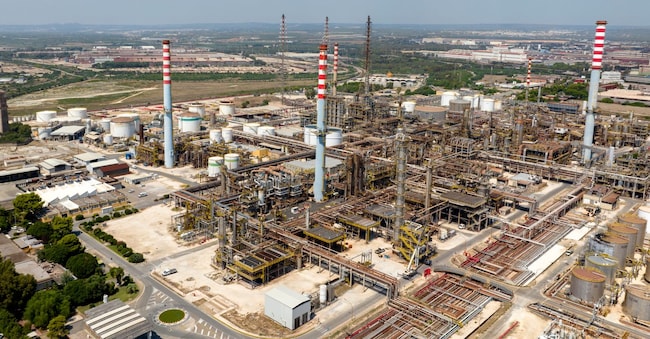
“The conditions are in place to consider an Italian consortium.” On 5 August, the day of the double summit at the Ministry of Enterprise, the latest news on the former Ilva came from Emanuele Orsini, president of Confindustria, during the meeting between Minister Adolfo Urso, Confindustria, Federmeccanica, Federacciai and the sector’s leading national groups. Orsini described the meeting at the Mimit as ‘serious and productive’ and added: ‘Various options are being considered on the matter. Given the new conditions relating to the former Ilva plant – explains Orsini, referring to the court order halting operations in the steelworks’ hot section – the conditions are now in place to consider an Italian consortium that has the country’s basic industry at heart. ‘As well as the people, there are extremely important product supply chains behind Ilva’.”
Hot zone heading for a shutdown
In the meantime, operations at the hot zone of the former Ilva site in Taranto must be halted. The decree of the Milan Court of Appeal must be enforced; due to pollution from asbestos and fine particulate matter, it mandates a shutdown within 90 days – a timeframe that is now even shorter, as some days have already passed. At the first of the two summits – the one involving the Puglia Regional Government, the municipalities of Taranto and Statte, and the Province of Taranto – Minister Urso made this clear. However, whilst the hot area will have to be shut down and many jobs will be lost at the former Ilva site and in associated businesses, there is also the prospect of developing alternatives for reindustrialisation. From this perspective, the meeting at the Ministry of Infrastructure and Transport (MIMIT) confirmed the existence of a series of possible projects that had already been discussed in recent months – projects that now need to be clarified and finalised – and also added some new ones, such as the one outlined, albeit in broad terms, by the Pirelli Group to Minister Urso. The closure of the hot area of the former Ilva site in Taranto ‘must be implemented’; the ruling by the Milan Court of Appeal has also been uploaded to the data room containing all the information on the former Ilva site, and therefore the bidders in the tender for the sale of the company are aware of it, states Urso. ‘We must necessarily take note of the decision of the Milan Court of Appeal, which orders the closure of the hot area within 90 days, a measure which the special commissioners must implement,’ the minister notes, adding that ‘in light of the new situation, Jindal has submitted an updated proposal covering the entire scope of the business, which takes into account the closure of the hot area and which the commissioners are currently assessing”.
Investment areas: a commissioner may be appointed
But beyond the former Ilva issue, the summit also brought to light new activities that could offset the downsizing of the steelworks. Urso explains: “Various sites are already available, and we will work with local authorities to assess the procedures for supporting these investments.” Meanwhile, “during discussions with Jindal,” Urso continues, “the commissioners had already agreed that the areas not required for steelmaking operations could be made immediately available within the framework of the Taranto Round Table. This amounts to around 170 hectares, 140 of which have already been reclaimed, earmarked to accommodate new investments. Added to these are 450 hectares belonging to the Port System Authority and over 350 hectares of former military sites that have been decommissioned or are in the process of being decommissioned. The Taranto Roundtable will therefore be able to clearly define the framework of available land and any extraordinary measures required in terms of authorisation to support the investments.” To guide and support this process, the Government, in consultation with local authorities, would also consider appointing an ad hoc commissioner, ‘suitably adapted to the context of Taranto’, with the aim of ‘speeding up authorisation procedures and facilitating the realisation of new investments’.
Among the new ventures announced is Pirelli
The list of what could be achieved in the Taranto area is extensive. There are both confirmations and new developments. Among the latter is the Pirelli Group, which, in a letter to Urso, stated that it is considering an investment in Puglia of up to 100 million, creating 1,000 new jobs, both direct and indirect. It is specified that this is a potential development project capable of generating around a thousand new jobs, comprising both direct and indirect employment. According to Pirelli’s statement, this would involve the creation of an innovation centre with a test track, linked to the Bari hub dedicated to software development, with which significant synergies could be developed. The Pirelli Group is reportedly already in contact with the Ministry of Economic Development (MIMIT) and the Puglia Regional Government to identify the most suitable site.
Confirmed projects
Alongside Pirelli, there are confirmations and the revival of initiatives already announced months ago. For example, the Webuild group has confirmed its interest in building a hub in Taranto dedicated to structural steelwork. According to the company, the project would be linked to the construction of the bridge across the Strait and could capitalise on its proximity to Taranto’s steelworks. It was explained that the construction of the hub would be contingent upon the ability to guarantee the supply of steel meeting the project’s specifications and the presence of an industrial and manufacturing facility capable of ensuring a direct link to the construction site. Provided these conditions are met, Webuild has therefore confirmed its interest in the initiative.

