The interview

Ortombina: 'La Scala's new season will be all about inclusiveness'

Superintendent Fortunato Ortombina announces the theatre's challenges and objectives in view of its 250th anniversary. The role of the private sector is decisive

by Giovanna Mancini

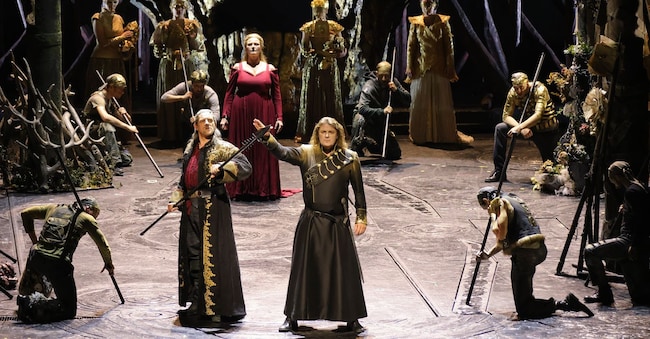
Il «Ring» di Richard Wagner (nella foto)  è tra le opere che ha riscosso maggiore successo nel primo trimestre 2026 Foto Brescia e Amisano © Teatro alla Scala

4' min read

Translated by AI
Versione italiana

4' min read

Translated by AI
Versione italiana

Thirteen opera titles, seven ballet titles, as many concerts and many activities for children and young people. Today the Teatro alla Scala in Milan will present the 2026-2027 season, which, as far as opera is concerned, will open on 7 December with Verdi's "Otello", and the superintendent of the opera foundation, Fortunato Ortombina, highlights a particular aspect that is close to his heart, apart from the artistic quality of the proposal: "it will be an even more accessible season, because our aim is to make La Scala an increasingly inclusive theatre, able to welcome groups of the public who, until now, for various reasons, have never been to our theatre".

One of the main reasons is certainly the price of tickets. Will you act on this?  

Loading...

Affordability is an important issue and in fact for the new season we have devised an increase mechanism limited to the best seats, creating a new 'premium' bracket. The added value generated by these tickets will allow us to strengthen our accessibility policies which, I would like to remind you, were introduced in the 1970s by Paolo Grassi, but which today need to be updated and expanded. Every season we register about 180,000 admissions at subsidised conditions, aimed in particular at young people under the age of 26, who make up about 60% of the total, adults who are members of company crals or cultural circles, 30%, and the over-65s, 10-15%. Starting in 2027, we will launch a new proposal, aimed at residents of the Milan Metropolitan City who are coming to La Scala for the first time, who will be able to purchase tickets with a 50% reduction.

But inclusion, as you say, is not only about prices. What else are you working on?

Accessibility also depends on how a certain product is packaged, which can be more or less attractive or welcoming. For example, next year will be the 200th anniversary of Beethoven's death. We will not be doing, say, the Fidelio, but an unprecedented opera aimed at children, young people and schools, on Beethoven, to introduce the composer, the character, the artist, the message of universal afflatus of his music that culminates with the Ninth Symphony. Moreover, we are strengthening the work we do with schools, activating new collaborations, with a special focus on suburbs and socially fragile contexts. La Scala has an international stature, but it is first and foremost one of the main symbols of Milan, which has always been able to speak to its city and must continue to do so. With its citizens, institutions and businesses. From the very beginning, and then especially during the difficult years of post-war reconstruction in 1946, the great Milanese entrepreneurial families have supported this theatre.

Is the contribution of private individuals still decisive? 

Absolutely. La Scala has achieved an economic-financial balance, which, however, we must never take for granted. We have just closed the 2025 budget with a profit of 200,000 euro and we expect to break even in 2026. We have an average saturation rate of 94%, we are recording an increase in subscriptions and average revenue per play. If this has been possible for several years now, it is thanks to the contribution of everyone: spectators, public and private. Last year we recorded a record in box-office revenue of EUR 36.6 million, which, for the first time, exceeded the State contribution by about EUR 500,000. And in the first three months of 2026 we recorded a further increase, both in terms of theatre occupancy and in terms of average revenue per performance. The support of private individuals, however, is fundamental, especially in order to tackle some major challenges we have ahead of us, starting with the renewal of the contract and the infrastructural works to build the new headquarters in Via Rubattino, where we will transfer the warehouses and laboratories currently housed at the former Ansaldo. Work on the first lot is already underway and should be ready for 2028, when we will celebrate our 250th anniversary. We are now finalising the financing of the second lot, which will be completed after 2030. This is fundamental work for us: I would go so far as to say that, once completed, La Scala will be in place for the next hundred years.

Very expensive works: how will you finance them?

Partly with our own resources, partly with the help of the institutions, but certainly the support of the private sector, which already does so much for our theatre, will also be necessary. Just think that in 2025 their contribution, between donations and sponsorships, exceeded 43 million euro, again a record figure. There are many realities that support us, some for many years and on an ongoing basis, particularly large companies. For some months now we have been developing a commercial offer dedicated to SMEs, with a corporate subscription and dedicated services, and we are holding several meetings with start-ups, thanks also to the collaboration with Confcommercio and Impresa Cultura Italia.

In other words, a Scala that wants to broaden both its traditional audience base and its supporters?

Yes, and, in fact, we are also strengthening our fundraising activities abroad, particularly in the US, thanks to the association that was set up in 2023. After all, almost a third of our viewers are international: they come from 160 countries, mainly the United States, France, Switzerland and Germany.


Copyright reserved ©
Loading...

Brand connect

Loading...

Newsletter

Notizie e approfondimenti sugli avvenimenti politici, economici e finanziari.

Iscriviti