
Oscar di Bilancio, Fincantieri wins among large listed companies
The 2024 Oscar awards promoted by Ferpi, Borsa Italiana and Bocconi University were assigned

4' min read
4' min read
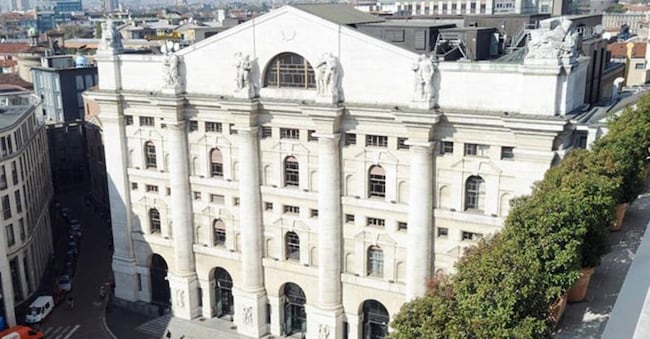
For large listed companies, Fincantieri wins. The Oscar di Bilancio 2024, promoted by FERPI, Borsa Italiana and Bocconi University, was announced at the Italian Stock Exchange in Milan. An event that was preceded by a Roadshow that took the promotion of the value of reporting for a culture of transparency and sustainability throughout Italy
The winners of the 2024 Edition
.The final verdict saw several icons of Made in Italy emerge in 12 different categories: for large listed companies, Fincantieri, for large unlisted companies illnycaffé, for utilities Hera, for SMEs Tea Spa, for financial companies Fideuram Intesa San Paolo Private Banking, for benefit companies Reale Group. Also, for social enterprises and non-profit organisations, Fondazione Human Technopole and for public institutions the Comuine di Bologna. For the special sustainability communication award, recognition went to UNI Ente Italiano di Normazione, for the special integrated reporting award C.A.D.F., the special non-financial statement award went to Snam and, finally, the special Generation Z award went to A2A S.p.A.
Fabrizio Testa, CEO of Borsa Italiana - Euronext Group stressed that 'Borsa Italiana promotes constructive dialogue between companies and investors. There is a tangible connection between the quality of reporting and the trust of the financial community. The theme of this year's Oscar di Bilancio highlights the growing importance of sustainability reporting and compliance with ESG criteria. This is a cultural and strategic transformation: transparency becomes a fundamental pillar for building a more responsible and resilient economy. By supporting this initiative, Borsa Italiana confirms its commitment to fostering the development of a culture of sustainability and strengthening confidence in the financial markets."
On the other hand, Francesco Billari, Rector of Bocconi University, said: 'To build economically, socially and environmentally sustainable societies, it is necessary to combine present and future, building on the past. Innovative research, accompanied by the monitoring and study of the CSRD (Corporate Sustainability Reporting Directive) and its application practices, is now essential to support companies and institutions in achieving transparent reporting. This is why Bocconi is proud to celebrate the sustainability of the Oscar di Bilancio, which after sixty years is coming of age, thanks to the collaboration and systemic and voluntary effort of many institutions and individuals".
The debate and sustainable finance
"The Oscar di Bilancio, undoubtedly one of the most prestigious awards in the Italian economic panorama among those dedicated to transparency and financial communication, is now 60 years old. Although it was conceived in 1954, in fact, it has been consolidated as a fixed appointment and structured in its current form since 1964. And it is now more topical than ever,' said Filippo Nani, President of Ferpi. Born to assess company financial statements, it has evolved to also reward aspects such as sustainability, compliance with ESG (environmental, social and governance) criteria in the light of the new European CSRD (Corporate Sustainability Reporting Directive), corporate social responsibility, and the ability of organisations to communicate values beyond numbers. An evolution that reflects the changes in the economic and social context of the last decades, to which the Award - and the companies and organisations honoured with it - has been able to adapt".In addition to the eagerly awaited awarding of the winners for each category and special prize, the Oscar di Bilancio called upon institutions, ambassadors, professionals and managers to put a face to the Value of Reporting. Discussions were held on the topics of CSRD, as a new challenge for companies between innovation and costs, to understand what future we have for sustainable finance. Two round tables were interspersed to better understand the guidelines, choices and impacts of the directive on our doing and measuring sustainability.

