Outdoor living. Outdoor design in the garden and on the terrace
Shapes reminiscent of the legendary 1960s seaside resorts. Tricot weaves, leather and precious woods and many technical solutions borrowed from the nautical world.

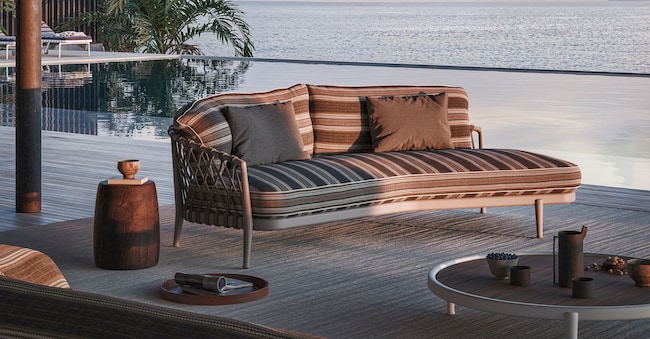
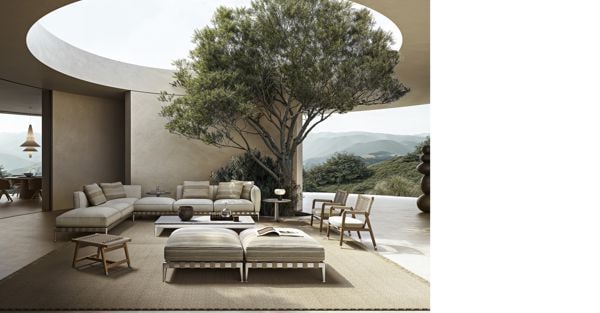
Indulging the widespread desire for open-air living, a need of our time, and transforming gardens, terraces and verandas into extensions of the home, giving the outdoors the same attention as indoors: this is the real design trend of the moment. It is not just a matter of arranging seats, tables and other accessories to be used extemporaneously. The basic idea is to set up real outdoor living areas that offer uncompromising comfort and functionality, to permanently accommodate moments of relaxation and convivial occasions with reassuring continuity. Armchairs, sofas and chaise-longues intended for outdoor use are increasingly inspired by contemporary indoor furnishing, which today interprets upholstered furniture and seating by giving them wide and enveloping lines, to furnish increasingly diversified spaces. On this path towards soft aesthetics and all-round comfort, design dedicated to outdoor furniture forges a valuable alliance with newly conceived material and technical solutions, sometimes borrowed from other design worlds, such as boating, one of the areas where the most extreme climatic conditions are experienced. "My outdoor collection for Molteni&C draws a dialogue between solidity and lightness, where each line composes a true design landscape," says Vincent Van Duysen, designer of the Soleva line.
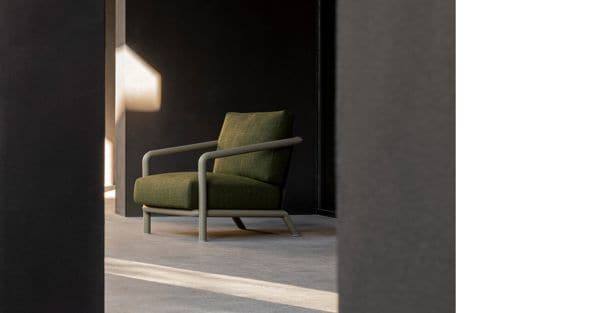
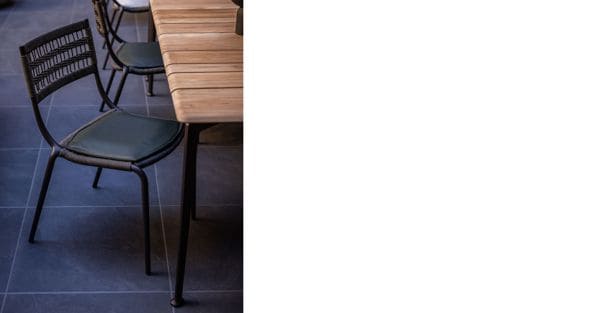
The tactile experience of these furnishings is enriched by the use of innovative materials: the backrests are composed of vertical slats of marine plywood, a technical choice that guarantees elasticity and resistance, while the tactile delicacy derives from the covering in EVA, an extremely light plastic material also used in the automotive sector, which is waterproof and shock-absorbent. The architectural language shared by the various elements of the collection is a continuous, threadlike tubular frame, which defines the proportions with clear, delicately modelled lines.
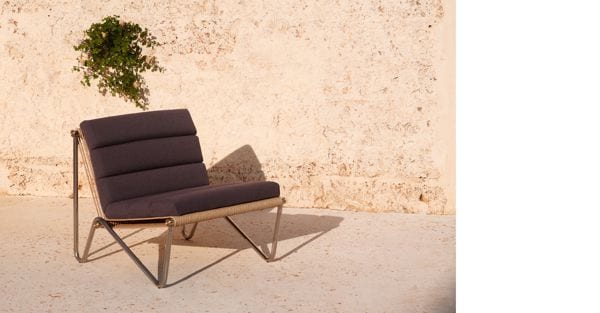
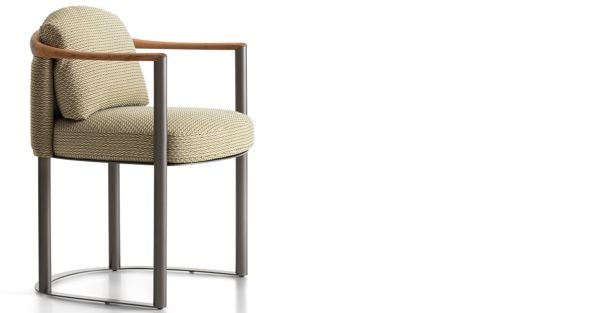
Also the Dabliou armchair, designed by Studiopepe for Baxter, an outdoor seat that captures the essence of the legendary Italian seaside resorts of the 1960s by transporting it into a contemporary dimension, demonstrates a surprising lightness thanks to the use of structural tubular metal. The textured surface of the upholstery plays with light and an enveloping tactility. But that is not all. It is a breathable polypropylene fabric that is not afraid of water, sunlight, mould and abrasion.
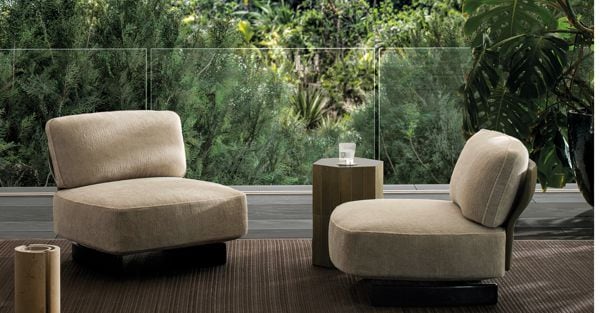
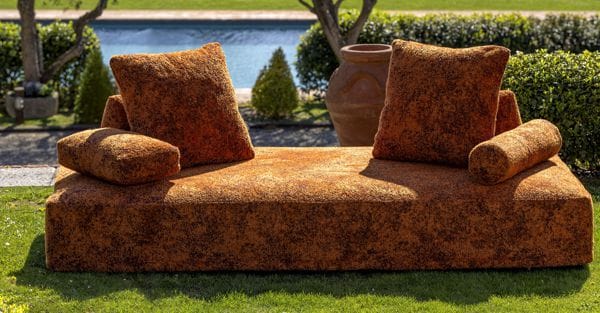
Designed by Nendo for Minotti, the Saki Outdoor armchairs and sofas, the open-air version of the indoor Saki system, have a marine plywood frame covered with a polyester cover with a water-repellent treatment and lacquered structural polyurethane panels, or in tubular stainless steel covered with a wicker-effect weave. The sinuous shape, emphasised by the back cushions resting on the petal-shaped panels, recalls the image of the flowering, Saki in Japanese, from which it takes its name.
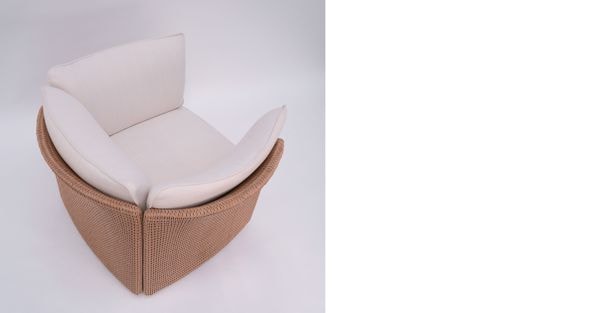
Another collection, another flower: Erica by B&B Italia expands towards the outdoors while maintaining its stylistic signature, an elegant weave that defines the aluminium structure and a soft design. "I integrated it with overtly cozy components," designer Antonio Citterio points out. "For example, curved sofas that encourage conviviality and sofas with a high back and headrest designed for a more intimate and protective comfort".