
Over-65s, those on low incomes, and those receiving cash payments: who is left out of digital payments
‘Cash lovers’, who make up 6.6 per cent of the population, use cash only. ‘Bank-tech sceptics’, who account for 4.6 per cent, use prepaid cards alongside cash but avoid cash machines, credit cards and apps

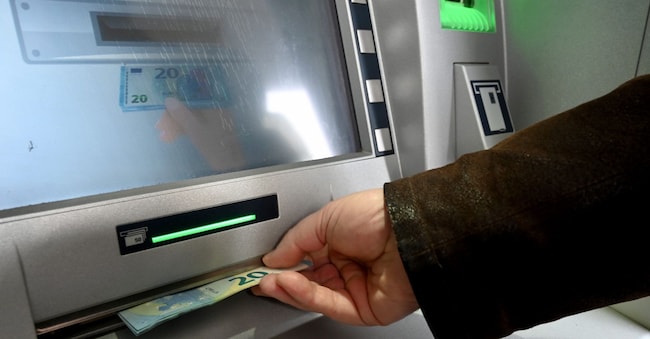
Income comes in as cash and goes out as cash. This is the cycle followed by around one in ten Italian consumers, according to a study by the Bank of Italy which categorised payment habits. The study is based on expenditure diaries and questionnaires from the ECB’s Space 2024 survey: 4,088 Italian respondents were categorised into five profiles using a method that combines human assessment, the GPT-4.1 language model and machine learning algorithms.
Those who use only cash (or, at a push, prepaid cards)
On the fringes, there are two groups. The ‘cash lovers’, accounting for 6.6 per cent of the population, use cash only. The ‘bank-tech sceptics’, accounting for 4.6 per cent, use prepaid cards alongside cash but avoid cash machines, credit cards and apps. Together, they account for 11.2 per cent.
The profiles of the two groups are similar. Compared with the average, there is a higher concentration of people aged over 65, those with an income of less than 1,500 euros a month, those who left school after lower secondary education, and those who are not in work. The proportion of people who receive between half and three-quarters of their income in cash is significantly higher, whilst savings, loans and investments are much less common, and interest in instant bank transfers and crypto-assets is virtually non-existent. Conversely, those with incomes above €4,000 are under-represented in both groups and are more common among the ‘Well-connected’ – the 14.6 per cent who use cash, cards and apps across all channels.
The differences
The differences relate to their relationship with the bank. The ‘sceptics’ have even fewer current accounts than those who use cash only, but they do hold cards – specifically, prepaid cards that can be obtained without an account: according to the authors, this is a deliberate choice to avoid banking services, whilst those who use cash only are more likely to be constrained by other factors. Sceptics are over-represented in the South. ‘Cash lovers’ are the only one of the five groups with a higher-than-average proportion of women and include a relatively large number of self-employed people, a finding which the study links to the possible use of cash in their work. Sceptics, on the other hand, also shop online, but pay using a prepaid card.
Interest in new developments also highlights the divide. In both groups, the proportion of people who do not want to try new payment methods is much higher than average. Where there is interest, those who use cash only seek simplicity and low costs, whilst the sceptics prioritise privacy and the ability to use the system offline. These are the very same conditions that the study sets out for the digital euro: without simplicity, low costs and privacy protection, these consumers are unlikely to adopt it.

