
More than 7 million tonnes of oysters are cultivated worldwide. But which are the best ones?
From creamy Kumies to Etoile with a fruit aftertaste, from the umami-flavoured Belon to the Bluff, which can only be found in a New Zealand body of water. Serve them poached, with alfonsino carpaccio or simply raw.

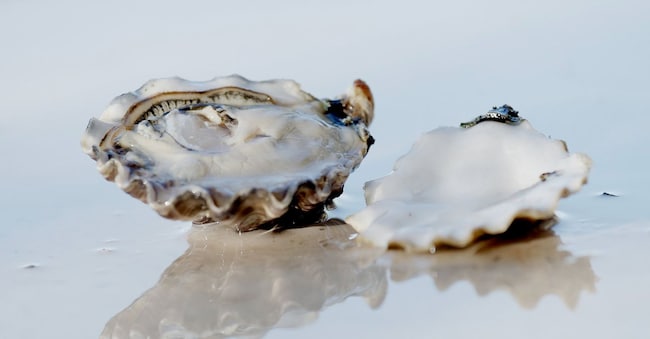
4' min read
4' min read
The world's largest oyster restaurant? It's in New York, at Grand Central station, the revered Grand Central Oyster Bar, which opened its doors in February 1913 with 440 covers. After ups and downs in the last decades of the 20th century, it has returned to its former glory: today it serves more than 30 different varieties of oysters and a selection of the best wines to toast them with. It may come as a surprise, because we are used to linking this prized shellfish to France, instinctively likening it to champagne, but until the 19th century the oyster capital was New York. "Millions of them were sold," writes Mark Kurlansky in his landmark book The Big Oyster. For indeed, before becoming the Big Apple, the moral capital of the US had been a Big Oyster. Here the best shellfish were found, and in great quantities, here recipes were born that later became legendary, such as the Oyster Stew or the Oyster Rockefeller, although some claim it was invented by a New Orleans chef who seasoned it with a rich sauce of butter, parsley and breadcrumbs before baking or grilling it.
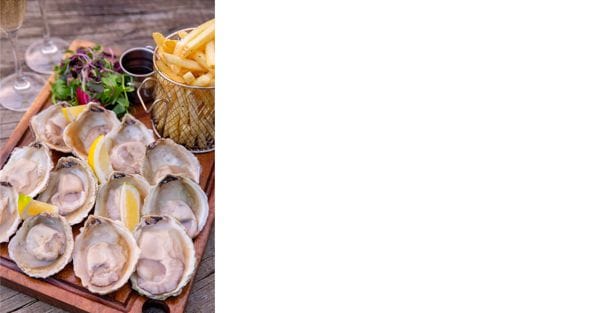
More than 7 million tonnes of oysters are 'grown' in the world today, and analysts project a 20 per cent growth between now and 2032. By far the largest producer is China, followed by South Korea, the United States, Japan and the European Union. Italy has quintupled its production in the last ten years. "Italian oysters are very interesting," says Gianfranco Pascucci, chef patron of the Pascucci restaurant at Porticciolo in Fiumicino and guru of the seafood world. "There are the pink ones from the Sacca degli Scardovari in the Po Delta, the white pearl of the Gargano, the oysters from the Tortolì pond in Sardinia. And let's not forget that they were already being cultivated in Roman times: the first great oyster trader and grower was a certain Gaius Sergius Orata, who in Gaul built a sophisticated system including canals and locks to control the tides. Today the choice is really wide, Pascucci explains, depending on the type of taste one prefers. 'The classic French Belon, which is highly sought after, has an intense, umami flavour, the Fine de Claire, with its more elongated shape, has leaner meat and is more delicate'. Although there are innumerable varieties around the world, in the end the oyster universe is divided into two, confirms Christophe Pelé, chef at the bistronomic Le Clarence in Paris: 'There is only the plate and the creuse, and the second, which has the characteristic of being, as its name says, "hollow", is the one most cultivated in France. The first variety is distinguished by a more ferrous taste, the other is sweeter, definitely more accessible'.
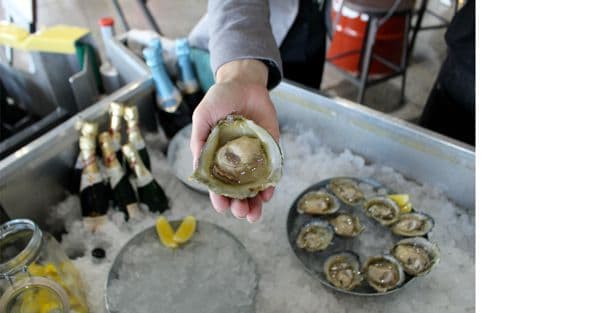
Ultimately, which are the best oysters? There are several rankings, but almost all of them converge on at least these four. The Coffin Bay King Oyster is a large Pacific oyster. It grows in the pristine waters of Coffin Bay in South Australia. With a delicately savoury flavour, it has a very long cultivation time, up to 6 or 7 years. Bluff oysters, on the other hand, are harvested in a small body of water in New Zealand, around Stewart Island, from March to August. Bluffies are exclusive, as it is impossible to grow them elsewhere: they are only found in the wild. And this justifies their high price. Equally expensive are the Kumies, Japanese oysters harvested in the prefecture of Kumamoto. Enthusiasts praise them for their special taste, slightly salty, creamy and with a sweet, buttery finish. "In my opinion, the best oyster is the Etoile," disagrees Ettore Bocchia, chef of the Mistral restaurant at Villa Serbelloni in Bellagio. "It has balance and a pleasant fruit aftertaste. It can be found all year round, so it undermines the old axiom that oysters are only eaten in the months with an R, but in Italy it comes with a quota. Equally exclusive are the Japanese Tsarskaya from the Hokkaido Sea, small, crisp and very tasty'.
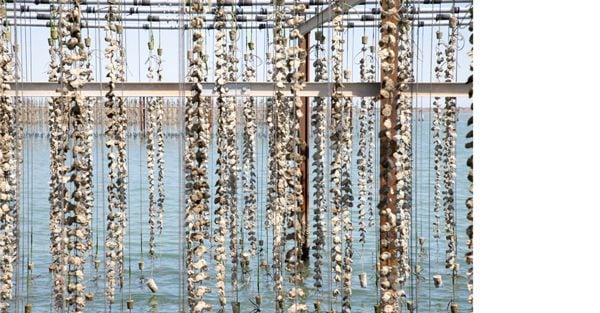
Raw, smoked, boiled, baked, fried, roasted, stewed, pickled, steamed or grilled: oysters can now be enjoyed in a thousand versions, and even daring combinations have been cleared through customs. "For example, I also offer them in a pochée version, laid on hare," explains Pelé. Bocchia serves them preferably cooked, au gratin and with fennel purée and hollandaise sauce or with other mussels and crustaceans, all laid on a carpaccio of alfonsino, a very rare red fish that tastes like pineapple. According to Pascucci, it is important to work on their aromatic bouquet: 'I love the raw oyster, I like to serve it with a green apple and basil granita, or with sorrel juice and white chocolate granita, but it is also excellent simply opened on the grill and dressed with chorizo oil'. Even on the pairings there is now freedom: a Blanc de Blancs or a Muscadet if you choose wine, but they are also perfect accompanied by a gin, a good whisky or a classic stout. If you are in Dublin to enjoy a good Irish oyster, a Guinness is a must.
COQUILLAGE GRAND CENTRAL OYSTER BAR, oysterbarny.com. LE CLARENCE. MISTRAL. PASCUCCI AL PORTICCIOLO.


