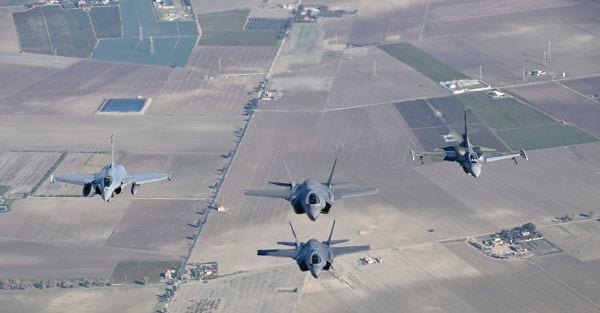
Falcon Strike 2025: over 1,000 military personnel and 50 fighters from Italy, USA, UK, France and Greece
Pilots, specialists and support units of the various Armed Forces train side by side to raise the bar in terms of operational readiness, and all work together with the aim of operating in an integrated manner in complex, inter-force, multinational and multi-domain scenarios
by Andrea Carli
Key points
BY OUR CORRESPONDENT. Amendola
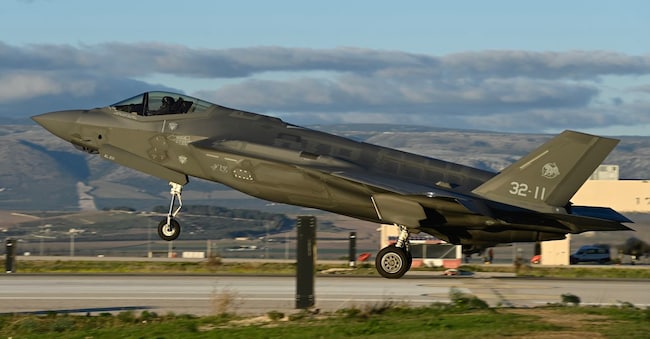
The first thing that leaps to the eye when entering the gates of the Amendola airbase, 15 km away from Foggia, home of the 32nd Air Force Wing, is an uninterrupted series of hangars. One behind the other. Tall, imposing. We count at least fifteen, but there could be many more. Inside them, usually guarded with the utmost secrecy to preserve them from observers who might capture their secrets, are fourth- and fifth-generation fighters, such as the F-35, Eurofighter, Tornado, Rafale and F-16, supplemented with refuelling, surveillance, transport and tactical support assets.
L’esercitazione
This time, however, the veil was lifted for a very special occasion. 3 November saw the start of 'Falcon Strike 2025', the Air Force's most important international exercise and one of the main training activities of the Defence for the year. It will end on the 14th. It will grind out flying hours to test and improve the capabilities of fifth-generation fighters in complex and contested environments. The declared goal: to facilitate and consolidate integration between fourth- and fifth-generation fighters, improving the ability to operate in coalition.
Over 1,000 military personnel and more than 50 aircraft from Italy, the United States, the United Kingdom, France and Greece are involved. In addition, several Observer Nations are present. The exercise is key to strengthening Italy's role as a leading nation in the deployment of fifth-generation assets and as a training hub in the wider Mediterranean. It makes a decisive contribution to collective security and deterrence on NATO's southern flank by consolidating interoperability between allied air forces. Pilots, specialists and support units of the different Armed Forces train side by side to raise the bar in terms of operational readiness, and all work together with the aim of operating in an integrated manner in complex, inter-force, multinational and multi-domain scenarios. In the background, the spectre of a Russia that is becoming more and more threatening by the day.
Conserve: 'the Atlantic Alliance can operate in complex scenarios'
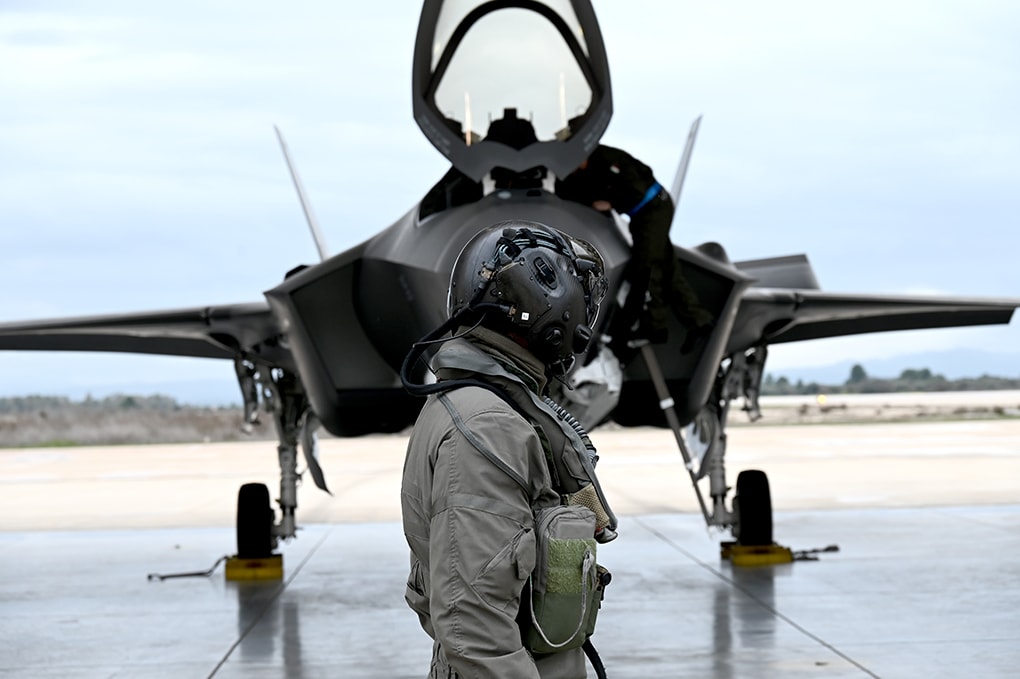
Amendola is one of the main bases. The other is the Decimomannu airport. "The exercise - claims the Chief of Staff of the Air Force, Air Force General Antonio Conserva - sees the combination of the assets of several NATO countries. Fifth-generation assets, such as the F35, but also traditional assets such as the French Rafale, the Italian Eurofighter and the Greek F16. It shows how the Atlantic Alliance can work together in complex scenarios by exploiting the best of the technologies offered by the fifth generation, even enhancing most of the air assets that are still of the fourth generation. The ability of our aircrews to work together and jointly repel a threat I believe is the best element to ensure both the defence of the Atlantic Alliance but also the deterrence capability". "The challenge," continued the general, "is the uncertainty of scenarios, the need to ensure very high operational readiness. We see this on a daily basis with the take-offs that take place all along the eastern flank where our air assets are ready to take off to identify aircraft approaching our borders. This exercise,' he emphasises, 'serves to demonstrate the cohesion of the Atlantic Alliance, but also the ability of the air forces to operate in unison, no matter what the colour of the cockade or the colour of the flag'.