
Overpackaging: the other side of e-commerce, which has to contend with oversized parcels and packaging
This is the finding of a study carried out by the Green Transition Hub at LIUC Università Cattaneo in collaboration with Tecniche Nuove

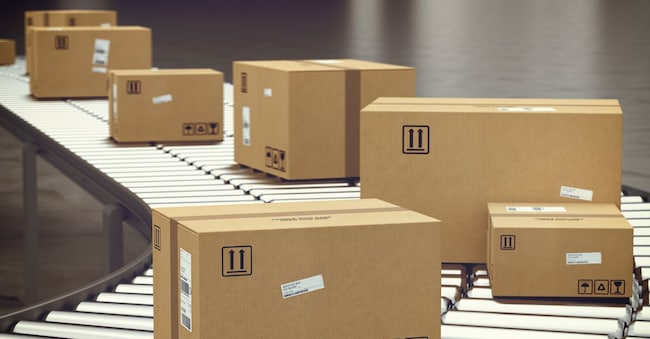
It is the flip side and the undesirable effect of e-commerce: overpackaging. That is, parcels and packaging that is oversized, excess cardboard and filling material that end up in the homes of online shoppers. These items become waste and must then be disposed of.
Research at LIUC
A study by the Green Transition Hub at LIUC Università Cattaneo, carried out in collaboration with Tecniche Nuove, examines this issue in detail. It highlights that overpackaging ‘is, above all, a defensive response to the uncertainty caused by a lack of integration and collaboration within the supply chain’.
“Product data that is not always reliable, fulfilment times of just a few hours and orders that are constantly changing – as Alessandro Creazza, director of the Green Transition Hub at LIUC Cattaneo University and associate professor of logistics and supply chain management, points out – are driving operators to opt for the precautionary ‘worst-case scenario’ approach ”.
A well-known but rarely measured phenomenon
A well-known phenomenon, but one that is rarely quantified ‘and almost entirely absent from contracts’, as the study points out. E-commerce accounts for over 23 per cent of global retail sales and, according to Statista, could exceed 5,000 billion dollars by 2030, with annual growth of close to 9 per cent. Millions of products are shipped individually packaged. In over half of all shipments, air accounts for more than 25 per cent of the volume, and every year 150,000 tonnes of unnecessary cardboard are used, at a cost of over 31 million euros. The regulations are also changing. ‘From 2030, the European PPWR Regulation will limit empty space in transport packaging to 50 per cent,’ the study emphasises, ‘and will set the minimum proportion of reusable transport packaging at 40 per cent.’
The study, carried out in two parts – first involving interviews with managers from companies in the e-commerce logistics supply chain and then with businesses in the sector – highlights a number of areas where, as the university lecturer points out, work can be done to turn the tide. According to the study, the issue is not a lack of precision but ‘risk management’. ‘Air is shipped, but it isn’t measured,’ the study further reveals. ‘Two in three companies do not measure overpackaging. Only one in four monitors the ratio between parcel volume and product volume, the metric closest to that of PPWR.’ Furthermore, ‘74 per cent of companies have no packaging KPIs in their logistics service contracts, and fewer than one in ten (9 per cent) link them to penalties or incentives. The cost of empty space exists, and with weight-volume-based rates, it falls on the client. Couriers and logistics operators see this every day, but they have no incentive to take action.’ There is also another aspect: ‘The supply chain operates in silos. Those who see the waste do not make the decisions, and those who make the decisions do not see it.’

