
Overtourism, Europe raises the price of access: from tickets on Greek islands to taxes on cruises in Croatia
From day visitor tickets to cruise taxes, the use of new tax instruments to curb overtourism and finance the sustainability of destinations is growing in Europe
by Silvia Martelli (Il Sole 24 Ore), Mike Konstantopoulos (Efsyn, Greece) and Marina Kelava (H-Alter, Croatia)
 Aggiungi Il Sole 24 Ore
ai preferiti su Google
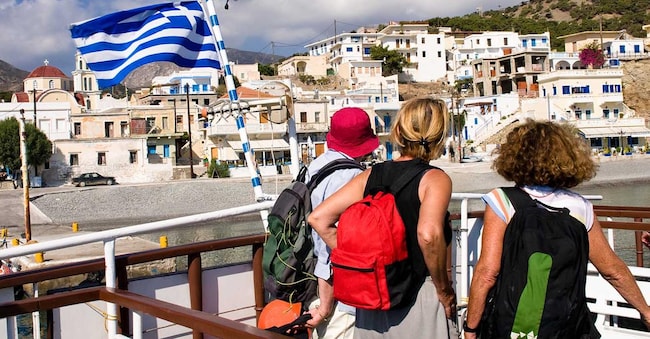
Faced with overtourism, Europe is experimenting with new fiscal levers to govern flows and defend territories increasingly under pressure. From entrance fees for day visitors on Greek islands to taxes on large cruise ships in Croatia, the number of local administrations trying to 'put a price' on access is growing, with the declared aim of financing infrastructure, mitigating environmental impact and improving residents' quality of life.
The most advanced case is that of Greece. Here some smaller islands, particularly exposed to day tourism by sea, are introducing or considering an entrance fee. Symi, in the Dodecanese, has promoted a EUR 3 fee for 'hit and run' visitors, mostly cruise passengers. But the initiative could spread: 34 islands in the South Aegean, between the Cyclades and the Dodecanese, have asked the government for permission to introduce a similar measure. The aim is not only to disincentivise overcrowding during peak hours, but also to create a stable source of funding for public services, waste management, water networks and environmental protection.
Indeed, the pressure of mass tourism, especially that concentrated in a few hours, has obvious effects on the daily life of local communities. Housing costs increase, housing supply for residents decreases, gentrification phenomena grow, and the environmental balance of fragile territories is put at risk. Local administrations, often with limited resources, find themselves bearing high costs for infrastructures sized for seasonal populations much larger than the resident population.
A different approach, but with similar aims, is that adopted in Croatia, another country strongly exposed to cruise tourism in the Mediterranean. Here the individual visitor is not taxed, but the ships. Several cities and municipalities apply a tariff to cruises based on the number of passengers on board. In 2026, for example, a ship with more than 3,000 passengers pays more than EUR 5,300 for docking, while smaller vessels are subject to lower progressive amounts. Dubrovnik and Split have chosen to apply the levy, while other cities, such as Zadar, have decided not to introduce it. The regulatory framework is provided by the Croatian Tourist Tax Act, which leaves it up to local administrations to decide whether or not to apply the levy. 85% of the revenue remains with the municipality or city, the remaining 15% goes to the county. The resources must be earmarked by law for improving tourism infrastructure and sustainable development. A mechanism that aims to rebalance the relationship between the economic benefits of tourism and the social and environmental costs.
Alongside Greece and Croatia, other European countries are also experimenting with fiscal and regulatory instruments to curb overtourism, especially in the most exposed urban and island destinations.


