
Oyster cultivation new route to the blue economy
According to two Pegaso University scholars, the shellfish industry contributes to improving water quality and should also be supported with economic incentives

Key points
For years, marine sustainability has mainly been portrayed as a battle 'against': plastic, industrial waste, visible pollution. A vision that no longer suffices today. The sea and coastal waters face endemic and systemic pressures: eutrophication (excess nutrients), warming, loss of biodiversity, invasive species, fragile lagoons and semi-enclosed systems. Phenomena that cannot be solved just by removing waste: they require ecosystem management and solutions that arise within the habitat itself. This is where the blue economy can change perspective: not just reducing the impact of economic activities, but generating value by working with the ecosystem. In this context, aquaculture can rightfully become part of the 'recipe' for water conservation.
The Studio
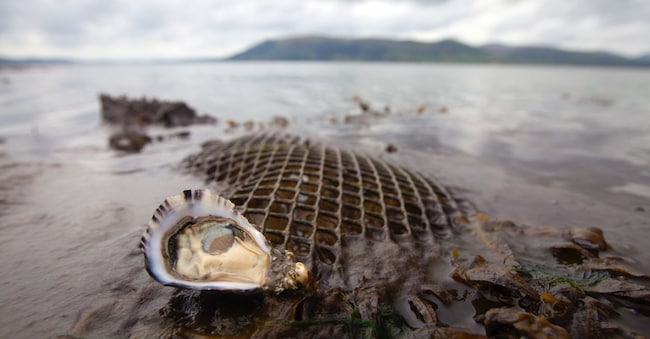
It is a sector with a dual advantage: it produces food and value and, under certain conditions, can contribute to water quality. This is confirmed by experts Benedetta Coluccia and Pasquale Sasso, researcher and lecturer at Pegaso University, who recently published a study on competitiveness, territorial development, production resilience and coherence with European trajectories of the Italian oyster industry within the university's Agrifood Tech & Innovation Observatory: 'It is about active sustainability: oyster farming, in fact, is not limited to containing its environmental impact, but can actively contribute to improving water quality through natural processes of filtration and removal of particulate matter and excess nutrients'.
However, the two experts point out that this effect is neither automatic nor uniform, because it is the result of a combination of different factors: temperature, salinity, basin quality, density and management. Moreover, with shellfish farming under pressure, partly due to the spread of blue crab, 'oyster farming can represent a relatively more resilient diversification strategy', even if it still remains a niche industry: national production is in fact around 300 tonnes per year. But, continue Coluccia and Sasso, 'filtering capacity is not just a biological fact, but can become a strategic asset' if translated into verifiable indicators and transparent monitoring. Hence the proposal to create a collaborative infrastructure for innovation applied to this sector, because 'the main bottleneck today is not demand, but the organisational and production scale'.
Regenerative gear shift
A view also shared by Raphaëla le Gouvello, expert and consultant for the International Union for Conservation of Nature (IUCN) and founder of the NGO RespectOcean, who calls for a change of gear: "We need to go beyond sustainability and move towards a regenerative blue economy". She explains that, if practised correctly, shellfish farms can contribute to coastal water quality mitigation (including nitrogen removal) and provide habitats for wild species, thus increasing biodiversity abundance. "These are benefits that are not sufficiently recognised today," he explains, pointing out that lack of access to new sites and increasingly complex regulations are creating major challenges for operators today.
Le Gouvello reiterates the need for the EU to publish an ambitious roadmap towards a regenerative blue economy, within which the shellfish industry could become a key pillar, along with seaweed cultivation and different types of aquaculture when combined with protection and restoration of marine ecosystems and renewable energy. But he warns: 'Innovative financial mechanisms will be needed to support entrepreneurship and local initiatives and to reward - including through the mechanism of nature credits (such as nitrogen credits, ed.) - the ecosystem services and benefits that this type of farming provides'.

